全域治理

Search documents
叶牛平参加莲湖代表团审议政府工作报告
Xi An Ri Bao· 2026-02-28 01:57
Core Viewpoint - The government work report presented at the meeting is seen as realistic and encouraging, with a focus on achieving the "14th Five-Year Plan" goals and setting a solid foundation for the "15th Five-Year Plan" [1] Group 1: Government Work Report - The report summarizes achievements accurately and sets inspiring development goals for the "15th Five-Year Plan" [1] - The 2026 work plan is described as pragmatic and precise, reflecting the government's capability and responsibility [1] Group 2: Development Goals and Strategies - The city aims to enhance its development capabilities and core competitiveness, emphasizing the mission of "Western Demonstration, Xi'an First" [1] - Key strategies include strengthening internal capabilities, solidifying foundations, and promoting comprehensive governance, innovation, and reform [1] Group 3: Focus Areas for Urban Development - The focus for the central urban area of Lianhu District includes urban renewal, industrial upgrading, social governance, and improving public welfare [1] - The district is encouraged to follow urban development laws and resource endowment characteristics to enhance comprehensive governance capabilities [1]
水土之诺,守护“山水城林”
Xin Lang Cai Jing· 2026-02-01 21:21
Core Viewpoint - The newly revised "Nanjing Water and Soil Conservation Measures" reflects a shift in the approach to water and soil conservation in a major city, moving from strict control to a more resilient system of guidance and value activation [1][2]. Approval Process Changes - The approval process for projects has been streamlined, allowing for a "notification commitment system" for projects in 22 completed regional assessments, reducing the approval time from 10 working days to immediate processing [2]. - This change has enabled 22 projects to commence with a total saving of 80 working days, indicating a shift in management focus from pre-approval to ongoing supervision [2]. Comprehensive Governance - The new measures emphasize "comprehensive governance" rather than limiting the scope to designated key areas, advocating for unified planning and systematic governance across various ecological components [2]. - Nanjing has established over 150 ecological clean small watersheds, covering more than 55% of the area, integrating water system management, pollution prevention, and rural landscape enhancement [3]. Ecological Value Transformation - Innovative practices in ecological value transformation have emerged, such as the successful monetization of ecological products in the Daqin small watershed, with a transaction value of 23.72 million yuan [3]. - The new regulations include provisions for exploring the valuation, trading, and transformation mechanisms of water and soil conservation ecological products, aiming to attract broader social capital participation [3]. Legislative Changes - The revision of local regulations aims to reduce burdens on grassroots governance, remove qualification thresholds for monitoring units, and update the terminology from "sustainable development" to "high-quality development" [4]. - These changes reflect a commitment to maintaining every inch of water and soil, as seen in the evolving green landscape of the hilly areas [4].
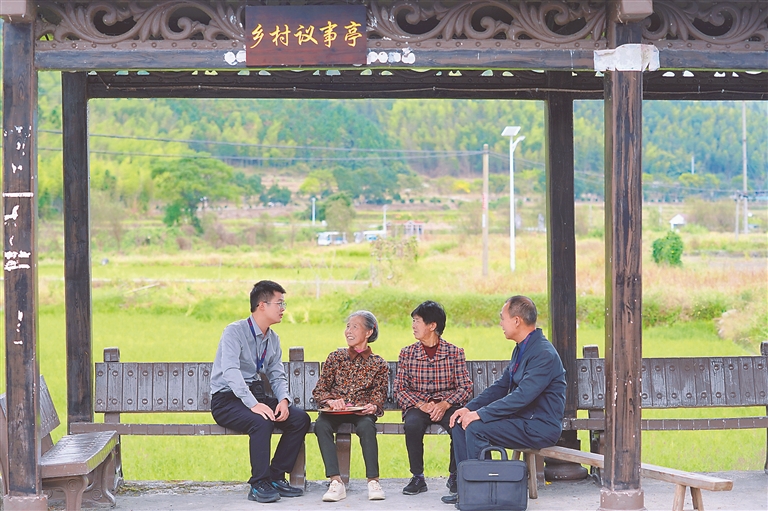
学纪知纪明纪守纪丨把“关键小事”办到群众心坎上
Zhong Yang Ji Wei Guo Jia Jian Wei Wang Zhan· 2025-11-19 00:05
Core Viewpoint - The article emphasizes the importance of addressing "key small matters" that affect people's livelihoods, highlighting the need for effective supervision and problem-solving mechanisms to enhance public trust and satisfaction [5][18]. Group 1: Supervision Mechanisms - The article discusses the implementation of a mechanism that allows for direct engagement with the public to gather their concerns, focusing on social assistance, agricultural policies, and infrastructure development [2][15]. - It stresses the need for a problem-oriented approach, concentrating on urgent issues that the public is most concerned about, such as rural revitalization, education, healthcare, and environmental safety [4][6]. Group 2: Collaborative Efforts - The article highlights the importance of collaboration among various departments to ensure effective supervision and problem resolution, advocating for a system that integrates feedback from the public into governance [13][14]. - It mentions the necessity of establishing a closed-loop governance mechanism to address persistent issues and improve the overall effectiveness of public service [16][18]. Group 3: Focus on Public Concerns - The article underscores the significance of identifying and addressing the specific concerns of the public, using data-driven approaches to analyze and prioritize issues that require immediate attention [10][18]. - It points out that seemingly minor issues often reflect deeper systemic problems and should be treated with the same urgency as larger issues [11][20]. Group 4: Continuous Improvement - The article advocates for ongoing evaluation and adjustment of strategies to ensure that the measures taken are effective and responsive to the public's needs, emphasizing the importance of transparency and accountability in governance [12][14]. - It encourages a proactive stance in supervision, where officials actively seek out and address public grievances rather than waiting for complaints to arise [20][21].