
全球供应链协同进化

Search documents
当全球供应链协同进化,“车厘子自由”只是一个开始
Sou Hu Cai Jing· 2026-01-12 00:42
Core Insights - The price of cherries has significantly dropped, with a decrease of nearly 40%, leading to a phenomenon referred to as "cherry freedom" among consumers [1][5] - This price drop is attributed to a combination of global supply chain improvements, increased agricultural production, and changes in domestic consumption patterns [1] Price Trends and Consumer Behavior - In Nanjing, cherries are being sold at prices below 40 yuan per pound for 2J and 3J specifications, with promotional prices as low as 20 yuan per pound [1][2] - The availability of cherries has increased, leading to a competitive pricing strategy among retailers, with 1J specifications being promoted for their cost-effectiveness [2] - Consumers are experiencing a range of prices for cherries, with some purchasing 3J cherries for as low as 149 yuan after platform subsidies, reflecting a trend towards more rational consumption [5] Supply Chain Dynamics - The supply of cherries has increased due to direct shipping from Chile, with the first batch arriving in October 2025, leading to a significant price drop from previous highs of 240 yuan per pound [6][9] - The logistics of cherry transportation have improved, with sea freight costs being one-third of air freight costs, allowing for lower retail prices [11] - The efficiency of sea transport has been enhanced, with the journey time reduced to approximately 23 days, and improved customs processes facilitating quicker market access [12] Market Segmentation and Consumer Preferences - The current market reflects a segmentation in consumer preferences, with different price tiers catering to both budget-conscious consumers and those willing to pay for higher quality [5] - The trend of "cherry freedom" indicates a shift in consumer behavior, with increased demand for cherries in lower-tier cities, suggesting a broadening of the consumer base [9] Future Outlook - The decline in cherry prices is seen as part of a larger trend affecting high-end fruits, with expectations of continued price reductions for other fruits like durians and avocados [12] - The advancements in supply chain technology and logistics are expected to further enhance the availability of high-quality fruits at competitive prices in the Chinese market [12]

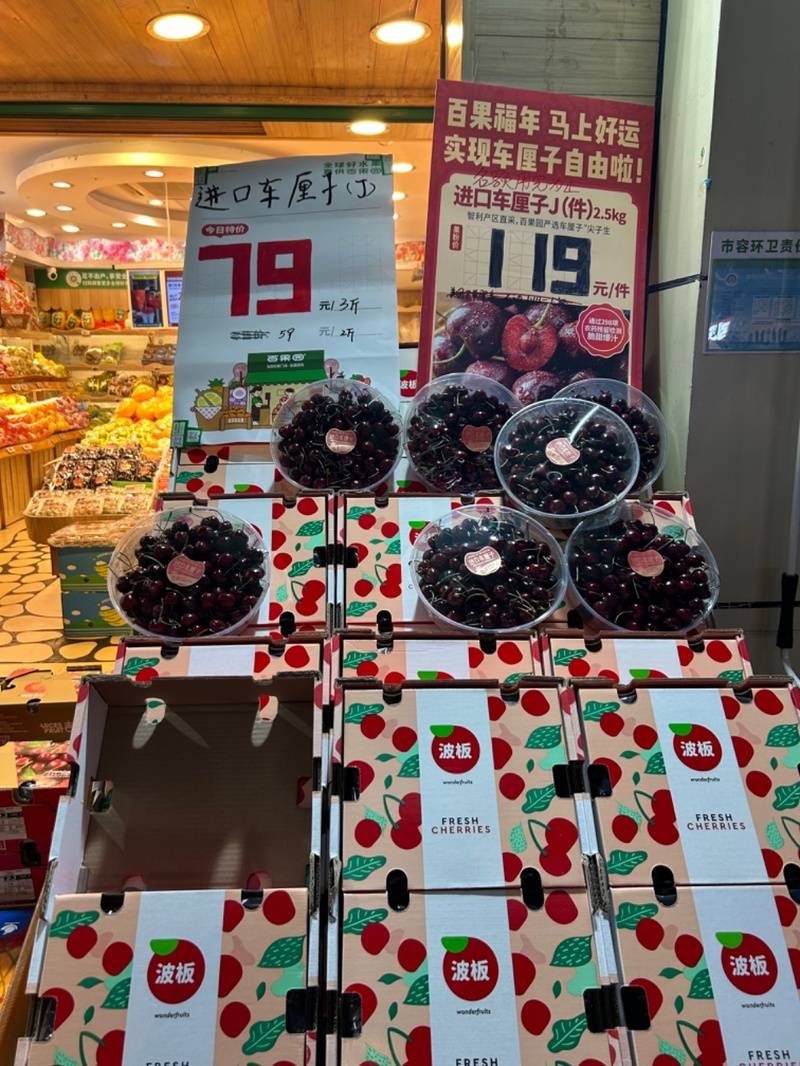
“车厘子自由”只是一个开始
Xin Lang Cai Jing· 2026-01-11 21:22
Core Viewpoint - The significant drop in cherry prices, nearly 40%, is attributed to a combination of global supply chain improvements, agricultural capacity increases, and changes in domestic consumption patterns, leading to the "democratization" of high-end fruits like cherries [1][6]. Price Trends and Consumer Behavior - In Nanjing, cherries are now priced below 40 yuan per jin for 2J and 3J specifications, with promotional prices as low as 20 yuan per jin, prompting consumers to express their excitement over "cherry freedom" [1][2]. - The price gradient in the cherry market reflects a mature consumer market, with various specifications catering to different consumer needs, from budget-conscious buyers to those seeking premium quality [3]. Supply Chain Dynamics - The increase in cherry supply is linked to the arrival of new varieties and improved logistics, with the average price of cherries previously reaching as high as 240 yuan per jin due to limited air freight availability [4][5]. - The logistics revolution has significantly reduced shipping costs, with sea freight now costing only one-third of air freight, allowing consumers to enjoy high-quality cherries at lower prices [6][7]. Infrastructure and Technological Advancements - China's cold chain infrastructure has seen substantial upgrades, with major ports like Guangzhou Nansha and Ningbo Meishan enhancing their cold storage capacities, ensuring rapid distribution of fresh produce [7]. - The efficiency of sea freight has improved, with transit times reduced to approximately 23 days, and advanced temperature control systems ensuring minimal quality loss during transport [6][7]. Market Outlook - The decline in cherry prices is indicative of broader trends in the high-end fruit market, with other fruits like durians and avocados also experiencing similar price drops due to increased supply [7]. - The ongoing evolution of agricultural trade between China and South America suggests that more high-quality fruits will become accessible to Chinese consumers at attractive prices, marking the beginning of a new era in fruit consumption [7].