全球思想史

Search documents
乔治斯·瓦鲁萨基斯谈“西方”观念的形成
Xin Lang Cai Jing· 2025-10-12 01:58
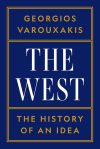
Core Argument - Georgios Varouxakis' new book "The West: The History of an Idea" offers a groundbreaking interpretation of the origins of the concept of "the West," challenging the prevailing academic consensus that it emerged in the late 19th century as a tool for promoting imperialism and racism [2][5][7]. Group 1: Historical Context and Evolution of the Concept - The term "the West" is often mistakenly viewed as a timeless concept dating back to ancient Greece, but Varouxakis argues that its self-identification began in the late 19th century, specifically in the 1880s and 1890s, to promote imperialism and white supremacy [5][7]. - Varouxakis highlights that earlier uses of "the West" can be traced back to the early 19th century, particularly through the works of Auguste Comte, who envisioned a "Western Republic" as a cultural and civilizational entity [7][8]. - The need for a distinct term arose from the desire to differentiate Western Europe from Russia, which was perceived as a significant threat after the Napoleonic Wars [8][9]. Group 2: Comte's Influence and Ideological Implications - Comte's writings initially focused on "Europe," but he later shifted to using "the West" to better represent a specific cultural community, distancing it from the broader geographical implications of "Europe" [11][12]. - Varouxakis emphasizes Comte's strong anti-imperialist stance, arguing that his vision for "the West" was not aligned with imperialism but rather aimed at promoting a peaceful, altruistic community [13][14]. - The concept of "the West" was intended to foster a sense of unity among Western nations while advocating for the independence of colonies and the abolition of empires [13][14]. Group 3: The Role of Other Thinkers and Global Perspectives - Varouxakis discusses various thinkers, including Francis Lieber, who contributed to the evolution of the concept of "the West" in the 19th century, particularly in the context of American political thought [16][17]. - The book also examines the contributions of non-Western thinkers, such as Rabindranath Tagore, who engaged in discussions about nationalism and the West during the early 20th century [18][19]. - Varouxakis argues that the historical understanding of "the West" is complex and multifaceted, shaped by various cultural, political, and ideological influences over time [24][27]. Group 4: Methodological Approach - The author employs a genealogical approach to trace the historical evolution of the concept of "the West," emphasizing the importance of understanding its various interpretations and uses throughout history [25][26]. - Varouxakis critiques the notion of a singular "Western value system," arguing that many values attributed to the West have origins in other cultures and should not be viewed as exclusive to the West [30][31]. - The book aims to clarify the historical context and potential future meanings of "the West," highlighting its adaptability and relevance in contemporary discussions [28][29].

研讨会︱重建全球:观念的全球流动
Sou Hu Cai Jing· 2025-06-10 10:15
Core Insights - The conference titled "Rebuilding the Global: The Flow of Ideas Globally" was organized by Fudan University's Department of History and the Institute of Global History, focusing on understanding global order and the historical processes of ideas [1][3] Group Summaries Group A - The first panel discussed three specific studies on the global flow of ideas, emphasizing theoretical explorations within solid case studies [3][4] - Richard Reid explored African reform ideas in the 19th and 20th centuries, highlighting the entanglement and fusion of local and global thoughts [4] - Zhang Ke focused on travel writings between China and India at the turn of the 19th and 20th centuries, analyzing how these narratives reflect Chinese realities [4] Group B - The second panel addressed methodological issues in global intellectual history, with Timothy Baycroft discussing the complexities of nationalism as a constructed concept [5] - Yuan Shang provided a detailed academic history of global intellectual history, identifying three mainstream paradigms and their theoretical dilemmas [5] Group C - The third panel examined key issues in French intellectual history, including the political philosophy of Rousseau and the religious politics of 17th-century France [8] - Wang Yin analyzed the "Four Articles" of 1682, revealing the negotiation between royal authority and church tradition [8] - The discussions on Rousseau's concepts emphasized their dynamic characteristics rather than static interpretations [8] Group D - The fourth panel focused on the evolution of British political thought from the 17th to the 20th century, with Huang Tao reinterpreting Hobbes' theory of passions [9] - Li Haime's research on Voegelin's critique of Burke highlighted the reflections on conservative ideologies [9] - Guan Yiran traced the interdisciplinary journey of the concept of "division of labor," illustrating its influence across various fields [9] Group E - The fifth panel presented diverse studies on the restructuring of modern German thought, with Kubo Eisei focusing on the often-overlooked empirical paths of late Enlightenment thinkers [10] - The discussions also included the tensions between historical consciousness and national identity in 19th-century Germany [10] Group F - The sixth panel explored the tensions between socialism and national identity, with Xiong Yingzhe examining Robert Owen's vision of social reform as a means to achieve permanent peace [10] - Chen Yawen analyzed the debates within the French socialist movement regarding the concept of the nation [10] Group G - The final panel highlighted cross-civilizational dialogues, with Shang Zhaoqi discussing Maruyama Masao's theory of dignity, integrating Eastern and Western philosophical resources [12] - Li Hongtu's research on the formation of the Universal Declaration of Human Rights revealed the tensions between Western-centric views and cultural diversity [13] Overall Conference Insights - The conference showcased the vitality and depth of global intellectual history research, revealing complex interactions and local adaptations of ideas [14] - It emphasized the need for nuanced methodologies that focus on contextual analysis and the positioning of intellectual subjects within historical structures [14]