全球美元循环

Search documents
中信建投:美债需求疲弱引发抛售潮 市场关注全球美元循环走向
智通财经网· 2025-04-10 00:31
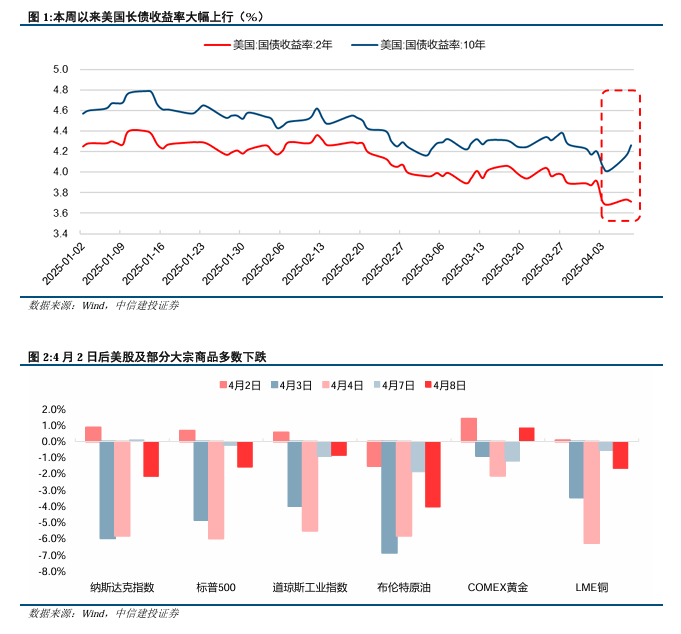
Core Viewpoint - The impact of tariff policies on global capital markets is gradually spreading, leading to a significant rise in U.S. long-term bond yields and a storm in the U.S. Treasury market [1][10]. Group 1: U.S. Treasury Market Dynamics - The U.S. Treasury market has experienced a rapid surge in yields, with a notable increase of nearly 30 basis points in the first two trading days of the week [2]. - Following the announcement of comprehensive tariff policies on April 2, U.S. Treasury yields initially fell due to risk aversion, but have since rebounded sharply, indicating a wave of selling in the Treasury market [2][11]. - The recent auction results for 3-year Treasury bonds showed weak demand, with a bid-to-cover ratio of only 2.26, the lowest since April 2023, raising concerns about upcoming 10-year and 30-year bond auctions [5]. Group 2: Factors Influencing Treasury Yields - The rise in long-term Treasury yields is driven by a combination of factors, including a significant drop in risk assets and increased volatility in the Treasury market, leading to forced liquidation in leveraged basis trading [6][11]. - The market is currently pricing in liquidity shocks triggered by tariff impacts, reflecting a broader concern about the restructuring of global order and the future of dollar liquidity [10][12]. Group 3: Economic Implications - The unexpected high tariffs could severely impact global economic growth, potentially leading to a new recession, with historical parallels drawn to the stagflation of the 1970s [11][14]. - Ongoing geopolitical tensions and tightening monetary policies in Europe and the U.S. may further dampen global economic growth and asset price performance, contributing to market uncertainty [14].