全球资源争夺战

Search documents
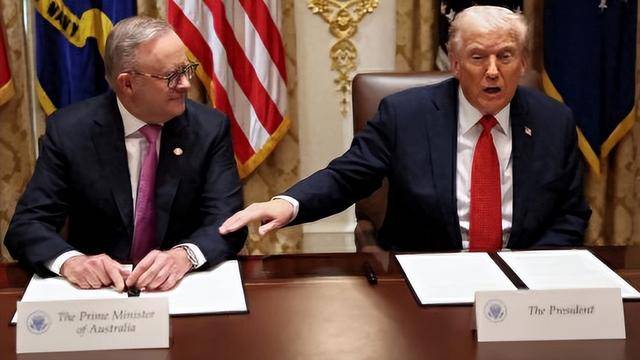
特朗普签署85亿美元矿产协议,资金如何分配,项目推进成悬念
Sou Hu Cai Jing· 2025-10-21 03:18
Core Points - The agreement between the US and Australia involves a total investment of $8.5 billion in critical mineral projects, with a focus on immediate funding of $1 billion within six months [1][3][5] - Discrepancies in reported figures, such as the difference between the $3 billion and $1 billion commitments, have led to confusion and speculation regarding the actual financial commitments [3][5][9] - The six-month timeframe is critical for the initiation of projects, with immediate funding aimed at supporting projects that can commence quickly [7][9][11] Financial Structure - The first layer of funding includes a short-term commitment of $1 billion for projects that can be executed within six months, emphasizing rapid project initiation [15][17] - The second layer consists of a $2.2 billion commitment from the Export-Import Bank of the United States, which serves as a preliminary financing promise that will only be activated once projects are confirmed [17][19] - The total figure of $8.5 billion represents a potential investment pool for various projects, rather than immediate cash flow, indicating a strategic positioning in the global resource market [19][30] Project Focus - The gallium refining project in Western Australia is highlighted as a flagship initiative, with a planned annual production of 100 tons, reflecting the strategic importance of gallium in technology and defense sectors [24][26] - Other significant projects include rare earth initiatives, with Australian companies receiving financing support to enhance production capabilities, crucial for the global supply chain [26][28] - The magnesium refining project is also part of the agreement, aimed at meeting the growing demand for lightweight materials in high-end manufacturing [28][30] Challenges and Considerations - The six-month deadline poses challenges related to mining cycles, environmental reviews, and policy approvals, which may delay project execution [9][11][13] - The complexity of project approvals and the need for feasibility studies and environmental assessments will significantly impact the timeline and success of the initiatives [11][13][28] - The successful execution of these projects is essential for stabilizing and sustaining the future resource supply chain, making the agreement's outcomes critical for both nations [30]