全链条管控体系

Search documents
淮安市工程质量突出问题专项治理工作成效显著
Xin Hua Ri Bao· 2025-11-17 22:01
Core Insights - The article highlights the efforts of Huai'an City in improving construction quality management through a comprehensive approach that includes mechanism enhancement, regulatory optimization, and technological empowerment [1][2][3][4] Group 1: Mechanism Enhancement - Huai'an City has initiated a 10-month special governance action for engineering quality, establishing a full-chain control system to address common quality issues such as leakage and poor sound insulation [2] - A detailed "Common Quality Issues Database" has been created based on provincial problem databases, implementing targeted solutions for each identified issue [2] - The city has integrated credit evaluation into the regulatory process, holding construction companies accountable for their responsibilities [2] Group 2: Regulatory Optimization - The city has introduced a cross-supervision mechanism for residential project acceptance, enhancing the pre-acceptance inspection process to ensure quality control [3] - Regular inspections have been conducted, with 103 projects checked this year, resulting in 58 corrective notices and 5 administrative penalties [3] - A quality information disclosure system has been implemented, achieving a 100% disclosure rate for ongoing residential projects, ensuring public access to quality-related information [3] Group 3: Technological Empowerment - Huai'an City is leveraging information technology to transition regulatory models towards smart management, enhancing the reliability and traceability of testing data [4] - A remote monitoring management platform for foundation testing has been piloted, shifting the focus from post-event inspections to proactive warnings and interventions [4] - Continuous training and certification for quality monitoring and testing personnel are being conducted to improve professional standards in the industry [4] Future Directions - The Huai'an City Housing and Urban-Rural Development Bureau plans to continue implementing the Jiangsu Province's action plans for enhancing residential engineering quality, emphasizing accountability and innovative regulation to elevate construction quality management standards [4]
保健食品生产规范27年来首次更新 强制性国家标准为行业划下安全红线
Zhong Guo Chan Ye Jing Ji Xin Xi Wang· 2025-10-21 22:14
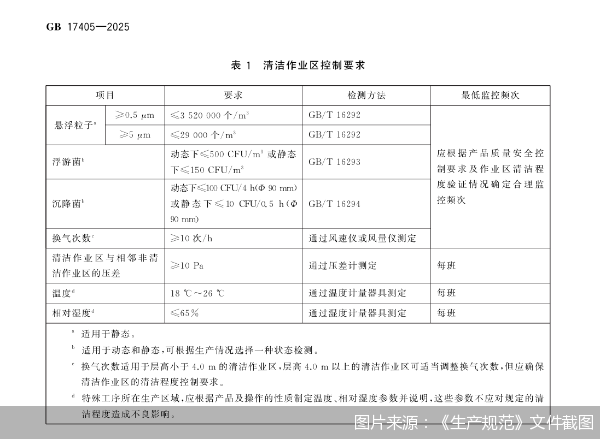
Core Viewpoint - The National Health Commission and the State Administration for Market Regulation have released 32 national food safety standards and 2 amendments, with the revised "National Food Safety Standard for Good Manufacturing Practices of Health Foods" (GB 17405-2025) marking the first update in 27 years since its initial release in 1998, emphasizing the importance of food safety management in health food production [1] Group 1: New Standards and Regulations - The new standard is a mandatory national standard that serves as a foundational document for the registration, filing management, production licensing review, and supervision of health food production [1] - It incorporates general hygiene requirements from GB 14881 while addressing the specificities of health food production, thereby clarifying safety requirements and management guidelines [1][2] Group 2: Diverse Forms of Health Foods - Health foods come in various forms, including tablets, powders, granules, capsules, liquids, and more, with the industry expected to continue evolving to meet changing consumer demands [2] - The standard combines general principles and targeted requirements to create a comprehensive production guideline for health foods [2] Group 3: Enhanced Food Attributes - The new standard replaces terms like "general production area" and "clean area" with "general operation area" and "clean operation area," reinforcing the food attributes of health foods [3] Group 4: Comprehensive Control System - The new standard establishes a full-chain control system covering raw materials, production, verification, and traceability, aimed at reducing product quality risks and ensuring product efficacy stability [4] - It specifies that raw materials and auxiliary materials must meet technical requirements and safety standards, with particular emphasis on non-purified fermentation products [4] Group 5: Production Process Management - The standard outlines clear requirements for material balance management and cleaning procedures, emphasizing the importance of quantifying risks in the production process [5] - It mandates that health food manufacturers develop a scientific material balance management system to optimize quality, compliance, and costs [5] Group 6: Verification and Quality Control - The new standard includes a verification chapter to ensure the stability of production processes and the controllability of product quality, supporting deviation management and continuous improvement [6] - Outgoing inspections are crucial for confirming product quality, requiring checks on key indicators such as efficacy components and microbial standards [6] Group 7: Recall and Traceability Management - The new standard also stipulates requirements for product recall and traceability management, aligning with GB 14881 regulations [7]
全链条管控 保健食品生产规范新“国标”发布
Bei Jing Shang Bao· 2025-09-25 23:24
Core Viewpoint - The newly revised "National Food Safety Standard for Good Manufacturing Practices of Health Food" (GB 17405-2025) has been officially released, marking the first update in 27 years, introducing stricter and more detailed requirements for health food production [1][2][3]. Group 1: Key Changes in the New Standard - The new standard expands from 10 chapters to 14 chapters, adding informative appendices and significantly revising various aspects such as site selection, factory environment, facilities, raw materials, and production process safety controls [1][2]. - The terminology has been updated to reflect food attributes more accurately, changing "general production area" and "clean area" to "general operation area" and "clean operation area" [2]. Group 2: Implementation and Impact - The implementation of the new standard aims to enhance production processes, ensure corporate responsibility, and improve product quality, thereby fostering innovation within the health food industry [3][4]. - The standard establishes a comprehensive control system covering the entire production chain from raw materials to finished products, enhancing safety measures and management requirements [4][5]. Group 3: Industry Implications - The new standard raises industry entry barriers, compelling companies to strengthen their quality management systems, while providing clear production guidelines for compliant enterprises [6]. - For consumers, the new standard is expected to enhance safety assurance in health food products, ensuring that consumers can purchase and consume these products with confidence [6].
强化食品属性与全链条管控 保健食品生产规范新“国标”发布
Bei Jing Shang Bao· 2025-09-25 15:01
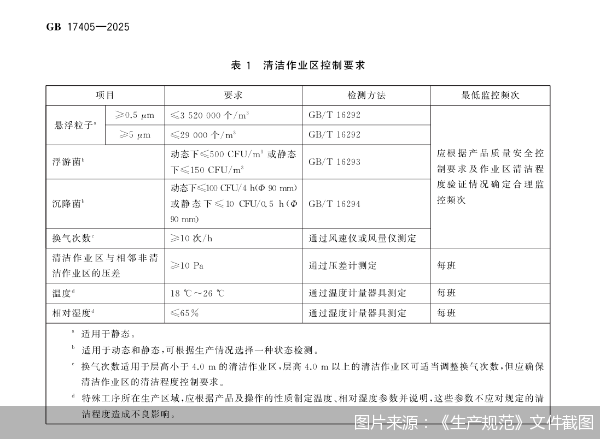
Core Points - The National Health Commission and the State Administration for Market Regulation have jointly revised the "National Food Safety Standard for Good Manufacturing Practices for Health Foods" (GB 17405—2025), marking the first update in 27 years since its introduction in 1998 [1] - The new standard has significantly expanded, increasing from 10 chapters to 14 chapters, and includes additional informative appendices [1] - The revised standard imposes stricter and more detailed requirements across various aspects of health food production, including site selection, factory environment, facilities, raw materials, production processes, and food safety management [1][4] Summary by Sections Revision Overview - The new standard replaces the old GB 17405—1998 and is based on the framework of GB 14881, aligning terminology with food safety standards by changing "general production area" and "clean area" to "general operation area" and "clean operation area" [4] - The update reflects the evolution of the health food industry over the past 30 years and aims to enhance food safety attributes [4] Implementation and Impact - The release of the new standard aims to enforce the "strictest standards" requirement, helping to standardize production processes, enhance product quality, and stimulate innovation within health food companies [5] - It establishes a comprehensive regulatory framework that connects health food production with safety management principles, thereby supporting the healthy development of the industry [5] Full Chain Control System - The new standard introduces a full chain control system from raw materials to finished products, enhancing safety measures throughout the production process [6] - It includes new requirements for raw material management, production process control, and verification, ensuring that each batch of products undergoes material balance checks and cleaning procedures to prevent cross-contamination [6][7] Consumer Protection - The implementation of the new standard is expected to raise industry entry barriers, prompting companies to strengthen their quality management systems [7] - It provides clear production guidelines for compliant companies, fostering healthy competition in the industry and enhancing consumer safety and confidence in health food products [7]

强化食品属性与全链条管控,保健食品生产规范新“国标”发布
Bei Jing Shang Bao· 2025-09-25 13:39
Core Viewpoint - The newly revised "National Food Safety Standard for Good Manufacturing Practices of Health Food" (GB 17405—2025) has been officially released, marking the first update in 27 years since its initial introduction in 1998. The new standard imposes stricter and more detailed requirements across all production stages of health food [1][5]. Group 1: Key Changes in the Standard - The new standard has expanded from 10 chapters to 14 chapters, including additional informative appendices [1]. - Significant revisions have been made to various aspects such as site selection, factory environment, facilities and equipment, raw materials, production processes, and food safety control measures [4][6]. - The terminology has shifted from "general production area" and "clean area" to "general operation area" and "clean operation area," aligning with food-related expressions [4]. Group 2: Implementation and Impact - The release of the new standard aims to enhance the production processes of health food companies, ensuring compliance with the most rigorous standards and improving product quality and safety [5][7]. - The standard establishes a comprehensive control system from raw materials to finished products, enhancing safety measures throughout the production chain [6]. - The introduction of a "verification" chapter solidifies product safety and ensures that the entire production process is controllable [7]. Group 3: Industry Implications - The new standard raises the entry barriers for the health food industry, compelling companies to strengthen their quality management systems [7]. - It provides clear production guidelines for compliant companies, fostering healthy competition within the industry [7]. - Consumers will benefit from enhanced safety assurances, allowing them to purchase and consume health food products with greater confidence [7].