
六座SUV市场竞争

Search documents
六座SUV新车型密集上市,车企瞄准家庭出行打响“卡位战”
Zheng Quan Shi Bao Wang· 2025-08-22 04:58
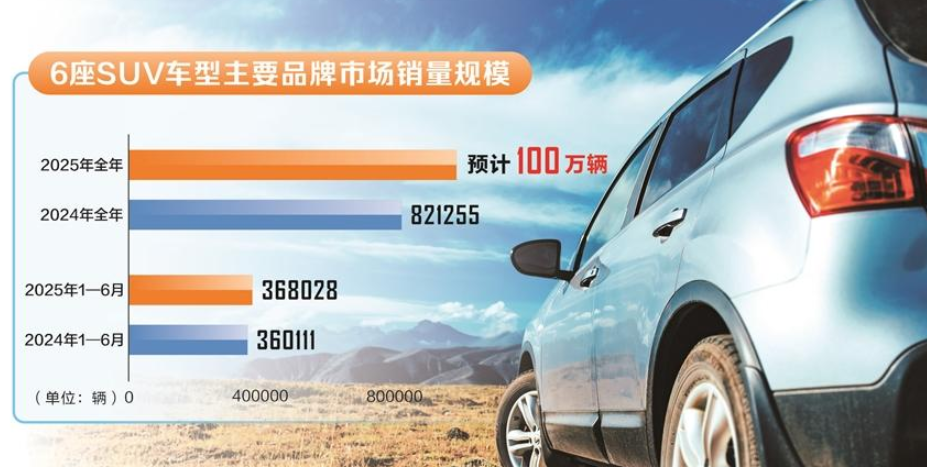
Core Insights - The six-seat SUV market in China is rapidly expanding, with new entrants like Leidao L90 and Li Auto i8, indicating a shift towards this segment as a potential growth area for automakers [1][5] - Consumer perceptions of six-seat SUVs are changing, with the third row now seen as a necessity for multi-child families and business travel, leading to increased competition among manufacturers [1][5] Market Dynamics - The introduction of the Tesla Model Y L at a competitive price of 339,000 yuan is a strategic move to capture market share in the six-seat SUV segment, reflecting intense price competition [3][4] - The six-seat SUV market is becoming a battleground for various automakers, with brands like NIO and AITO launching models that cater to family and business needs, indicating a strategic focus on market segmentation [5][6] Sales Trends - Sales data shows a slight increase in six-seat SUV sales, with 368,028 units sold in the first half of 2025, up 2.2% from the same period in 2024, and an expectation to reach around one million units for the year [5][6] - The second half of 2025 is anticipated to see a surge in six-seat SUV sales due to the launch of new models and increased demand during holiday travel periods [6] Competitive Landscape - The competition in the six-seat SUV market is intensifying, with various brands adopting different strategies, such as focusing on smart features and user experience to differentiate themselves [7][8] - The market is witnessing a shift towards more affordable models, with many six-seat SUVs now priced between 200,000 and 350,000 yuan, creating new opportunities in this segment [7][8] Technological Trends - The six-seat SUV market is characterized by multiple technological pathways, including pure electric, plug-in hybrid, and fuel options, with a notable shift towards pure electric models as battery technology improves [8] - Despite challenges related to range anxiety and charging infrastructure, advancements in technology are expected to enhance the appeal of pure electric six-seat SUVs for family users [8] Future Outlook - The entry of Tesla into the six-seat SUV market is seen as a potential catalyst for increased competition, with expectations that other brands will respond with comparable offerings [9] - To navigate potential market saturation, automakers are encouraged to adopt diversified strategies, focusing on cost optimization, product innovation, and enhancing brand loyalty [9]


六座SUV新车型密集上市家庭出行赛道激战正酣
Zheng Quan Shi Bao· 2025-08-21 18:32
Core Insights - The six-seat SUV market in China is rapidly expanding, with new entrants like Leidao L90 and Li Auto i8, indicating a shift in consumer perception towards the necessity of third-row seating [1][3] - Automakers are competing fiercely in this segment, aiming to capture market share by addressing the needs of multi-child families and business travel [1][5] Group 1: Market Dynamics - The six-seat SUV segment is seen as a potential "blue ocean" amidst intense competition, as companies seek to define and price new product types [1][5] - Sales data shows a slight increase in six-seat SUV sales from 360,111 units in H1 2024 to 368,028 units in H1 2025, with expectations to reach around one million units for the full year [4] - The introduction of new models and the upcoming holiday season are expected to drive further sales growth in the second half of the year [5] Group 2: Competitive Landscape - Tesla's Model Y L, priced at 339,000 yuan, aims to fill a gap in the pure electric six-seat SUV market, reflecting the intense pricing competition [2][3] - Domestic brands like NIO and Li Auto are leveraging unique features and technology to differentiate themselves from Tesla, indicating a strategic shift in the competitive landscape [3][8] - The market is witnessing a trend where six-seat SUVs are increasingly becoming a must-have for families, driven by the growing demand for spacious vehicles [3][5] Group 3: Technological and Strategic Considerations - The competition in the six-seat SUV market is not just about adding seats but also about enhancing overall vehicle performance, including range, space utilization, and charging convenience [6][7] - The market is diversifying with various powertrain options, including pure electric, hybrid, and fuel models, with a notable shift towards pure electric vehicles [7] - Companies are focusing on improving their overall capabilities, including technology integration and cost control, to remain competitive in this evolving market [6][8]