
农村供水保障

Search documents
全省农村供水保障工作推进会议召开
Da Zhong Ri Bao· 2026-02-25 00:59
Core Viewpoint - The meeting focused on advancing rural water supply security in the province, emphasizing the importance of ensuring safe drinking water in rural areas as per the directives of President Xi Jinping and the central government [2]. Group 1: Achievements and Responsibilities - The provincial government acknowledged the achievements in improving rural water quality through special actions in recent years [2]. - Rural water supply security is described as a long-term systematic project, requiring all levels of government and relevant parties to enhance their sense of responsibility and mission [2]. Group 2: Implementation Strategies - The meeting highlighted the need to establish a standardized water supply engineering system, implementing upgrades in thousands of stations and villages to ensure comprehensive access to water [2]. - Emphasis was placed on detailed county-level management, accelerating direct management to households to ensure stable and sustainable operation of water supply projects [2]. Group 3: Quality and Service Improvement - There is a call to enhance the capacity for ensuring water quality, focusing on the management of water sources, treated water, pipeline water, and terminal water to guarantee safety [2]. - The meeting stressed the importance of improving the quality and efficiency of standardized water supply services, enhancing the regulatory system, and utilizing digital empowerment to respond promptly to public concerns [2]. Group 4: Accountability and Oversight - The need to tighten responsibilities and strengthen supervision was emphasized, aiming to elevate the level of rural water supply security through rigorous and effective practices [2].
广东:全力保障春节期间农村供水稳定
Nan Fang Nong Cun Bao· 2026-02-07 04:03
Core Viewpoint - Guangdong province is taking comprehensive measures to ensure stable rural water supply during the upcoming Spring Festival, addressing the increased demand due to returning residents and dry weather conditions [2][5][47]. Group 1: Initiatives and Guidelines - The Guangdong Provincial Water Resources Department issued a proposal titled "Drinking Water Safety Participation and Quality Service Sharing" to mobilize social participation in water conservation and management [3][12]. - A practical guide titled "One Page of Emergency Water Supply for Rural Areas" was distributed to local management personnel, outlining key steps for water supply management [13][14]. - The department encourages water-saving practices, suggests staggered water usage times, and provides emergency contact information for water supply issues [8][10][18]. Group 2: Emergency Preparedness - The provincial government emphasizes the importance of preemptive measures, including monitoring water demand, increasing inspections, and preparing emergency supplies [14][29]. - Specific actions include full-chain inspections from water source to tap, ensuring water storage tanks are filled, and enhancing inspection frequency during the holiday [15][16][30]. - A systematic approach is being implemented to ensure all levels of government are coordinated in their emergency response efforts [20][22]. Group 3: Practical Implementation - Local governments, such as in Yunfu City, are conducting practical drills to test emergency response plans for scenarios like water source contamination and pipeline ruptures [35][36]. - Innovative solutions, such as the distribution of bottled emergency drinking water, are being implemented to meet peak demand [38]. - Ongoing infrastructure improvements are being made to ensure reliable water supply, with funding secured for upgrades to water treatment facilities and monitoring systems [41][42].


广东多举措保障春节期间农村供水稳定
Zhong Guo Xin Wen Wang· 2026-02-06 11:21
Core Viewpoint - Guangdong's water resources department has implemented multiple measures to ensure stable rural water supply during the Spring Festival, addressing the increased demand due to returning residents and dry weather conditions [1][2]. Group 1: Measures for Water Supply Stability - The Guangdong Provincial Water Resources Department has issued an initiative titled "Drinking Water Safety Participation and Quality Service Sharing" to enhance rural water supply security during the Spring Festival [1]. - A practical guide titled "One-Page Emergency Guarantee for Rural Water Supply" has been distributed to town and village engineering management personnel to assist in emergency situations [1]. - The department is mobilizing efforts from top to bottom to ensure a stable and orderly rural water supply during the holiday period, with a 24-hour service hotline available for water supply issues [1]. Group 2: Emergency Preparedness and Response - The department has developed a comprehensive emergency response plan, including a thorough inspection and targeted reinforcement of frost protection in northern Guangdong [2]. - A rapid response and operational emergency water supply guarantee system has been established, with a focus on assessing water demand from returning populations and identifying areas of water supply tension [2]. - Water source scheduling and emergency preparations are being prioritized, with strict duty inspection systems and adequate repair resources and materials in place to ensure stable and safe water supply [2]. Group 3: Infrastructure Improvements - In the lead-up to the Spring Festival, various regions in Guangdong are taking advantage of the "winter repair" period to implement water supply facility renovation projects, ensuring that residents have access to safe drinking water before the holiday [2].
全省农村自来水普及率超95%
Xin Lang Cai Jing· 2026-02-03 19:47
Core Insights - The rural tap water coverage in Guizhou Province has reached 95.15%, marking a significant improvement in water supply security for rural populations [1][2] Group 1: Current Status and Challenges - Guizhou's rural water supply system faces challenges due to the karst topography and uneven distribution of water resources, resulting in lower overall scale compared to the national average [1] - Some areas experience seasonal water shortages and unstable water quality, indicating the need for further improvements in management and infrastructure [1] Group 2: Initiatives and Achievements - The province is implementing a "3+1" model to enhance rural water supply, which includes urban-rural integration, large-scale centralized water supply, and localized small-scale projects [1] - A total of 357 projects for urban-rural integrated and large-scale rural water supply have been initiated, with 250 completed, benefiting 4.02 million rural residents [2] - The rural tap water coverage has increased by 4.95 percentage points since the end of the 13th Five-Year Plan, with the proportion of the population served by large-scale projects rising to 50.81%, an increase of 30.65 percentage points [2] Group 3: Management and Maintenance Improvements - Since the 14th Five-Year Plan, 28,200 rural water supply projects have been maintained, and 2,000 water quality improvement projects have been completed [2] - The province has established a professional management model for rural water supply, with 64 counties achieving unified management, enhancing service efficiency and water safety for residents [2]
从“有水喝”到“喝好水”,威海筑牢农村饮水安全生命线
Qi Lu Wan Bao· 2026-01-30 03:19
Core Viewpoint - Rural water supply security is crucial for the well-being of residents, rural revitalization, and socio-economic development, with a focus on improving water quality and management systems in Weihai City [1][2] Group 1: Rural Water Supply Infrastructure - Weihai City has implemented a "3+1" standardized construction and management model for rural water supply, which includes urban-rural integration, centralized supply scale, and standardized village supply [1] - The city has optimized the layout of water supply projects, transitioning from a "dispersed" to a "centralized" supply model, enhancing water supply capacity and risk resilience [1] - Key projects include the expansion of the Nanhai New District Water Plant and the Gangxi Water Plant, significantly improving supply capabilities [1] Group 2: Management and Maintenance Mechanisms - A new management mechanism has been established, shifting from traditional to professional management, with the formation of rural water supply management companies in all districts [1] - The "1+7+N" management model has been created, involving one city-level supervisory body, seven county-level management companies, and multiple town-level service stations for operational management [1] - As of now, county-level management companies have taken over 2,526 villages, effectively addressing the management challenges [1] Group 3: Water Quality Assurance - Weihai City is advancing from "having water" to "having good water" by enhancing water quality assurance through a comprehensive system from source to tap [2] - Actions include optimizing the protection zones for 1,753 rural drinking water sources and improving environmental conditions [2] - A three-tier water quality testing network has been established, ensuring timely rectification of any identified issues to guarantee safe drinking water for rural residents [2] Group 4: Future Plans - The Weihai Water Authority plans to continue deepening the "3+1" model to consolidate and enhance rural water supply construction and management outcomes [2] - The goal is to ensure that more residents have access to safe, reliable, and high-quality drinking water [2]
从"村村通"到"优质供",德州市2025年"三网工程"发力
Qi Lu Wan Bao· 2026-01-29 08:27
Core Viewpoint - The news highlights the development goals and achievements of the water supply sector in Dezhou for the year 2025, focusing on enhancing rural water supply as a key livelihood project to support poverty alleviation and rural revitalization efforts [3][4]. Group 1: Water Supply Development Goals - The Dezhou Water Resources Bureau aims for "village-to-village, household-to-household, continuous supply, and quality supply" by 2025, implementing a comprehensive approach through the "three network projects" [3]. - The projects include the construction of new reservoirs and water treatment plants, as well as the optimization of existing water supply networks to ensure stable and qualified water quality [3]. Group 2: Infrastructure Enhancements - Four new reservoirs will be built, including Pingyuan Yangzhuang Reservoir and Ningjin Second Reservoir, enhancing the existing 18 reservoirs to create a more robust water source system [3]. - Two new large-scale water plants will be constructed in Wucheng and Xiajin, with upgrades to existing plants to improve water quality, alongside the installation of 70 kilometers of main pipelines and the renovation of water supply facilities in 473 villages [3]. Group 3: Service Quality Improvement - The county management mechanism is being strengthened with six key management and service mechanisms, including water quality monitoring and emergency supply coordination, to ensure effective service delivery [4]. - A smart monitoring system has been established to track water volume, pressure, and quality 24/7, promoting transparency and community oversight through a public monitoring system [4].
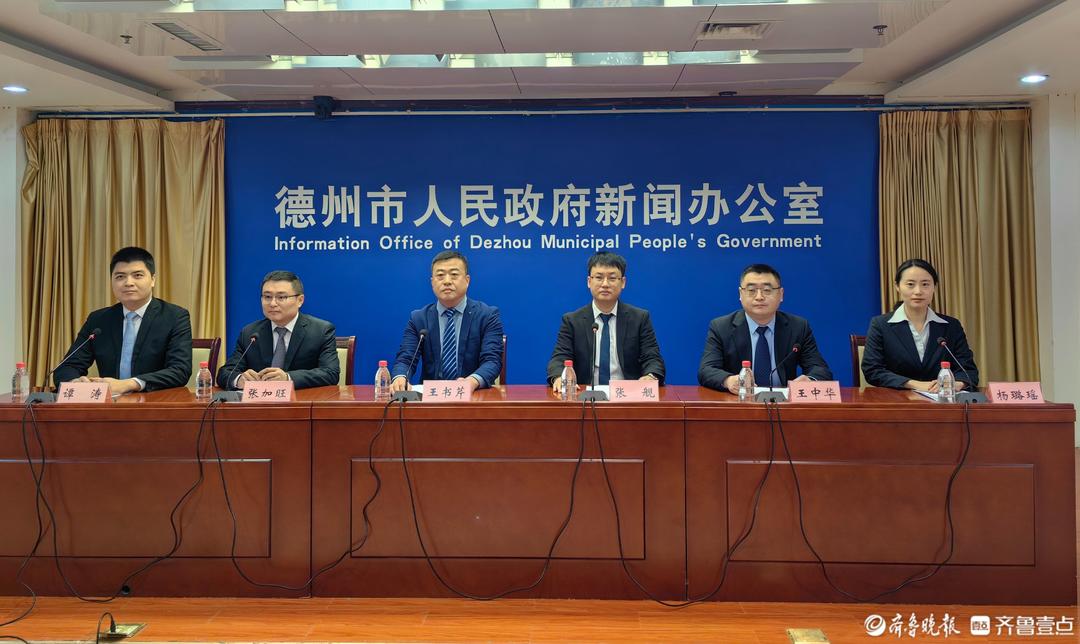
惠及群众6万人,潍坊市水利局将提升农村供水保障能力
Qi Lu Wan Bao· 2026-01-22 14:11
Core Viewpoint - The Weifang Municipal Government is set to implement 12 new livelihood projects by 2026, focusing on enhancing rural water supply capabilities, which will benefit approximately 60,000 residents [1] Group 1: Water Supply Improvement Initiatives - The Weifang Water Resources Bureau aims to upgrade water supply facilities in 100 villages, addressing aging and leaking water supply networks through regular and periodic renovations [1] - The city has achieved over 96% coverage in large-scale water supply, with high levels of supply assurance, water quality compliance, and public satisfaction [1] Group 2: Project Implementation Strategy - A comprehensive list of villages needing pipeline renovations will be established, prioritizing urgent cases to ensure all necessary upgrades are completed without leaving any hidden risks [2] - Funding will be secured through central and provincial subsidies, with continued municipal support, and the use of local special bonds and social funds for project construction [2] - Strict quality control measures will be enforced, including adherence to design specifications, careful selection of construction teams, material quality checks, and thorough project acceptance processes [2] - A timeline for project execution has been set, with specific milestones for investigation, planning, construction commencement, and completion throughout the year [2]
密云所有水毁修复项目将于5月15日前全面完工
Xin Lang Cai Jing· 2026-01-07 17:12
Core Viewpoint - The article highlights the efforts of the Miyun District Water Authority to enhance rural water supply safety and disaster recovery, aiming for completion of all water damage repair projects by May 15 this year, thereby supporting rural revitalization and high-quality development [1][2] Group 1: Project Completion and Infrastructure Development - All water damage repair projects are set to be completed by May 15, with standardized construction to improve disaster resilience and water supply security [1] - The ongoing construction covers 10 townships and 107 administrative villages, including the updating of 102 water source wells, reconstruction of 101 water supply stations, and replacement of 117 kilometers of main pipelines [1] - The repair projects adhere to principles of "high standards, strong resilience, and heavy protection," considering extreme weather in design, using durable materials, and employing advanced technologies [1] Group 2: Future Measures for Water Supply Security - For the 2026 rural water supply security initiatives, the focus will be on "building systems, raising standards, strengthening management, and optimizing services" [1] - The district plans to implement standardized construction for 30 water supply stations to enhance water supply reliability in mountainous villages [1] Group 3: Water Quality and Safety Standards - The Miyun District will enhance water quality and safety standards by strengthening oversight from "source to tap" and increasing inspections of water sources, supply stations, and village pipelines [2] - Continuous monitoring of drinking water disinfection equipment will be conducted to maintain a high level of water quality compliance [2] - The district aims to establish a long-term management mechanism and improve water service quality through a professional management model combined with local participation [2]
攻坚通“梗阻”清流润农家——湖南省长沙市全力推动农村供水高质量发展
Zhong Guo Jing Ji Wang· 2025-12-19 13:16
Core Viewpoint - The article highlights the significant improvements in rural water supply in Changsha, Hunan Province, emphasizing the successful implementation of water supply projects that enhance the quality of life for residents and support rural revitalization efforts [1][2][6]. Group 1: Rural Water Supply Improvements - Changsha has extended urban water supply networks and rural water plants, covering a population of 3.28 million, with a rural tap water penetration rate of 96.15% [1]. - The rural safe drinking water quality improvement project initiated this year has connected all 1,080 households in Shuangxing Village to tap water, enhancing convenience and safety [2]. - The scale of centralized water supply projects has increased, with coverage rates rising from 88.30% to 90.42% since 2021 [2]. Group 2: Infrastructure Development - The Huangcai Water Plant, with a daily processing capacity of 20,000 tons, and a 50.3 km water distribution network are under construction to improve water supply capabilities for approximately 200,000 residents [3]. - A total of 30 small-scale water supply projects have been standardized, with 230 water operators and 100% equipped with purification and disinfection facilities, aiming for full compliance by 2028 [3]. Group 3: Service Efficiency - The establishment of a "30-minute water service circle" in Changsha County has improved service efficiency, allowing for quick repairs and customer service [4]. - A digital monitoring platform has been implemented to manage the entire water supply process, enhancing operational efficiency and response times to issues [5]. Group 4: Financial and Operational Strategies - The construction of the Jiaohua Reservoir, a major water conservancy project with a total investment of 5.907 billion yuan, aims to provide an annual water supply of approximately 86.2 million cubic meters [10]. - Changsha is exploring a new financing mechanism that combines government guidance with market participation to support rural water supply projects, successfully securing 770 million yuan in bank loans [11]. - The transfer of rural water supply operations to specialized companies aims to enhance management efficiency and service quality, with over 1,192 km of pipelines laid to serve 26,000 rural households [11].
陕西深入实施农村供水保障工程
Shan Xi Ri Bao· 2025-12-16 22:38
Core Insights - The rural water supply improvement in Longwu County exemplifies the effective implementation of water supply security projects in Shaanxi Province [2][4][11] Group 1: Infrastructure Development - Longwu County initiated a small-scale water diversion project, connecting 97 villages and significantly enhancing water supply capacity [1][3] - The rural tap water coverage in Longwu County has reached 99.96%, with a scale water supply project coverage of 97.1% [3] - The construction of 813.31 kilometers of pipelines has replaced the previous scattered water sources, ensuring stable water quality and supply [3] Group 2: Management and Operations - Shaanxi Province has established a clear and professional rural water supply management system, focusing on government oversight and enterprise operation [2][4] - The integration of smart water management systems allows for real-time monitoring of water quality and supply, enhancing operational efficiency [7][10] Group 3: Community Impact - Improved water supply has positively affected local agriculture and businesses, as seen in the flourishing tea gardens and increased customer flow in rural guesthouses [3] - The implementation of a unified management system in rural water supply aims to provide consistent quality and service across regions [8][9]