
农村供水

Search documents
全力保障节日期间农村供水安全
Xin Lang Cai Jing· 2026-02-24 18:21
Core Viewpoint - The water supply department of Huangyuan County is actively conducting emergency drills and inspections to ensure stable and safe water supply during the Spring Festival period [1] Group 1: Emergency Preparedness - The county's water supply department and rural water company are focusing on 9 townships, 80 water sources, and 67 rural water supply projects to ensure water quality and supply reliability during the holiday [1] - Emergency drills are being conducted to enhance the preparedness for water supply issues during the festive season [1] Group 2: Water Source Management - A special inspection of water sources is being carried out, focusing on the surrounding environment and the integrity of protective facilities [1] - The management of water sources is being standardized to address any anomalies promptly, ensuring the first line of defense for drinking water safety is maintained [1] Group 3: Pipeline Maintenance - Regular inspections of water supply pipelines are being conducted, combining technical monitoring with manual checks to identify and rectify issues in old and remote pipelines [1] - Increased inspection frequency in key areas is being implemented to mitigate risks of pipeline freezing due to low temperatures [1] Group 4: Emergency Response Capability - The county is enhancing its emergency response capabilities by preparing repair equipment and materials, and forming specialized emergency repair teams [1] - A 24-hour duty system is in place to ensure rapid response and efficient handling of any unexpected situations, guaranteeing normal water usage for residents during the holiday [1]
广东多举措保障春节期间农村供水稳定
Zhong Guo Xin Wen Wang· 2026-02-06 11:21
Core Viewpoint - Guangdong's water resources department has implemented multiple measures to ensure stable rural water supply during the Spring Festival, addressing the increased demand due to returning residents and dry weather conditions [1][2]. Group 1: Measures for Water Supply Stability - The Guangdong Provincial Water Resources Department has issued an initiative titled "Drinking Water Safety Participation and Quality Service Sharing" to enhance rural water supply security during the Spring Festival [1]. - A practical guide titled "One-Page Emergency Guarantee for Rural Water Supply" has been distributed to town and village engineering management personnel to assist in emergency situations [1]. - The department is mobilizing efforts from top to bottom to ensure a stable and orderly rural water supply during the holiday period, with a 24-hour service hotline available for water supply issues [1]. Group 2: Emergency Preparedness and Response - The department has developed a comprehensive emergency response plan, including a thorough inspection and targeted reinforcement of frost protection in northern Guangdong [2]. - A rapid response and operational emergency water supply guarantee system has been established, with a focus on assessing water demand from returning populations and identifying areas of water supply tension [2]. - Water source scheduling and emergency preparations are being prioritized, with strict duty inspection systems and adequate repair resources and materials in place to ensure stable and safe water supply [2]. Group 3: Infrastructure Improvements - In the lead-up to the Spring Festival, various regions in Guangdong are taking advantage of the "winter repair" period to implement water supply facility renovation projects, ensuring that residents have access to safe drinking water before the holiday [2].
贵州:深入推行农村供水“3+1”标准化建设和管护模式
Xin Lang Cai Jing· 2026-02-03 04:22
Core Viewpoint - During the "14th Five-Year Plan" period, Guizhou will implement the rural water supply "3+1" standardized construction and management model to enhance the quality of rural water supply, transitioning from merely having water supply to ensuring its quality, thereby providing robust support for modern living conditions in rural areas [1] Group 1: Engineering Quality Improvement - The initiative aims to promote urban-rural integrated water supply and scale up rural water supply, focusing on standardizing and upgrading existing small centralized water supply projects [1] - The goal is to maintain a rural tap water coverage rate of over 95% and increase the proportion of the rural population served by large-scale projects to over 60% [1] Group 2: Management and Maintenance Efficiency - The plan includes enhancing the operation and maintenance efficiency of rural water supply projects, ensuring all counties achieve unified management [1] - Responsibilities will be reinforced for various levels of government, industry departments, and water supply units, alongside the establishment of a water pricing and fee collection mechanism to promote sustainable operation [1] - In areas with conditions, the construction of smart rural water supply systems will be advanced to improve digital management and service levels [1]
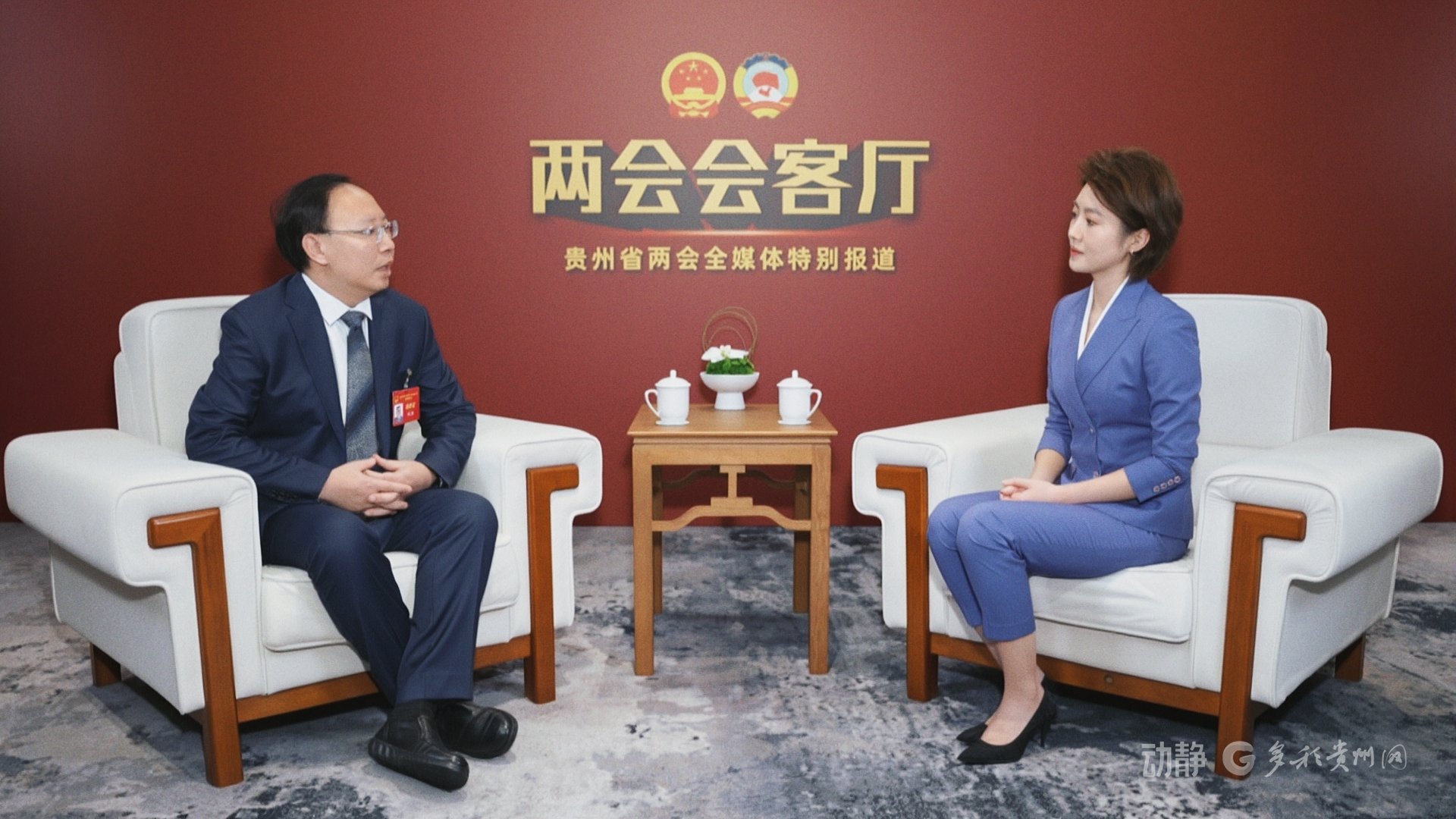
两会会客厅丨贵州农村规模化供水覆盖率提升至50%以上
Xin Lang Cai Jing· 2026-01-28 16:48
Group 1 - The core viewpoint of the article highlights the achievements and future plans of Guizhou Province in water supply and irrigation during the "14th Five-Year Plan" period, emphasizing the significant improvements in rural water supply and infrastructure [1][2]. Group 2 - Guizhou Province has constructed over 2,800 kilometers of backbone water supply and distribution networks, increasing water supply capacity by 2.9 billion cubic meters and improving irrigation areas by over 4.33 million acres [1]. - The rural large-scale water supply coverage rate has increased from 20% at the end of the "13th Five-Year Plan" to over 50%, providing rural residents with access to tap water of the same quality as urban areas [1]. - The next steps include implementing a five-year action plan to enhance rural water supply, aiming for a coverage rate of no less than 53% and maintaining a tap water penetration rate of over 95% [2].

靶向施治让群众喝上“放心水”
Zhong Yang Ji Wei Guo Jia Jian Wei Wang Zhan· 2026-01-14 01:47
Core Viewpoint - The news emphasizes the importance of rural water supply for the well-being of citizens and its role in promoting comprehensive rural revitalization in Zhejiang Province, particularly in Kaihua County, where efforts are being made to enhance water quality and governance [1]. Group 1: Responsibility and Supervision - Kaihua County's Discipline Inspection and Supervision Commission has integrated rural water supply issues into its supervision checklist, establishing a specialized supervision plan to clarify responsibilities among local government and relevant departments [1]. - A three-tiered inspection mechanism has been established, involving county-level coordination, town-level self-inspection, and verification by guiding teams to identify risks in rural water supply [2]. - The county water resources bureau has formed five working groups to investigate and track the resolution of 47 identified issues and 536 risk points related to rural water supply [1][2]. Group 2: Dynamic Monitoring and Corruption Prevention - The county is focusing on dynamic supervision of water projects and facility maintenance, with the establishment of town-level water supply management stations and a dynamic identification mechanism for supervisory personnel [2]. - Investigations have been initiated into five individuals for issues related to corruption and mismanagement in water supply, highlighting the commitment to addressing micro-corruption in the sector [2]. - Regular monitoring and assessment of water sources and environmental conditions are being conducted to eliminate potential pollution sources and ensure real-time water quality monitoring [2][3]. Group 3: Long-term Mechanisms and Quality Assurance - A meeting was convened to address issues in rural water supply management, resulting in the development of a work plan and a regular consultation mechanism to tackle persistent problems [3]. - The county has issued disciplinary recommendations to the water resources bureau to promote educational activities aimed at improving governance and addressing identified risks [3]. - Efforts are being made to establish emergency response mechanisms for rural water supply management, ensuring efficient multi-departmental collaboration to address public concerns regarding water access [3].
装水表的钱要算清(执纪者说)
Ren Min Ri Bao· 2025-09-16 00:35
Core Viewpoint - Rural water supply is a crucial public welfare initiative that directly impacts the well-being of citizens, yet the marketization of household water supply facilities remains low, leading to reliance on local water management units for maintenance and replacement [1] Group 1: Issues in Rural Water Supply - The installation fees for water meters vary significantly, causing public dissatisfaction due to inconsistent charging standards [1] - There is a need for clear accounting of water meter installation costs to ensure transparency and fairness in pricing [1] Group 2: Regulatory Measures - The city’s disciplinary inspection and supervision agencies will enhance collaboration with relevant industry departments to broaden channels for public and media supervision [1] - Proactive measures will be taken to address early signs of issues and to combat corruption and misconduct vigorously [1] - The aim is to ensure that all charges related to public welfare operate transparently, thereby reducing opportunities for financial leakage [1]
水利部召开农村供水“3+1”标准化建设和管护现场推进会
Shui Li Bu Wang Zhan· 2025-04-23 07:42
Core Points - The Ministry of Water Resources emphasizes the importance of rural water supply for public welfare and has introduced the "3+1" standardized construction and management model for rural water supply [1][2] - The model focuses on integrated urban-rural water supply, large-scale centralized water supply, and localized small-scale water supply projects, along with county-level management and specialized maintenance [1][2] - Achievements include a national rural tap water coverage rate of 94%, with 65% of the rural population covered by large-scale water supply projects, and improved water security for 220 million rural residents [1] Summary by Sections Implementation Goals - The goal is to achieve a rural tap water coverage rate of 96% by 2025, with 69% of the rural population covered by large-scale water supply projects and 60% of counties under unified management [2] - Focus areas include legislative measures, water pricing, investment financing, and the promotion of new technologies to establish a high-quality development system for rural water supply [2] Conference Insights - The conference included site visits to various water supply facilities in Suichang County, highlighting the practical implementation of the "3+1" model [2] - Representatives from five provinces and various water management entities participated in discussions, sharing experiences and strategies for improving rural water supply [2]