农民养老金

Search documents
建议取消中考分流!建议70岁以上农民养老金提至500!建议允许60岁以上农民工继续务工!两会代表建言献策,每条都是真正的民生关切!
新浪财经· 2026-03-12 09:13
Group 1 - The core viewpoint of the article emphasizes the need for educational reform, particularly the suggestion to abolish the high school entrance examination (Zhongkao) as a means of student selection, arguing that a child's potential should not be determined by a few exams [2][4] - The article highlights the importance of allowing children to develop gradually and to focus on fostering a positive and confident personality rather than merely academic achievements [4] Group 2 - The article discusses the plight of elderly farmers, particularly those over 70 years old, who receive inadequate pensions, often only around 100 yuan per month, leading to financial struggles and the need to continue working [7][8] - A proposal is made to gradually increase the basic pension for farmers over 70 to 500 yuan per month over three years, which would cover essential living expenses and reduce poverty among the elderly [8] Group 3 - The article addresses the challenges faced by elderly migrant workers over 60, who are often denied job opportunities due to their age despite having experience and physical capability [11] - A recommendation is made to create a job platform for older migrant workers and ensure they have access to necessary insurance protections [11] Group 4 - The article presents a proposal to eliminate shared public area calculations in real estate sales, advocating for a clearer understanding of actual usable space for consumers [13][14] Group 5 - The article highlights the need for support for families with children suffering from cerebral palsy, suggesting the introduction of special care subsidies and respite services to alleviate the burden on caregivers [17][18]


给农民涨养老金,只调缴费上限不够
经济观察报· 2026-01-12 14:31
Core Viewpoint - The article discusses the challenges faced by rural residents in increasing their pension contributions, highlighting the disparity between farmers' pensions and those of urban workers, and the need for coordinated efforts to improve pension levels through increased personal income, local and central government subsidies [2][4]. Group 1: Pension Contribution Challenges - Recent announcements from provinces like Yunnan, Anhui, and Guizhou indicate a new round of increases in the upper limits for rural residents' pension contributions, which is expected to encourage higher personal contributions for better retirement benefits [2][3]. - In Yunnan, the required monthly contribution to meet the upper limit exceeds 50% of the average disposable income of rural residents, making it difficult for many to afford higher contributions [3][4]. - Approximately 80% of villagers opt for the lowest contribution tier, which is typically set at 300 yuan per year, indicating a significant reluctance to increase contributions despite policy changes [3][4]. Group 2: Pension Disparities - The average monthly pension for farmers in 2023 is 214 yuan, compared to 3,162 yuan for enterprise retirees, illustrating a substantial gap attributed to the "more pay, more benefits" principle [2][4]. - The central government plans to increase its monthly subsidy for farmers' pensions from 93 yuan to 143 yuan by 2025, marking the highest increase since the policy's implementation [4][5]. - The financial support for farmers' pensions is significantly lower than that for civil servants and enterprise employees, suggesting room for further increases in subsidies to enhance pension levels [4][5]. Group 3: Economic Implications - Research indicates that improving farmers' pension levels can have a multiplier effect on consumption and macroeconomic growth, suggesting that pension subsidies are not merely welfare but can enhance fiscal sustainability [5]. - The article emphasizes that while raising the contribution limits can positively impact average pension levels, additional measures are necessary to ensure that policy benefits reach a larger elderly population [5].

给农民涨养老金,只调缴费上限不够
Jing Ji Guan Cha Wang· 2026-01-12 13:43
Core Viewpoint - Recent announcements from several provinces in China indicate a new round of increases in the maximum contribution levels for rural residents' basic pension insurance, aimed at allowing wealthier individuals to enhance their contributions for higher retirement benefits [1] Group 1: Policy Changes and Impacts - Provinces such as Yunnan, Anhui, Guizhou, and Liaoning have declared that the maximum contribution levels for rural pensions will rise, marking a significant change after several years [1] - The policy aims to enable individuals who contribute at the maximum level for 15 years to receive monthly pensions exceeding 1000 yuan upon retirement, compared to the current average of 214 yuan per month for rural pensions [1] - The disparity between rural pensions and enterprise pensions is attributed to the "more pay, more benefits" principle, with rural contributions historically being low [1] Group 2: Challenges in Contribution - Many residents face challenges in increasing their contributions; for instance, in Yunnan, the monthly contribution at the upper limit is approximately 833 yuan, which exceeds 50% of the average disposable income for rural residents [2] - A survey indicated that around 80% of villagers opt for the minimum contribution level, which is typically 300 yuan per year in most provinces [2] - The lowest 20% income group has an average annual disposable income of 9542 yuan, equating to about 795 yuan per month, highlighting the difficulty in raising contribution levels without increased income [2] Group 3: Financial Support and Subsidies - To encourage higher contributions, provinces have implemented matching subsidy policies; for example, in Liaoning, government subsidies increase with higher personal contributions [1] - Local financial support varies significantly, with cities like Beijing and Shanghai providing over 800 yuan per month, while many provinces offer less than 100 yuan [3] - The central government has been gradually increasing its financial subsidies for rural pensions, with the standard rising from 93 yuan to 143 yuan per month between 2021 and 2025, indicating potential for further increases [3] Group 4: Economic Implications - Research suggests that improving rural pension levels can have a multiplier effect on consumption and macroeconomic growth, indicating that pension subsidies are not merely welfare but can enhance fiscal sustainability [5] - While raising the contribution limits is a positive step towards improving average rural pension levels, further measures are necessary to ensure that the benefits reach a larger elderly population [5]
提高农民养老金,不能只靠个人缴费“抬上限”
Xin Lang Cai Jing· 2026-01-11 22:25
Core Viewpoint - The article emphasizes that addressing the pension dilemma for farmers requires enhancing the public financial safety net ("floor") rather than merely raising the individual contribution ceiling ("ceiling") [1] Group 1: Pension Contribution Changes - Several regions, including Yunnan, Anhui, Guizhou, and Liaoning, are set to increase the maximum contribution levels for rural residents' basic pension insurance by 2026, marking a significant rise after several years [2] - The maximum contribution in Liaoning and Guizhou will increase from 3,000 yuan/year to 5,000 yuan/year and 6,000 yuan/year respectively, while Yunnan will raise it to 10,000 yuan/year, becoming the first province to exceed this threshold [2] Group 2: Challenges in Pension Contributions - The primary issue with farmers' pensions is not the contribution ceiling but rather that many individuals cannot afford to contribute significantly due to income volatility and heavy family burdens [3] - Emphasizing individual contributions may weaken the public pension system's fiscal responsibility, indicating that enhancing the "floor" is more critical than raising the "ceiling" [3] Group 3: Recommendations for Improvement - The article suggests prioritizing the increase of the national minimum pension standard and establishing a more stable dynamic adjustment mechanism [3] - It advocates for optimizing subsidies to encourage more individuals to move from the lowest contribution tier to a more manageable middle tier, while also improving support for low-income groups [3][4] - There is a need to streamline processes and enhance transparency to reduce instances where eligible individuals do not receive benefits [4] Group 4: Addressing Labor Mobility and Service Gaps - The article highlights the importance of improving the transition process for migrant workers between rural and urban pension systems to minimize losses during the switch [4] - It calls for a collaborative mechanism for new employment forms, such as gig workers, to ensure fair distribution of pension responsibilities [4] - The integration of pension benefits with rural elderly care services and healthcare accessibility is essential to enhance the quality of life for the elderly [4] Group 5: Sustainability and Equity - The design of the rural residents' basic pension insurance should reflect a balance between public safety nets and reasonable incentives, considering the varying payment capabilities of rural residents [5] - Local governments should assess their fiscal capacity when raising contribution ceilings to avoid undue pressure on individuals [5] - Encouraging collective economic contributions and exploring a combination of support from collective, government, and individual sources can help more people maintain stable and long-term contributions [5]
多地农民养老金缴费上限迎来新一轮上涨
经济观察报· 2026-01-10 13:25
Core Viewpoint - The article highlights the significant disparity between the pension levels of farmers and urban retirees, emphasizing the recent adjustments in the contribution limits for rural pensions aimed at improving the financial security of farmers in retirement [1][2][3]. Summary by Sections Pension Disparity - In 2023, the average monthly pension for urban retirees was 3162 yuan, while for farmers it was only 214 yuan, a difference of 14.8 times [2]. Recent Changes in Contribution Limits - Several provinces, including Yunnan, Anhui, Guizhou, and Liaoning, announced increases in the maximum contribution limits for rural pensions, with Yunnan's limit reaching 10,000 yuan per year, the highest in the country [2][15]. - The new contribution limits are designed to encourage higher personal contributions, which can significantly enhance future pension benefits [7][10]. Structure of Rural Pensions - Rural pensions consist of a basic pension funded by government subsidies and a personal account pension based on individual contributions. The contribution limits set a cap on how much individuals can contribute annually [2][3]. - The increase in contribution limits is closely tied to the goal of raising the average pension level for farmers, addressing the long-standing issue of low pension benefits [7][8]. Factors Influencing Contribution Choices - Many residents still prefer to contribute at lower levels due to immediate financial constraints, despite the potential long-term benefits of higher contributions [18][21]. - Experts suggest that improving current income levels and increasing awareness about the pension system could encourage more individuals to opt for higher contribution tiers [3][21]. Government Policy and Future Outlook - The adjustments in contribution limits align with government policies aimed at enhancing social security and addressing the needs of an aging population [13][16]. - There is a likelihood that more provinces will follow suit in raising contribution limits, as many still have room for adjustments based on local economic conditions [16].
多地农民养老金缴费上限迎来新一轮上涨
Sou Hu Cai Jing· 2026-01-10 10:16
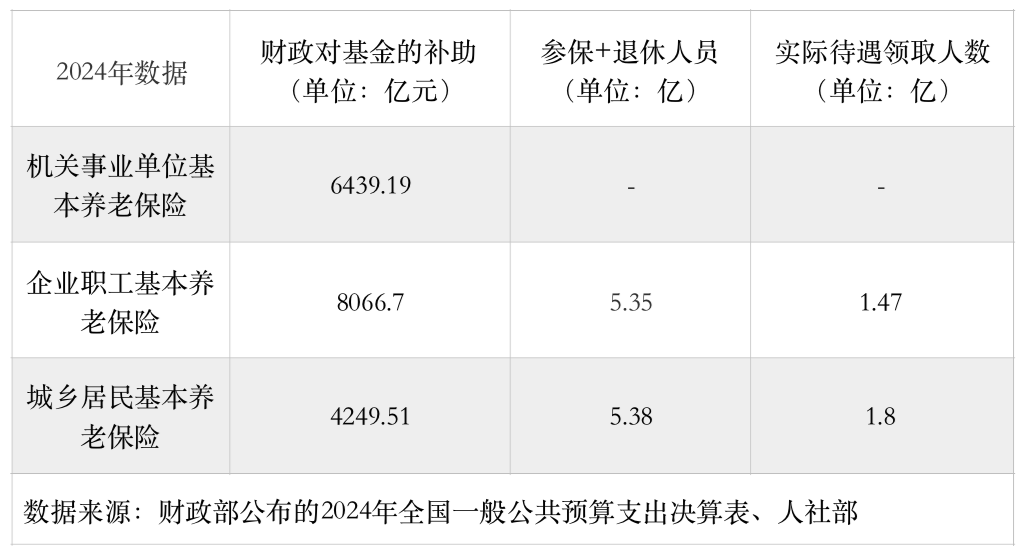
Core Viewpoint - Recent announcements from provinces such as Yunnan, Anhui, Guizhou, and Liaoning indicate that the maximum contribution levels for rural residents' basic pension insurance will increase by 2026, marking a significant rise after several years of stagnation [2][8]. Group 1: Pension Contribution Changes - The rural pension system consists of a "basic pension + personal account pension," with the basic pension funded by central and local government subsidies, while personal account pensions are primarily derived from individual contributions [2]. - Contribution limits for rural pensions have been set to rise significantly, with Yunnan's limit reaching 10,000 yuan per year, making it the first province to exceed this threshold [2][9]. - The average pension for rural residents remains significantly lower than that of urban retirees, with the average monthly pension for rural residents at 214 yuan compared to 3,162 yuan for urban retirees, a disparity of 14.8 times [2][3]. Group 2: Implications of Contribution Increases - The increase in contribution limits aims to enhance the average pension levels for rural residents, responding to the growing income levels of urban and rural residents [8][12]. - Experts suggest that higher contribution levels can lead to better retirement benefits, but many residents still prefer lower contribution tiers due to immediate financial constraints [4][17]. - The adjustment of contribution limits is seen as a necessary step to align with the rising disposable income of residents and to address the long-standing issue of low pension levels [16][19]. Group 3: Participation and Awareness - As of 2024, approximately 5.4 billion people are enrolled in the rural pension system, with 1.8 billion actually receiving benefits [7]. - Despite the rising contribution limits, many residents continue to opt for the lowest contribution levels, with about 80% of rural participants choosing the minimum tier [18][19]. - There is a need for increased awareness and understanding of the pension system among residents, as many are concerned about the reliability of future pension payouts [20].