
冰山模型

Search documents
边加谷歌边减英伟达!百年巨头柏基披露去年四季度大动作
Ge Long Hui· 2026-02-10 03:42
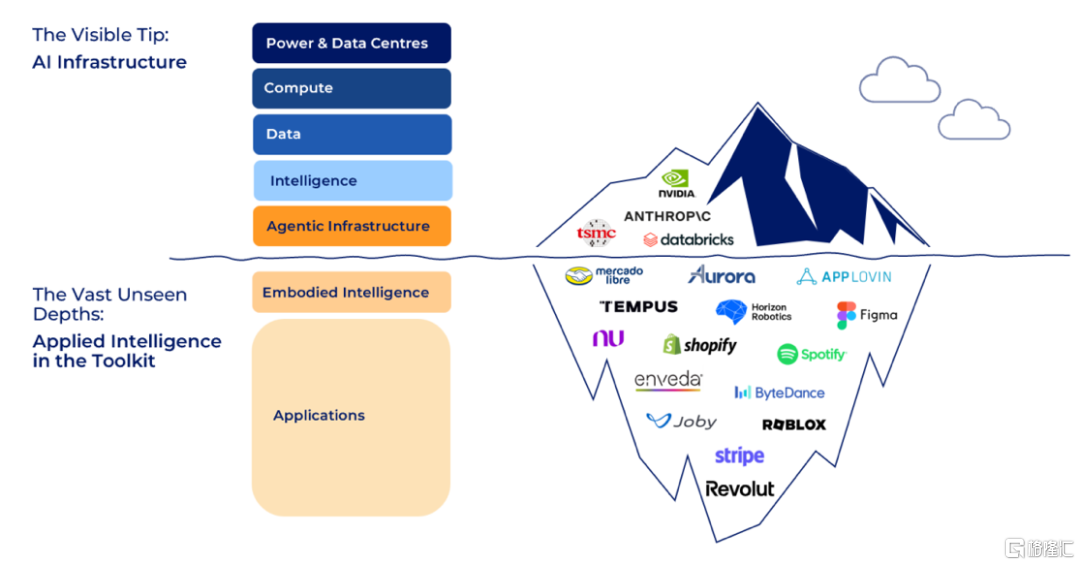
Summary of Key Points Core Viewpoint - Baillie Gifford's total holdings value decreased to $120.34 billion in Q4 2025, down approximately 10.8% from $135 billion in Q3 2025, primarily due to a net selling strategy and some growth stocks experiencing high-level corrections [1][2]. Group 1: Portfolio Adjustments - Nvidia remains the largest holding despite a 5.76% reduction in shares, accounting for 6.80% of the portfolio [3]. - Mercado Libre saw a 4.95% increase in holdings, raising its share to 5.83%, solidifying its position as a cornerstone of the portfolio [3]. - The top five holdings also include Amazon, Shopify, and Sea Ltd, with the top ten holdings comprising 43.4% of the total portfolio [4]. Group 2: Notable Transactions - Significant reductions were made in Amazon, Shopify, Meta, and Cloudflare, while Google saw a notable increase in holdings by 166%, reflecting a strategic shift towards AI capabilities [5][6]. - Baillie Gifford's investment in Google is valued at approximately $1.7 billion post-increase [6]. Group 3: Investment Philosophy and Trends - The investment team emphasizes the importance of adapting to the AI wave, suggesting that companies must pivot quickly to meet new market demands [9][10][12]. - The transition to AI is viewed as a new paradigm shift, with potential for significant growth opportunities as new companies emerge [14][15]. - The focus is on both "AI core" companies and those using AI as a tool to enhance existing services [21][24]. Group 4: Insights on China and Platform Companies - The sentiment in China has shifted, with a recognition of the country's potential to foster visionary entrepreneurs, particularly in the battery sector where CATL holds a significant market share [25][26]. - Platform companies are highlighted for their ability to create value through network effects and adaptability, requiring a long-term investment perspective [28]. Group 5: Non-Public Company Investments - Baillie Gifford has committed over £6 billion to non-public companies since 2012, recognizing the increasing duration of private company ownership before IPOs [31][32]. - The firm holds significant stakes in companies like SpaceX and ByteDance, which have shown substantial revenue growth compared to public market indices [33]. Group 6: Portfolio Construction Approach - The investment strategy is bottom-up, focusing on global transformations rather than specific trends or technologies [34]. - The portfolio includes a diverse range of companies across various sectors, with ongoing adjustments to capitalize on emerging growth opportunities [38].




文章推荐:深度解读--健康保险政策(2025年10月)|保险学术前沿
13个精算师· 2026-01-18 02:03
Core Insights - The article discusses the findings from the Health Policy Alliance's report on health insurance policies, highlighting urgent gaps and priorities in the current landscape [2][31]. - It emphasizes the importance of understanding both surface-level issues and deeper structural dynamics that shape health insurance policies [4][31]. Group 1: Immediate Issues - Affordability of healthcare costs is identified as the most pressing issue, with rising premiums and out-of-pocket expenses creating significant pressure on consumers, employers, and government budgets [7][8]. - The pre-authorization process is highlighted as a contentious topic, causing delays in necessary treatments and burdening healthcare providers, leading to widespread dissatisfaction among stakeholders [9][10]. - The rapid growth of the Medicare Advantage (MA) program raises concerns about payment accuracy and the actual benefits received by enrollees, despite the appeal of additional benefits [10][11]. - The role of Pharmacy Benefit Managers (PBMs) is under scrutiny, particularly regarding the transparency of rebate structures and drug pricing mechanisms, which complicate the evaluation of their effectiveness [12][13]. Group 2: Underlying Trends - The complexity of the healthcare system, characterized by overlapping plans and regulatory frameworks, creates confusion and administrative burdens for providers and consumers alike [15][16]. - Market consolidation among insurance companies, hospitals, and physician groups is reshaping the insurance landscape, potentially reducing competition and impacting affordability and consumer choice [16][17]. - Continuous reductions in government funding are increasing pressure on public programs, which may lead to cost shifts to healthcare providers and patients, threatening the stability of insurance coverage [17][18]. - There is a growing expectation for insurance coverage to expand beyond traditional medical services, placing additional pressure on insurers, especially in a context of limited public funding [18][19]. Group 3: Structural Forces - The relationship between insurance coverage and health outcomes is being reevaluated, with experts questioning whether increased coverage necessarily leads to better health outcomes [21][22]. - Market stability is viewed as a critical element of the health insurance system, influenced by competition, payment structures, and regulatory frameworks, necessitating a deeper understanding of these dynamics [22][23]. - Policy choices in health insurance often involve trade-offs that can have cross-sector impacts, highlighting the need for comprehensive assessments of policy changes [23][24]. - Evaluating the effectiveness of government programs and identifying successful elements can inform future policy discussions and improvements [24][25]. Group 4: Fundamental Issues - Defining the value and goals of insurance coverage remains a complex issue, with varying perspectives on what constitutes value for consumers and society [27][28]. - The quality of insurance coverage is difficult to define and communicate, leading to confusion among consumers and policymakers, necessitating a focus on how quality is measured and conveyed [28][29]. - The roles of government, employers, and private payers in shaping the health insurance system are complex and often overlapping, requiring clarity in their interactions and responsibilities [29][30].

冰山错觉:这种现代系统神话如何阻碍真正的变革
3 6 Ke· 2026-01-06 08:08
Core Insights - The article critiques the iceberg model, suggesting that while it offers a simplistic view of organizational dynamics, it may not be effective in complex, adaptive systems where interactions and feedback are crucial [1][3][12] - It emphasizes the need for leaders to engage from within the system rather than observing from a distance, advocating for a participatory approach to leadership [2][4][13] Group 1: Limitations of the Iceberg Model - The iceberg model assumes a hierarchical structure where beliefs shape behavior, but in complex systems, surface events can rapidly alter underlying assumptions [3][12] - The model encourages a detached observational stance, which can distort the dynamics of the system, as the presence of an observer inherently influences the interactions [5][12] - It promotes the search for root causes, which is often misleading in complex environments where multiple interacting factors exist [5][6][12] Group 2: Embracing Complexity - In complex adaptive systems, change is not a top-down process but emerges from interactions at the edges of the system [7][12] - Leaders should focus on fostering relationships and trust rather than merely redesigning structures, as sustainable change is rooted in interpersonal connections [10][12] - The article advocates for a shift from seeking deep insights to actively listening and engaging in dialogue, recognizing that understanding comes from interaction rather than isolation [8][13] Group 3: Practical Approaches to Leadership - Leaders are encouraged to ask different questions that focus on where change is already beginning rather than identifying problems [7][8] - Engaging in open-ended conversations and inviting diverse voices can lead to richer insights and foster a culture of collaboration [8][9] - Experimentation and iterative learning are essential, allowing for small-scale tests that can inform broader strategies without the pressure of immediate success [10][11]