冰间湖

Search documents
探秘南极冰间湖 为地球气候档案添新知
Xin Lang Cai Jing· 2026-02-01 19:22
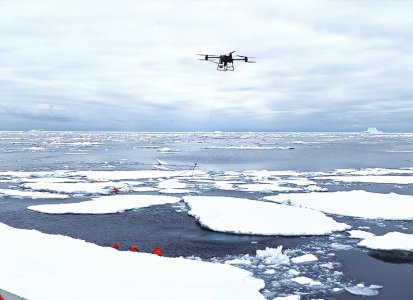
Core Viewpoint - The article discusses the ongoing research conducted by China's 42nd Antarctic Expedition team aboard the "Snow Dragon" vessel, focusing on the study of ice-covered lakes in the Amundsen Sea and their role in global ocean circulation and climate regulation. Group 1: Research Activities - The "Snow Dragon" team successfully deployed and retrieved an "anchor-type buoy observation system" to conduct multidisciplinary research on ocean chemistry and biology in the ice-covered lakes [6][8]. - The team observed the generation process of Antarctic Bottom Water, which is crucial for global ocean circulation, as cold, high-salinity water sinks from the surface [6][10]. Group 2: Ecological Insights - Ice-covered lakes provide favorable conditions for marine phytoplankton growth during spring, which in turn supports a rich ecosystem including krill, fish, penguins, and whales [7]. - The research highlights the unique ecological system in the Antarctic, driven by the seasonal dynamics of ice and sunlight [7]. Group 3: Technological Innovations - The deployed buoy system, which can conduct continuous observations for up to a year, collects data on temperature, salinity, and flow rates, acting as a "sentinel" for deep-sea monitoring [8]. - The 2900-meter-long buoy system integrates domestically developed biological acoustic and optical detection modules, providing valuable long-term monitoring data [8]. Group 4: Carbon Sequestration Research - The ice-covered lakes are described as significant "ocean carbon pumps," effectively capturing and transporting atmospheric CO2 to the deep sea [10]. - Research since 2003 has focused on the carbon sink mechanisms of these lakes, contributing to a better understanding of their role in climate change and carbon cycling [10].

科学与健康 | 探秘南极冰间湖!为地球气候档案添新知
Xin Hua She· 2026-01-28 08:17
Group 1 - The article discusses the significance of Antarctic ice lakes, which are key areas for polar ocean science research, particularly in the Amundsen Sea [1] - Ice lakes are crucial for global ocean circulation, as they generate Antarctic Bottom Water, which transports carbon and other materials from the atmosphere and surface ocean to the deep sea, thus regulating global climate and marine ecosystems [2] - The Chinese 41st Antarctic Expedition successfully captured strong vertical convection signals in the ice lake area, observing key processes in the formation of bottom water [2] Group 2 - The article highlights the use of a specialized mooring system, known as a "subsurface mooring," which allows for continuous observation of various water layers, collecting data on temperature, salinity, and flow speed [3] - The deployment of sediment traps since 2003 has focused on studying the carbon sink mechanisms of ice lakes, revealing the contribution of algae to carbon output and providing important references for assessing the Southern Ocean's carbon sink capacity [5] - The research aims to enhance understanding of the carbon pump mechanism of the ocean, which plays a significant role in absorbing carbon dioxide from the atmosphere [4][5]
世界海洋日,“雪龙2”号带来极地海洋新故事
Xin Hua Wang· 2025-06-09 08:34
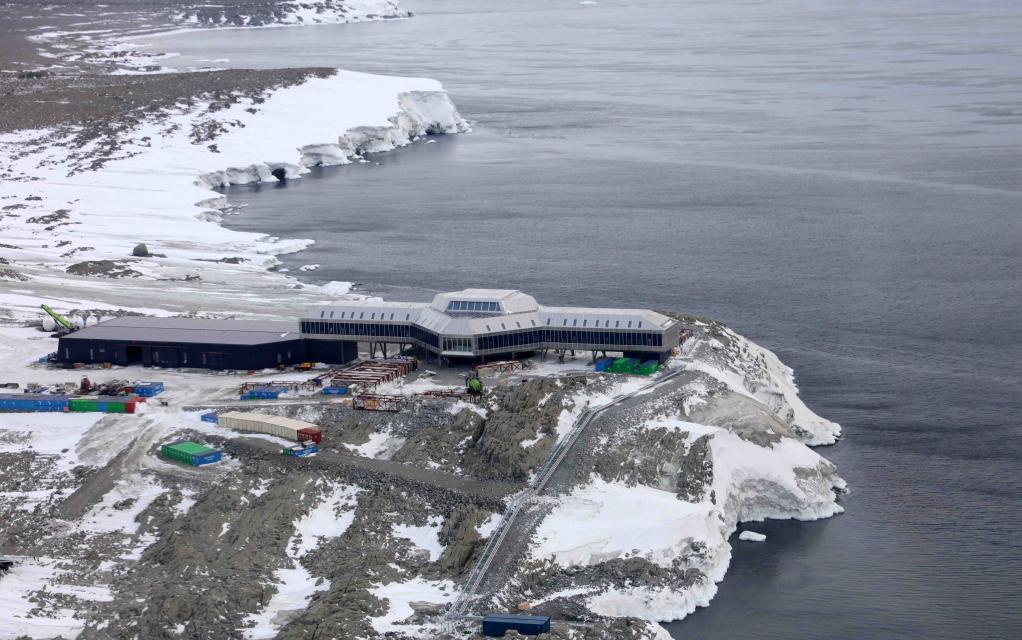
Core Insights - The article highlights the achievements of China's 41st Antarctic expedition aboard the "Xuelong 2" ship, emphasizing the significance of polar marine research and the advancements in clean energy systems at the newly established Qinling Station [1][4][10]. Group 1: Antarctic Expedition Achievements - The "Xuelong 2" ship completed a record-long journey of over 80,000 nautical miles, marking the longest expedition in China's polar exploration history [1]. - The expedition successfully established the Qinling Station, which features a new energy system that can achieve over 60% clean energy usage, saving over 100 tons of fossil fuel annually [4][5]. - The team conducted the first autumn scientific survey in the Southern Ocean, completing 24 comprehensive marine investigation stations and collecting over 5,000 samples [5][7]. Group 2: Environmental and Biological Discoveries - The expedition discovered significant biological activity in the "ice-interstitial lakes," which are crucial for the survival of plankton during winter [7]. - New microbial species were identified, including six new genera and seven new species of Antarctic bacteria, indicating potential for future medical and cosmetic applications [8]. - The expedition retrieved sediment cores from the Amundsen Sea, preserving geological history that could inform about Earth's climate evolution over thousands to millions of years [10]. Group 3: Broader Implications - The findings underscore the interconnectedness of human life and polar ecosystems, highlighting the importance of understanding and protecting polar regions in the context of global climate change [10][11].