出口竞争优势

Search documents
出口韧性的“来源”?
Sou Hu Cai Jing· 2025-12-09 00:39
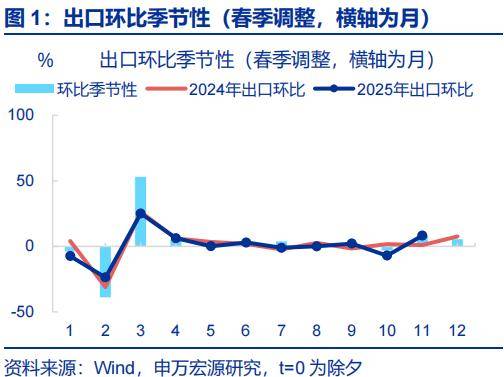
Core Viewpoint - The significant rebound in November exports is primarily attributed to the dissipation of short-term supply disruptions rather than an improvement in external demand [2][7][30] Export Analysis - November exports increased by 5.9% year-on-year (YoY) in USD terms, a notable recovery from a decline of 1.1% in October, driven by factors such as increased working days and the reduction of "production rush" effects [2][6][7] - The increase in working days in November (up by 2 days YoY) and the tapering off of the "production rush" phenomenon contributed significantly to the export rebound [2][7] - Exports to emerging economies showed a marked recovery in November, with exports to Africa and Latin America rising by 17.1 percentage points (pct) and 12.8 pct respectively, despite no significant improvement in demand from these regions [2][11] - The export of goods such as food, steel, and auto parts, which had seen significant declines in October, rebounded in November, with respective increases of 34 pct, 18.7 pct, and 13.6 pct [3][18] Import Analysis - Imports also showed a recovery in November, with a YoY increase of 1.9%, up by 0.9 pct from the previous month [3][25] - Processing trade imports surged by 9.2 pct to 13.9%, exceeding previous growth levels, indicating a rebound in supply conditions [3][25] - Major commodities like crude oil and electromechanical products saw improved import growth rates, with crude oil imports increasing by 8.4 pct to 8.1% [3][25][51] Future Outlook - The easing of supply disruptions, combined with ongoing improvements in external demand and China's competitive export advantages, is expected to support exports for the remainder of the year [4][30] - The potential for improved exports to the U.S. is bolstered by the easing of tariffs and the likelihood of inventory replenishment in the U.S. market [4][30] - Continued industrialization in emerging markets is anticipated to drive demand for imported production materials, further supporting China's export of intermediate and capital goods [4][30] Regular Tracking - In November, both exports and imports showed signs of recovery, with notable increases in consumer electronics and light industrial products [5][37] - Capital goods exports exhibited mixed results, with intermediate goods like auto parts and integrated circuits showing growth [5][40] - Exports to non-U.S. developed economies and emerging markets increased, while exports to the U.S. declined [5][47][48]