
轻工制品

Search documents
数据点评 | 出口飙升的“春节效应”(申万宏观·赵伟团队)
赵伟宏观探索· 2026-03-10 16:04
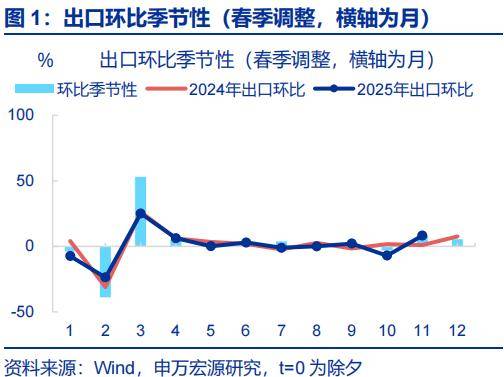
Core Viewpoint - The significant increase in exports in January-February is primarily driven by the "Spring Festival misalignment," contributing 8.4 percentage points, while external demand improvement accounts for an additional 6.8 percentage points [2][9][84] Export Analysis - The export growth in January-February reached 21.8% year-on-year, a substantial improvement of 15.2 percentage points compared to December 2025 [8][9] - The "Spring Festival misalignment" effect is expected to influence export readings, with a long impact period of up to one and a half months, leading to a low base effect from the previous year [2][9] - Labor-intensive industries, such as textiles and furniture, showed significant export rebounds, benefiting directly from the "Spring Festival misalignment" and improved demand from the U.S. [2][19][28] Country-Specific Insights - The recovery in U.S. demand and acceleration in emerging market demand are key drivers for export growth, with exports to the U.S. rebounding by 13.4 percentage points [3][28] - Exports to Africa and ASEAN also showed strong growth, reflecting the industrialization acceleration and domestic demand release in emerging economies [3][29] Import Analysis - Imports in January-February increased by 19.8% year-on-year, with processing trade imports rising significantly by 19.1 percentage points [3][35][71] - The import growth of mechanical and electrical products improved notably, with integrated circuits showing a year-on-year increase of 23.2% [3][71] Future Outlook - The "Spring Festival misalignment" may lead to a decrease in export readings for March, but the overall export growth for the year is expected to remain high due to stable external demand and improved inventory replenishment in the U.S. [4][84] - The strong export data for January-February reflects ongoing improvements in external demand, with expectations of continued high growth throughout the year [4][84] Regular Tracking - Both exports and imports showed strength in January-February, with consumer electronics and light industrial products experiencing notable rebounds [5][54] - Capital goods, intermediate goods, and energy resources also saw increased export growth, indicating a broad-based recovery [5][57]


出口韧性的“来源”?
Sou Hu Cai Jing· 2025-12-09 00:39
Core Viewpoint - The significant rebound in November exports is primarily attributed to the dissipation of short-term supply disruptions rather than an improvement in external demand [2][7][30] Export Analysis - November exports increased by 5.9% year-on-year (YoY) in USD terms, a notable recovery from a decline of 1.1% in October, driven by factors such as increased working days and the reduction of "production rush" effects [2][6][7] - The increase in working days in November (up by 2 days YoY) and the tapering off of the "production rush" phenomenon contributed significantly to the export rebound [2][7] - Exports to emerging economies showed a marked recovery in November, with exports to Africa and Latin America rising by 17.1 percentage points (pct) and 12.8 pct respectively, despite no significant improvement in demand from these regions [2][11] - The export of goods such as food, steel, and auto parts, which had seen significant declines in October, rebounded in November, with respective increases of 34 pct, 18.7 pct, and 13.6 pct [3][18] Import Analysis - Imports also showed a recovery in November, with a YoY increase of 1.9%, up by 0.9 pct from the previous month [3][25] - Processing trade imports surged by 9.2 pct to 13.9%, exceeding previous growth levels, indicating a rebound in supply conditions [3][25] - Major commodities like crude oil and electromechanical products saw improved import growth rates, with crude oil imports increasing by 8.4 pct to 8.1% [3][25][51] Future Outlook - The easing of supply disruptions, combined with ongoing improvements in external demand and China's competitive export advantages, is expected to support exports for the remainder of the year [4][30] - The potential for improved exports to the U.S. is bolstered by the easing of tariffs and the likelihood of inventory replenishment in the U.S. market [4][30] - Continued industrialization in emerging markets is anticipated to drive demand for imported production materials, further supporting China's export of intermediate and capital goods [4][30] Regular Tracking - In November, both exports and imports showed signs of recovery, with notable increases in consumer electronics and light industrial products [5][37] - Capital goods exports exhibited mixed results, with intermediate goods like auto parts and integrated circuits showing growth [5][40] - Exports to non-U.S. developed economies and emerging markets increased, while exports to the U.S. declined [5][47][48]
数据点评 | 出口韧性的“来源”?(申万宏观·赵伟团队)
赵伟宏观探索· 2025-12-08 16:03
Core Viewpoint - The significant rebound in exports in November is primarily supported by the dissipation of short-term supply disruptions rather than an improvement in external demand [3][10][82] Export Data Summary - November exports increased by 5.9% year-on-year, exceeding expectations of 3% and recovering from a decline of 1.1% in October [2][9][82] - The rebound in exports is attributed to factors such as an increase in working days and the reduction of "production rush" effects, which had previously impacted supply [3][10][82] - The increase in working days in November (up by 2 days year-on-year) contributed significantly to the export recovery [3][10][82] Country-Level Analysis - Regions that previously experienced significant supply shocks saw notable rebounds in exports in November, indicating that the easing of supply disruptions was a key driver [3][21][82] - Exports to emerging economies showed a clear recovery in November, with exports to Africa and Latin America increasing by 17.1 and 12.8 percentage points, respectively [3][21][82] - Despite the rebound, there was no significant improvement in demand from these emerging economies, as indicated by stable PMI readings in South Africa and Brazil [3][21][82] Commodity Export Trends - Commodities that had previously shown significant export volatility also experienced a notable recovery in November, with food, steel, and auto parts exports rebounding sharply [4][29][83] - The export growth rates for consumer electronics and light industrial products also improved significantly in November after substantial declines in October [4][29][83] Import Data Summary - Imports in November increased by 1.9% year-on-year, recovering from a previous expectation of 2.9% [2][9][82] - Processing trade imports saw a significant rise of 9.2 percentage points to 13.9%, indicating a recovery in trade performance due to the easing of supply disruptions [4][37][82] - Major commodities such as crude oil and electromechanical products also showed improved import growth rates in November [4][37][82] Future Outlook - The easing of supply disruptions, combined with ongoing improvements in external demand and China's competitive export advantages, is expected to support exports for the remainder of the year [5][45][46] - The potential for improved exports to the U.S. is bolstered by the easing of tariffs and the possibility of inventory replenishment in the U.S. market [5][45][46] - Continued industrialization in emerging markets is anticipated to drive demand for intermediate and capital goods, further supporting China's export performance [5][45][46] Regular Tracking - November saw a general recovery in both exports and imports, with notable increases in consumer electronics and light industrial products [6][71][82] - Capital goods exports showed mixed results, with intermediate goods like auto parts and integrated circuits experiencing growth [6][59][68] - Exports to non-U.S. developed economies and emerging markets showed positive trends, while exports to the U.S. declined [6][68][71]

外贸数据点评:出口韧性的“来源”?
Shenwan Hongyuan Securities· 2025-12-08 14:40
Group 1: Export Data Overview - November exports increased by 5.9% year-on-year, exceeding the expected 3% and recovering from a previous decline of -1.1% in October[7] - The rise in exports is attributed to the easing of supply disruptions rather than an improvement in external demand[2] - The number of working days in November increased by 2 days compared to the previous year, contributing to the export rebound[2] Group 2: Import Data Overview - November imports rose by 1.9% year-on-year, slightly below the expected 2.9% but up from 1% in October[7] - Processing trade imports surged by 9.2 percentage points to 13.9%, indicating a recovery in trade activity[26] - Major commodities like crude oil saw a rebound in import growth, with an increase of 8.4 percentage points to 8.1%[26] Group 3: Sector-Specific Insights - Consumer electronics exports grew by 5.1 percentage points to 3.3%, with significant contributions from mobile phones and LCD display modules[37] - Capital goods exports showed mixed results, with general machinery and medical instruments increasing, while shipbuilding exports fell significantly[43] - Exports to emerging markets, particularly Africa and Latin America, saw notable increases of 17.1 and 12.8 percentage points, reaching 27.7% and 15% respectively[14] Group 4: Future Outlook - The easing of supply disruptions and ongoing competitive advantages for Chinese exports are expected to support export growth in the coming months[30] - Potential improvements in exports to the U.S. are anticipated due to reduced tariffs and ongoing inventory replenishment needs[30] - Continued industrialization in emerging economies is likely to drive demand for intermediate and capital goods from China[30]
数据点评 | 出口骤降的“隐藏线索”?(申万宏观·赵伟团队)
赵伟宏观探索· 2025-11-08 00:00
Core Viewpoint - The decline in October exports is not primarily due to weakened external demand but rather short-term supply disruptions, which are now dissipating [3][10][65]. Export Analysis - October exports fell significantly, with a year-on-year decrease of 1.1%, down from a previous value of 8.3%, and a forecast of 3.2%. The month-on-month decline was 7.1%, which is worse than the seasonal average of 3.2% [2][9][10]. - The drop in exports is influenced by a high base effect, but the decline in exports to emerging economies, such as ASEAN and Africa, indicates a more complex situation. For instance, exports to ASEAN decreased by 4.7 percentage points to 11%, and to Africa by 46.1 percentage points to 10.5% [3][10][11]. - The reduction in working days in October, which was three days fewer than the previous month, exacerbated supply constraints. The "production rush" phenomenon observed in September ended, leading to a significant drop in exports of goods that had previously surged [3][18][27]. Import Analysis - October imports also saw a decline, with a year-on-year decrease of 6.4% to 1%. This decline was particularly notable in processing trade imports, which fell from 12% in September to 4.6% in October [4][23][66]. - The import of mechanical and electrical products decreased significantly, with a drop of 7.6% to 2.5%. The largest declines were seen in automatic data processing equipment and integrated circuits [4][54][66]. Future Outlook - With the easing of trade tensions between China and the U.S., and the dissipation of supply disruptions, it is expected that export growth may recover in November. The export performance to developed economies is showing divergence, with exports to the U.S. improving while those to Europe and the UK are declining [5][67]. - The ongoing industrialization and urbanization in emerging markets are expected to drive demand for imported production materials, which may support China's exports of intermediate and capital goods [5][67]. Regular Tracking - In October, both exports and imports experienced declines. The export of consumer electronics fell sharply by 11.1 percentage points to -1.7%, with mobile phones seeing a significant drop of 14.7 percentage points to -16.6% [6][68]. - Capital goods exports showed mixed results, with general machinery exports declining by 33.9 percentage points to -9.1%, while shipbuilding exports increased by 25.7 percentage points to 68.4% [6][42][68].

出口骤降的隐藏线索?:——10月外贸数据点评
Shenwan Hongyuan Securities· 2025-11-07 11:50
Export Data Analysis - In October, exports (in USD) decreased by 1.1% year-on-year, significantly lower than the expected 3.2% and previous value of 8.3%[1] - The month-on-month decline was 7.1%, which is worse than the seasonal average decline of 3.2%[2] - Exports to emerging markets like ASEAN and Africa saw notable declines, with ASEAN down 4.7 percentage points to 11% and Africa down 46.1 percentage points to 10.5%[2] Supply Chain and Production Factors - The drop in exports is attributed more to short-term supply disruptions rather than a significant decline in external demand[2] - A reduction of 3 working days in October compared to the previous month exacerbated supply issues, particularly following the "production rush" phenomenon in September[2] - High-frequency export chain production indicators fell to -0.2%, aligning with the October export growth rate of -1.1%[2] Import Data Insights - Imports (in USD) also fell, with a year-on-year decrease of 6.4% to 1% in October, down from a previous value of 7.4%[1] - Processing trade imports saw a significant drop from 12% in September to 4.6% in October, indicating substantial supply disruptions[3] Future Outlook - With the easing of US-China trade tensions and the expected recovery in supply, November exports are anticipated to rebound[4] - The export performance to developed economies is showing divergence, with exports to the US improving while those to the EU and UK are declining[4] - Emerging markets are expected to continue increasing their demand for intermediate and capital goods, supporting resilience in China's exports[4]
数据点评 | 出口骤降的“隐藏线索”?(申万宏观·赵伟团队)
申万宏源宏观· 2025-11-07 10:20
Core Viewpoints - October export decline is not primarily due to weakening external demand, but rather short-term supply disruptions, which are now dissipating [3][10][65] - The significant drop in exports in October is influenced by a high base effect and a reduction in working days, with a month-on-month decline of 7.1% compared to a seasonal expectation of 3.2% [3][10][65] - Exports to emerging economies, such as ASEAN and Africa, have seen a notable slowdown, while demand from countries like Vietnam and Thailand has shown improvement [3][10][11] Import Analysis - October imports decreased by 6.4% year-on-year to 1%, reflecting supply disruptions, particularly in processing trade, which fell from 12% in September to 4.6% in October [4][23][66] - The surge in port freight volumes in late October indicates that supply disruptions are easing, with exports from countries like Vietnam and South Korea showing significant recovery [4][27][66] Future Outlook - With the easing of US-China trade tensions and the recovery of supply chains, November export growth is expected to rebound [5][67] - The differentiation in export performance to developed economies, particularly a recovery in exports to the US, suggests potential for continued growth in exports [5][67] Regular Tracking - In October, both exports and imports saw declines, with consumer electronics and light industrial products experiencing significant drops in export growth [6][68] - Capital goods exports showed mixed results, with general machinery and medical instruments declining, while shipbuilding exports increased [6][42][68] - Import growth for mechanical and electrical products and bulk commodities also decreased, with notable declines in automatic data processing equipment [6][54][68]

10月外贸数据点评:出口骤降的“隐藏线索”?
Shenwan Hongyuan Securities· 2025-11-07 10:14
Group 1: Export Data Overview - October exports decreased by 1.1% year-on-year, significantly lower than the expected 3.2% and previous value of 8.3%[1] - The month-on-month decline in exports was 7.1%, which is worse than the seasonal average decline of 3.2%[2] - Exports to emerging markets like ASEAN and Africa saw significant drops, with ASEAN exports down 4.7 percentage points to 11% and African exports down 46.1 percentage points to 10.5%[2] Group 2: Import Data Overview - October imports increased by 1% year-on-year, below the expected 4.1% and previous value of 7.4%[1] - The month-on-month decline in imports was 6.4 percentage points, reflecting supply disruptions[3] - Processing trade imports fell from 12% in September to 4.6% in October, indicating significant supply disturbances[3] Group 3: Supply Chain and Economic Factors - The decline in exports is attributed more to short-term supply disruptions rather than weakening external demand[2] - A reduction in working days in October (down 3 days compared to the previous month) exacerbated supply issues, particularly following the National Day holiday[2] - High-frequency export chain production indicators fell to -0.2%, aligning with the overall export decline of -1.1%[2] Group 4: Future Outlook - With easing US-China trade tensions and the expected recovery in supply, November exports are anticipated to rebound[4] - Exports to developed economies are showing a mixed performance, with US exports improving while those to the EU and UK are declining[4] - The ongoing industrialization and urbanization in emerging markets are expected to drive demand for intermediate and capital goods imports from China[4]
商务发布|外贸优品汇“首店”落户环联夜市
Qi Lu Wan Bao· 2025-10-09 08:50
Core Insights - The newly launched Foreign Trade Quality Goods Exchange in Jinan has successfully initiated trial operations during the National Day holiday, attracting significant consumer interest and enhancing the night economy [1][4]. Group 1: Market Demand and Consumer Engagement - The Foreign Trade Quality Goods Exchange focuses on meeting the domestic market needs of foreign trade enterprises, featuring high-quality products from well-known brands such as Kadele, Luban, and Yinfeng, across various categories including home goods and cultural products [4]. - The trial operation attracted over 10,000 visitors on its first day, with several featured products selling over 1,000 units, indicating strong consumer demand [5]. - The introduction of the "Youth Music Concert" at 7 PM each night has become a focal point for attracting visitors, blending entertainment with shopping to enhance foot traffic [5]. Group 2: Economic Impact and Strategic Initiatives - The average daily foot traffic at the Huanlian Night Market is expected to exceed 100,000 during the first three days of the National Day holiday, with the Foreign Trade Quality Goods Exchange projected to contribute nearly 20% to this consumption increase [5]. - The Huanlian Night Market's management views the introduction of the Foreign Trade Quality Goods Exchange as an upgrade to the "shopping + leisure" model, aimed at boosting night economy vitality and expanding consumer spending [5]. - The Shandong Provincial Department of Commerce has been actively supporting foreign trade enterprises in developing domestic sales channels, contributing to both stabilizing foreign trade and expanding consumption [7].

5月外贸数据点评:6月出口会反弹吗?
Shenwan Hongyuan Securities· 2025-06-10 03:11
Export Data Analysis - In May, exports (in USD) grew by 4.8% year-on-year, lower than the expected 6.2% and previous value of 8.1%[7] - The decline in exports is attributed to the retreat of the "export grabbing" phenomenon and a high base effect from the previous year[8] - Exports to ASEAN and India fell significantly, with declines of 6.0 percentage points to 15.1% and 9.2 percentage points to 12.7%, respectively[2] - The export growth rate for midstream manufacturing products decreased from 7.4% in April to 6.3% in May, while energy resource exports dropped from 1.3% to -3.5%[15] Import Data Analysis - Imports (in USD) fell by 3.4% year-on-year, a decrease of 3.2 percentage points from the previous month[5] - The decline in imports was primarily driven by a drop in bulk commodity imports, including copper (-18.6% to 5.8%), crude oil (-8.2% to -0.8%), and iron ore (-5.1% to -3.8%)[42] - Mechanical and electrical product imports saw a slight increase, rising by 0.1 percentage points to 5.5%[5] Future Outlook - The shift in "export grabbing" is expected to transition from emerging markets to the U.S., with June exports likely to receive some support[23] - Key indicators for June include positive processing trade import growth of 2.4% in May, a surge in container bookings from the U.S., and rising prices for Yiwu small commodities[23] - The necessity for further "export grabbing" is anticipated to decrease as the suspension period for equal tariffs on emerging countries approaches its end[23]