分子遗传学

Search documents
“猫”侦探
Bei Jing Ri Bao Ke Hu Duan· 2026-02-11 21:25
Core Insights - The absence of cats in the traditional Chinese zodiac is attributed to the historical context of cat domestication and introduction to China, with significant research revealing that leopard cats cohabited with humans in China for 3,500 years, while modern domestic cats were introduced much later [4][9] - Professor Luo Shujin's research spans over 20 years, focusing on the genomic studies of wild cats, particularly the leopard cat, and its relationship with humans, contributing to a deeper understanding of wildlife conservation and species evolution [4][10] Group 1: Research Findings - A breakthrough study from Peking University indicates that leopard cats have been present in China since the Neolithic era, coexisting with humans for thousands of years before retreating to the wild [4][6] - The research team has identified approximately 3,000 leopard cats in Beijing, marking the first systematic survey of this apex predator in the urban ecosystem [9] - The relative abundance of leopard cats in the northwestern mountainous areas of Beijing reached 11%, significantly higher than other regions in China, indicating a suitable habitat for these animals [8][9] Group 2: Methodology and Techniques - The research employs advanced genomic techniques and machine learning for individual identification of leopard cats, enhancing the efficiency of wildlife studies [8] - The team utilizes infrared cameras for monitoring wildlife, allowing for the collection of extensive data on leopard cat behavior and population dynamics [7][8] - Satellite tracking collars have been used to monitor leopard cat movements across various landscapes, providing insights into their habitat preferences [8][9] Group 3: Conservation Efforts - The findings emphasize the importance of habitat preservation and management to ensure the survival of leopard cats and other wildlife in urban settings [9] - Luo Shujin's work contributes to the broader field of wildlife conservation, advocating for the coexistence of humans and wildlife in urban environments [9][19] - The research highlights the potential for restoring populations of other species, such as the North China leopard, through effective conservation strategies [9][10]


DNA之父去世,曾表示“想带一些中国艺术品回去”
第一财经· 2025-11-08 06:55
Core Viewpoint - James D. Watson, a pivotal figure in the discovery of the DNA double helix and a Nobel laureate, passed away at the age of 97, leaving a significant legacy in molecular biology and genetics [3][5]. Group 1: Contributions to Science - Watson was awarded the Nobel Prize in Physiology or Medicine in 1962 at the age of 34, highlighting his early contributions to the field [5]. - He co-discovered the DNA double helix structure in 1953, a groundbreaking finding that transformed the understanding of life and marked the birth of molecular genetics [6]. - Watson was a proponent of the Human Genome Project, further solidifying his influence in genetics and molecular biology [5]. Group 2: Personal Life and Interests - Watson maintained a vigorous work ethic, continuing to work at Cold Spring Harbor Laboratory into his late 80s, where he was known for his energetic approach to research [4][6]. - He had a deep appreciation for Chinese culture, particularly enjoying Peking duck and expressing a desire to collect Chinese art [7][8]. - Watson was also a food enthusiast, attempting to improve the dining experience at Cold Spring Harbor by hiring a chef, although he was ultimately disappointed with the results [9]. Group 3: Legacy and Philosophy - Watson's philosophy emphasized the importance of surrounding oneself with the best people and striving to be the best version of oneself, a principle he instilled in his students and colleagues [9]. - He was known for his candid personality and unique character, often described as talented yet outspoken [6].

DNA之父詹姆斯·沃森去世 曾表示“最想带一些中国的艺术品回去”
Di Yi Cai Jing· 2025-11-08 06:20
Core Points - James D. Watson, a significant figure in 20th-century science and co-discoverer of the DNA double helix structure, passed away on November 6, 2025, at the age of 97 [1] - Watson was a prominent advocate for the International Human Genome Project and continued to work at Cold Spring Harbor Laboratory (CSHL) into his late years [2][3] - The discovery of the DNA double helix is regarded as one of the most important scientific breakthroughs of the 20th century, comparable to Darwin's theory of evolution [3] Contributions and Achievements - Watson won the Nobel Prize in Physiology or Medicine at the age of 34 for his work on the DNA structure [2][3] - He was known for his vibrant personality and dedication to research, maintaining a rigorous work schedule even in his 90s [2][3] - CSHL, where Watson served as director, is recognized as a leading institution in life sciences and molecular biology, producing numerous Nobel laureates [2] Personal Interests - Watson had a deep appreciation for Chinese culture, particularly enjoying Peking duck and expressing a desire to collect Chinese art [4] - He was also a food enthusiast, attempting to improve the dining experience at CSHL by hiring a chef, although he was disappointed with the results [4][5] - Watson's advice to young people emphasized the importance of striving to be their best selves and surrounding themselves with the best individuals [6]
人民网:江汉大学学子暑期科研实践不停歇
Ren Min Wang· 2025-07-11 00:48
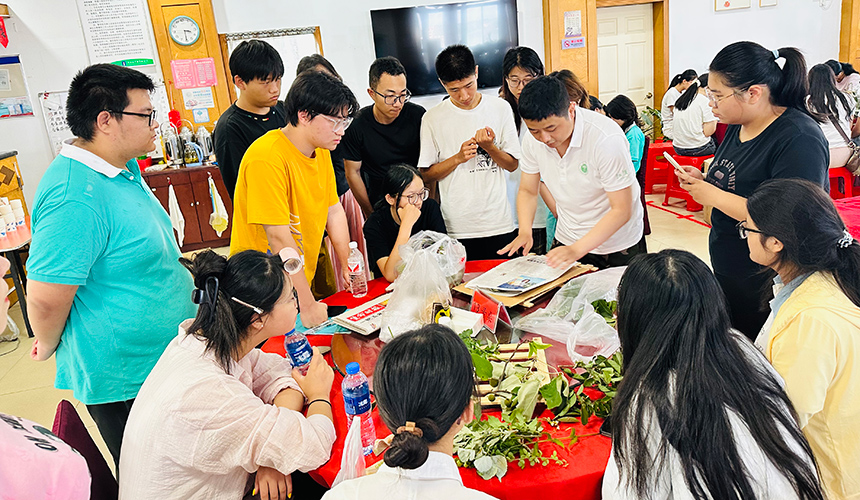
Group 1 - The core idea of the articles highlights the commitment of Jianghan University’s School of Life Sciences to student research and practical training during the summer, emphasizing the importance of hands-on experience in scientific education [1][2] - Nearly 200 students are engaged in various research projects and field practices, focusing on topics such as microalgae synthetic biology and molecular genetics, under the guidance of their mentors [1] - The college organizes multiple social practice activities, including health knowledge dissemination in rural areas and food safety surveys, allowing students to apply their learning in real-world contexts [1] Group 2 - The leadership of Jianghan University’s School of Life Sciences actively supports students by visiting them at field practice bases and laboratories, providing fresh watermelons as a gesture of encouragement [2] - The college has implemented a structured approach to ensure the smooth operation of summer activities, including establishing communication channels for students and adjusting facility hours based on needs [2]