古基因组学

Search documents
“猫”侦探
Bei Jing Ri Bao Ke Hu Duan· 2026-02-11 21:25
Core Insights - The absence of cats in the traditional Chinese zodiac is attributed to the historical context of cat domestication and introduction to China, with significant research revealing that leopard cats cohabited with humans in China for 3,500 years, while modern domestic cats were introduced much later [4][9] - Professor Luo Shujin's research spans over 20 years, focusing on the genomic studies of wild cats, particularly the leopard cat, and its relationship with humans, contributing to a deeper understanding of wildlife conservation and species evolution [4][10] Group 1: Research Findings - A breakthrough study from Peking University indicates that leopard cats have been present in China since the Neolithic era, coexisting with humans for thousands of years before retreating to the wild [4][6] - The research team has identified approximately 3,000 leopard cats in Beijing, marking the first systematic survey of this apex predator in the urban ecosystem [9] - The relative abundance of leopard cats in the northwestern mountainous areas of Beijing reached 11%, significantly higher than other regions in China, indicating a suitable habitat for these animals [8][9] Group 2: Methodology and Techniques - The research employs advanced genomic techniques and machine learning for individual identification of leopard cats, enhancing the efficiency of wildlife studies [8] - The team utilizes infrared cameras for monitoring wildlife, allowing for the collection of extensive data on leopard cat behavior and population dynamics [7][8] - Satellite tracking collars have been used to monitor leopard cat movements across various landscapes, providing insights into their habitat preferences [8][9] Group 3: Conservation Efforts - The findings emphasize the importance of habitat preservation and management to ensure the survival of leopard cats and other wildlife in urban settings [9] - Luo Shujin's work contributes to the broader field of wildlife conservation, advocating for the coexistence of humans and wildlife in urban environments [9][19] - The research highlights the potential for restoring populations of other species, such as the North China leopard, through effective conservation strategies [9][10]


登上Cell子刊封面:北京大学罗述金团队揭开中国古代养猫史
生物世界· 2026-01-25 09:00
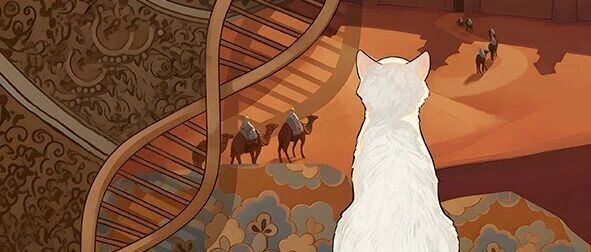
Core Insights - The study reveals the long-standing commensal relationship between ancient Chinese humans and leopard cats, lasting over 3,500 years, before the introduction of domestic cats via the Silk Road during the Tang Dynasty [4][10][13] - The research highlights the significance of the Silk Road in the transmission of species, particularly the domestic cat, which is traced back to African wildcats [11][13] Group 1: Historical Context - The research analyzed 22 cat remains from 14 archaeological sites in China, dating from 5,400 years ago to 150 years ago, indicating a long coexistence with leopard cats [4][7] - The earliest known domestic cats in China appeared around the Tang Dynasty (approximately 730 AD), likely introduced by Silk Road merchants [7][10] Group 2: Methodology and Findings - Stable isotope analysis of remains from the Qianhu Village site suggests that cats were present in human settlements during the late Neolithic period, primarily feeding on rodents [8][10] - Genetic analysis confirmed that all domestic cats in China trace back to African wildcats, supporting the theory of a single domestication origin [9][11] Group 3: Implications of the Study - The study provides valuable insights into the historical interactions between humans and animals, particularly in the context of cultural exchanges along the Silk Road [13] - It emphasizes the need for further evaluation of archaeological findings related to small cat species in ancient China, particularly during the Han Dynasty [8][10]
吉林大学发表最新Science论文
生物世界· 2025-12-20 10:00
Core Insights - The article discusses the complex evolutionary history of cattle in East Asia, highlighting multiple diffusion events and extensive genetic mixing [2][8] - A recent study published in the journal Science provides a comprehensive genetic map of the origins and migration of East Asian cattle, offering new perspectives on prehistoric human migrations and ancient civilization exchanges [3][5] Group 1: Research Findings - The research team analyzed 166 ancient cattle samples from various archaeological sites, spanning from 10,000 years ago to 200 years ago, resulting in the largest and most complete dataset of ancient East Asian cattle genomes to date [5] - The study indicates that the primary source of East Asian cattle during the Holocene was a lineage from Northern Asian wild cattle, mixed with approximately 15% Western wild cattle ancestry [6] - The genetic composition of cattle from the Yellow River basin during the late Neolithic to Bronze Age formed a homogenous group, originating from Western Eurasian cattle with about 10% local wild cattle gene input, followed by a significant population bottleneck [6] Group 2: Genetic Mixing Events - The research reveals four significant fusion events in the genetic history of East Asian cattle, challenging the traditional view of a single origin and highlighting a gradual process of multiple external inputs and deep local population integration [8] - The findings suggest that the Eurasian steppe and Central Asia were key corridors for the early diffusion of cattle into East Asia, emphasizing these regions as important priorities for future ancient genomics research [9]

北京大学最新论文登上Cell头条
生物世界· 2025-11-29 08:00
Core Insights - The research reveals the long-standing commensal relationship between leopards and humans in China, lasting over 3,500 years, before the introduction of domestic cats via the Silk Road around the Tang Dynasty [3][10] - The study utilizes ancient DNA analysis from 22 cat remains across 14 archaeological sites in China, providing insights into the timeline and pathways of cat domestication and migration [7][10] Group 1: Historical Context - The study indicates that leopard cats cohabited with humans from the late Neolithic period (around 5,400 years ago) until the end of the Eastern Han Dynasty, establishing a symbiotic relationship [3][7] - Domestic cats, traced back to African wildcats, were introduced to China around the 6th to 7th century during the Tang Dynasty, likely through trade routes [5][8] Group 2: Methodology and Findings - The research team analyzed 22 skeletal samples using ancient DNA techniques, successfully recovering mitochondrial genomes and whole genomes from seven samples, confirming the long-term presence of leopard cats [7][10] - The earliest identified domestic cat remains date back to the Tang Dynasty, with a carbon dating of approximately 706-883 AD, suggesting an earlier introduction than previously thought [8][10] Group 3: Genetic Insights - Genetic analysis indicates that all domestic cats in China can trace their lineage back to African wildcats, supporting the theory of a single domestication origin [6][10] - The study highlights the genetic flow between local wildcats and domestic cats in regions like the Tibetan Plateau, indicating interactions between species [6]