利润随行

Search documents
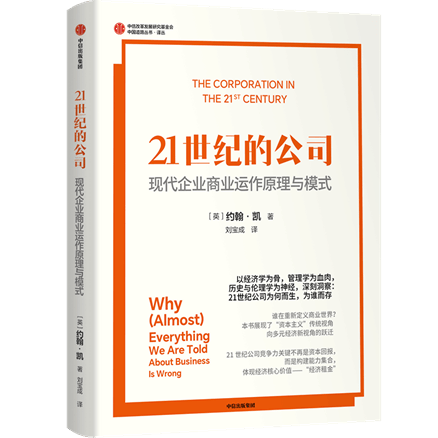
21世纪公司:核心是“能力集合”,不是“资本集合”
Sou Hu Cai Jing· 2025-10-17 15:05
Core Insights - The article discusses the evolution of business logic from the industrial era to the digital age, emphasizing that traditional metrics like asset size and shareholder primacy are becoming obsolete [3][5][10] - It highlights the importance of "ability collection" over "asset collection" as the core competitive advantage for 21st-century companies [10][12][26] Group 1: Historical Context - Business history is characterized by survival of the fittest rather than the strongest, with companies like General Motors and Sears failing not due to a lack of demand but because competitors better met market needs [5][6] - The decline of once-dominant companies illustrates that their failure was due to inefficiency in adapting to changing consumer preferences and technological advancements [6][7] Group 2: Shifts in Business Logic - The article argues that the language and frameworks used to understand business have not evolved alongside the changes in the business environment, leading to misconceptions about what constitutes competitive advantage [8][9] - In the 21st century, leading companies often do not rely on heavy asset investments but instead focus on leveraging technology, data, and user networks [9][10] Group 3: Core Competencies - The essence of modern enterprises is described as a "collection of abilities," which includes supplier relationships, technological innovation, and brand reputation, rather than merely physical assets [10][12] - Companies must harness collective knowledge and capabilities to navigate the complexities of the modern business landscape [11][14] Group 4: Profit and Economic Rent - The article introduces the concept of "economic rent," which refers to the excess returns generated by unique capabilities, as the true source of profit in modern businesses [16][17] - Successful companies like Apple and Amazon exemplify this by leveraging their unique capabilities to generate significant economic rent [17][18] Group 5: Value Creation - The article emphasizes that true business success comes from prioritizing value creation for customers and society, rather than merely focusing on shareholder returns [22][23] - Companies that align their operations with broader societal values tend to achieve sustainable profitability, as illustrated by the contrasting fates of Merck and Imperial Chemical Industries [24][25] Group 6: Management Directions - For 21st-century managers, the focus should shift from asset accumulation to building capabilities, fostering collective intelligence, and prioritizing stakeholder value over shareholder primacy [26][27] - The transition from "asset controllers" to "ability integrators" is essential for future business success, as highlighted by the failures of companies that could not adapt to new market demands [27][28]