价值优先

Search documents
"从通用到特种",会通股份首席技术官携重磅报告邀您共聚尼龙应用开发大会!
DT新材料· 2026-03-01 16:05
Core Viewpoint - The nylon industry is transitioning from a phase of "scale-oriented" growth to "technology-driven, value-first" high-quality development, with a focus on specialized applications in emerging fields such as electric vehicles, consumer electronics, and AI liquid cooling [2] Group 1: Product Development and Innovation - The company has developed a comprehensive nylon product matrix that spans from general to specialized applications, emphasizing a strategic layout of "general foundation, specialized breakthrough" while balancing cost-effectiveness and high added value [2] - The PA6/66 series has undergone lean upgrades, achieving a fine balance of flowability, strength, and heat resistance through precise molecular weight control and modification technology, laying a solid foundation for specialized applications [3] - Long-chain nylon products such as PA610, PA612, and PA1012 have been introduced to address high demands for hydrolysis resistance, chemical corrosion resistance, and dimensional stability, effectively solving the issue of traditional nylon softening in water [4] Group 2: High-Temperature Nylon Development - The company has developed high-temperature nylon series including PPA, PA46, and PA6T/9T/10T, which are essential for environments above 150°C, breaking the reliance on imported high-temperature nylon through independent polymerization and modification innovations [5][6] - This "pyramid" product structure allows the company to match optimal material solutions for specific customer conditions across a temperature range of -40°C to 200°C, from general mechanical parts to precision electronic components [6] Group 3: Application and Industry Empowerment - The company adheres to a "scene-oriented" approach, deeply integrating nylon material innovation with downstream industry demands, focusing on key sectors such as connectors, consumer electronics, new energy, automotive, and electric tools [7] - Customized nylon solutions have been launched, including special nylon materials for automotive wiring harnesses that exhibit excellent heat resistance, flame retardancy, and insulation, ensuring driving safety [11] - In the robotics sector, ultra-high-strength carbon fiber reinforced nylon materials have been introduced to achieve lightweight and long-lasting product characteristics [14] Group 4: Upcoming Industry Forum - The "2026 Advanced Nylon Industry Innovation and Application Development Conference" will be held on March 19-20, 2026, in Guangzhou, where the company will elaborate on its strategic thinking and practical paths from general to specialized nylon [12] - The conference aims to explore how domestic engineering plastics can support high-end manufacturing upgrades, featuring discussions on the latest advancements in nylon monomers, polymerization, and modification [22]


非上市人身险企“一哥”争夺战:泰康坚守、中邮“虚胖”?
Sou Hu Cai Jing· 2026-02-06 02:15
Core Insights - The competition among non-listed life insurance companies in China is becoming clearer as the solvency reports for Q4 2025 are disclosed, with Taikang Life maintaining its position as the leader in the sector [2] Group 1: Profit Comparison - In 2025, Taikang Life achieved a net profit of 271.59 billion yuan, a year-on-year increase of 86%, while China Post Life's net profit was 83.45 billion yuan, down 9.2% year-on-year, indicating a "revenue growth without profit" trend [3] - The total net profit of 57 non-listed life insurance companies reached approximately 673.89 billion yuan in 2025, a significant increase of 170.66% compared to 248.98 billion yuan in 2024 [3] - The difference in profit performance between Taikang Life and China Post Life is attributed to their differing business structures, with Taikang focusing on a "value-first" strategy, while China Post Life is trapped in a "scale-first" dilemma [3][8] Group 2: Premium Competition - In 2025, the insurance business revenue of 57 non-listed life insurance companies exceeded 1.2 trillion yuan, growing approximately 12.3% year-on-year, with Taikang Life and China Post Life both surpassing the 100 billion yuan mark [5] - China Post Life briefly surpassed Taikang Life in Q1 2025 with a revenue of 801.07 billion yuan, but Taikang regained its lead in subsequent quarters, ending the year with 2,386.64 billion yuan in revenue [5] - China Post Life's premium income growth is significantly supported by its parent company, China Post, and Postal Savings Bank, which contributed a combined premium of 1,061.59 billion yuan and 179.64 billion yuan, respectively [5] Group 3: Investment Returns - In terms of investment performance, Taikang Life outperformed with a financial investment return rate of 4.11% and a comprehensive investment return rate of 2.65%, compared to China Post Life's 3.4% and 0.74% [7] - By the end of 2025, China Post Life's total assets were 681.88 billion yuan with a return on assets (ROA) of 1.28%, while Taikang Life's total assets reached 2 trillion yuan with an ROA of 1.42% [7] - China Post Life's core solvency adequacy ratio was 92.19%, expected to decline to 80.23%, approaching regulatory limits, influenced by market conditions [7] Group 4: Industry Outlook - The competition between Taikang Life and China Post Life represents a broader structural differentiation in the non-listed life insurance industry, highlighting the need for a balance between scale and value [8] - As the industry faces intensified competition and regulatory improvements, companies must focus on long-term value creation and optimize their business structures to achieve sustainable growth [8]

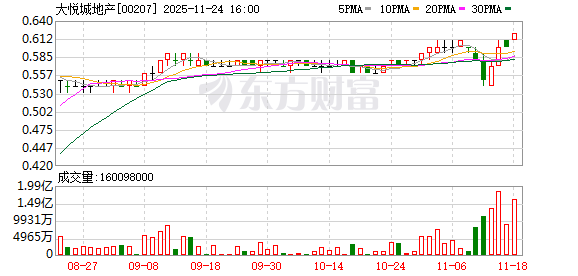
上海出让9宗宅地揽金超173亿元;大悦城地产申请撤销股份上市地位 | 房产早参
Mei Ri Jing Ji Xin Wen· 2025-11-24 23:06
Group 1: Shanghai Land Auction - Shanghai successfully sold 9 land parcels for a total of 173.33 billion yuan, with a total land area of 289,200 square meters and a planned construction area of 552,600 square meters [2] - The auction attracted major developers such as China Overseas Land & Investment, China Jinmao, and others, indicating strong competition among private enterprises for quality land [2] - The results reflect a shift towards "precise investment and value prioritization" in the land market, signaling a more rational investment approach by real estate companies [2] Group 2: Joy City Property Privatization - Joy City Property announced its application to delist from the Hong Kong Stock Exchange, aiming for a strategic transformation during the industry's deep adjustment period [3] - The company plans to repurchase shares and sacrifice some market liquidity for more flexible decision-making and efficient resource allocation [3] Group 3: Oceanwide Holdings Debt Issues - Oceanwide Holdings announced a delay in the repayment of two USD bonds totaling 3.56 billion yuan, reflecting the ongoing debt crisis faced by the company [4] - The company plans to extend the repayment deadline to May 23, 2026, but the fundamental issues remain unresolved, leading to high uncertainty in its future development [4] Group 4: China Green Development Asset Transfer - China Green Development is offering a 99% stake in Hangzhou Green Development Center for a base price of 3.58 billion yuan, as part of its strategic asset restructuring [5] - The project, originally acquired for 6.35 billion yuan, has undergone significant adjustments, including a reduction in the height of its main tower [5] - This move is indicative of state-owned enterprises accelerating strategic transformation and optimizing asset structures amid industry adjustments [5] Group 5: Guangzhou Hanjian Holdings Regulatory Warning - Guangzhou Hanjian Holdings received a warning from the Guangdong Securities Regulatory Commission for failing to disclose significant information regarding overdue debts and being listed as a dishonest executor [7] - The company and its executives have committed to adhering to disclosure requirements and improving governance and risk management practices [7] - This incident highlights the regulatory body's strict stance on information disclosure violations, particularly concerning matters that could significantly impact investor decisions [7]


制氢设备电解槽价格“膝斩”,40家氢能企业发起行业“反内卷”倡议
Di Yi Cai Jing· 2025-11-18 11:08
Core Insights - The hydrogen industry in China is facing challenges due to chaotic competition, price wars, and a focus on short-term gains rather than long-term value [1][2][4] - The China Hydrogen Energy Promotion Association, along with 40 leading hydrogen companies, has issued a "Healthy Development Initiative" to address these issues and promote a value-first approach [1][4] Industry Challenges - The average cost of alkaline electrolyzers has decreased from 10 million yuan (approximately 1.4 million USD) in 2021 to 6.5 million yuan (approximately 910,000 USD) in 2024, indicating a significant price drop of over 60% [2] - The rapid expansion of production capacity in the hydrogen industry has not been matched by market demand, leading to aggressive pricing strategies among manufacturers [2] Competitive Landscape - The price competition has extended to international markets, with foreign clients expecting similar low bids as seen in China, potentially harming the industry's global prospects [4] - Companies are increasingly prioritizing short-term sales over research and development, which could lead to quality issues and damage brand reputation [4] Call for Change - Industry leaders are advocating for a shift from a price-centric mindset to a value-driven approach, emphasizing the importance of technological innovation and verified performance [4] - There is a pressing need for credible standards and third-party testing platforms to ensure the integrity of electrolyzer data and foster trust in the industry [4]

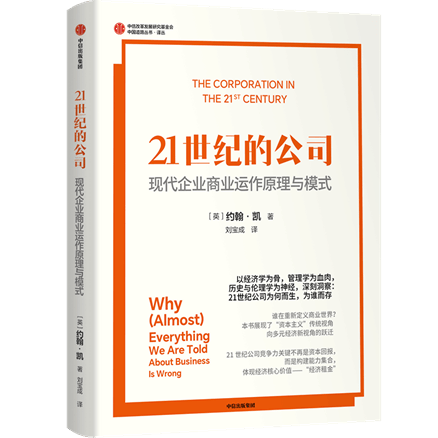
21世纪公司:核心是“能力集合”,不是“资本集合”
Sou Hu Cai Jing· 2025-10-17 15:05
Core Insights - The article discusses the evolution of business logic from the industrial era to the digital age, emphasizing that traditional metrics like asset size and shareholder primacy are becoming obsolete [3][5][10] - It highlights the importance of "ability collection" over "asset collection" as the core competitive advantage for 21st-century companies [10][12][26] Group 1: Historical Context - Business history is characterized by survival of the fittest rather than the strongest, with companies like General Motors and Sears failing not due to a lack of demand but because competitors better met market needs [5][6] - The decline of once-dominant companies illustrates that their failure was due to inefficiency in adapting to changing consumer preferences and technological advancements [6][7] Group 2: Shifts in Business Logic - The article argues that the language and frameworks used to understand business have not evolved alongside the changes in the business environment, leading to misconceptions about what constitutes competitive advantage [8][9] - In the 21st century, leading companies often do not rely on heavy asset investments but instead focus on leveraging technology, data, and user networks [9][10] Group 3: Core Competencies - The essence of modern enterprises is described as a "collection of abilities," which includes supplier relationships, technological innovation, and brand reputation, rather than merely physical assets [10][12] - Companies must harness collective knowledge and capabilities to navigate the complexities of the modern business landscape [11][14] Group 4: Profit and Economic Rent - The article introduces the concept of "economic rent," which refers to the excess returns generated by unique capabilities, as the true source of profit in modern businesses [16][17] - Successful companies like Apple and Amazon exemplify this by leveraging their unique capabilities to generate significant economic rent [17][18] Group 5: Value Creation - The article emphasizes that true business success comes from prioritizing value creation for customers and society, rather than merely focusing on shareholder returns [22][23] - Companies that align their operations with broader societal values tend to achieve sustainable profitability, as illustrated by the contrasting fates of Merck and Imperial Chemical Industries [24][25] Group 6: Management Directions - For 21st-century managers, the focus should shift from asset accumulation to building capabilities, fostering collective intelligence, and prioritizing stakeholder value over shareholder primacy [26][27] - The transition from "asset controllers" to "ability integrators" is essential for future business success, as highlighted by the failures of companies that could not adapt to new market demands [27][28]
热搜榜不该等同于“流量榜”
Xin Lang Cai Jing· 2025-09-25 03:18
Core Viewpoint - The recent regulatory actions by the National Cyberspace Administration of China (NCA) against social media platforms aim to address the issues of sensationalism and harmful content in trending topics, potentially reshaping the information market and restoring fairness in content dissemination [1][2][3]. Group 1: Regulatory Actions - The NCA has conducted a series of enforcement actions against multiple social media platforms, including Xiaohongshu, Weibo, Kuaishou, Toutiao, and UC, due to the presence of harmful content in their trending topic lists [1][2]. - Platforms like Xiaohongshu and Kuaishou have been penalized for frequently showcasing celebrity gossip and trivial matters, which are deemed as negative content [1][2]. - In response to the penalties, platforms have committed to forming special rectification teams to improve the management of trending topics and enhance their content review processes [2][5]. Group 2: Issues with Trending Topics - The primary reasons for the penalties include the excessive entertainment focus of trending topics and the dissemination of sensitive and harmful information [3][4]. - The pursuit of traffic by social media platforms has led to a neglect of the informational value of content, with algorithms favoring sensational topics that attract user engagement [3][4]. - There is a concern that the manipulation of trending topics for commercial gain can disrupt the online ecosystem and potentially harm societal stability [4][5]. Group 3: Recommendations for Improvement - Experts suggest that social media platforms should establish clearer management standards for trending topics, including limits on the proportion of entertainment content [5]. - There is a call for platforms to provide personalized trending lists for different user demographics, allowing for a broader representation of important social issues [5]. - The shift from prioritizing traffic to valuing content quality is seen as essential for the evolution of social media platforms towards providing valuable information services [5].
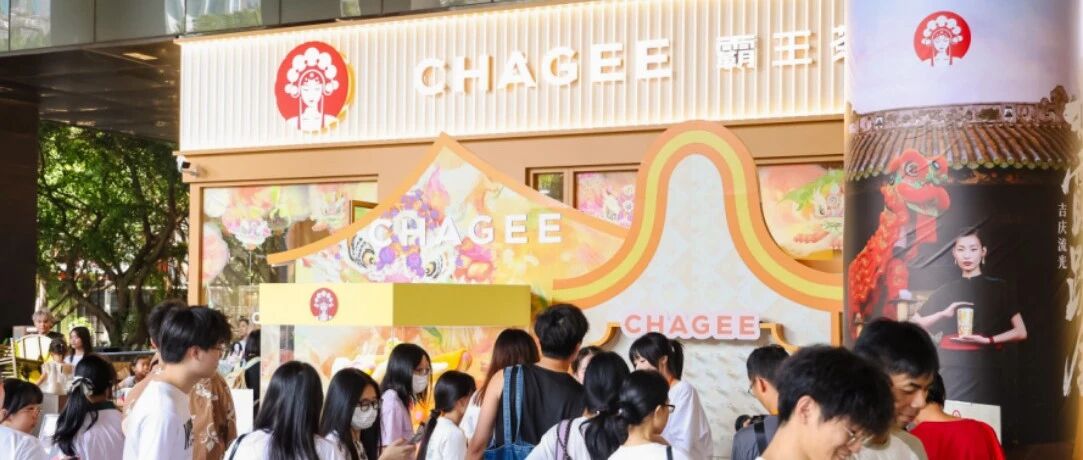
霸王茶姬二季度财报发布:全球门店数超七千家
Sou Hu Cai Jing· 2025-09-02 13:10
Core Insights - The company reported a total GMV of 81.031 billion yuan for Q2 2025, reflecting a year-on-year growth of 15.5% [7] - The net income for Q2 reached 33.319 billion yuan, with a year-on-year increase of 10.2% [7] - The adjusted net profit was 6.298 billion yuan, corresponding to an adjusted net profit margin of 18.9% [9] Global Expansion - As of June 30, the company operates 7,038 stores globally, including 208 overseas locations [3] - The overseas GMV reached 2.352 billion yuan, showing a significant year-on-year increase of 77.4% and a quarter-on-quarter growth of 31.8% [3][4] - The company successfully entered the Indonesian market, opening 8 new stores, and has also launched operations in Vietnam and the Philippines [4][5] Product Innovation and Marketing - The company introduced region-specific products and marketing strategies, achieving notable success with the "谷香焙茶" in Southeast Asia [4] - New product launches, including the "一骑红尘" and "夏梦玫珑," have received positive market feedback [7] - The company has engaged in innovative marketing collaborations, such as the Earl Grey tea series with the British Library, which sold out quickly [4] Membership Growth and User Engagement - The registered membership base surpassed 206.9 million, with a year-on-year growth of 42.7% [8] - The company emphasizes user engagement through initiatives like the CHAGEE TOWN membership rights system and offline community events [8] - A significant portion of orders, 73.9%, came from customers who had ordered two or more times, indicating strong customer retention [8] Cost Management and Profitability - The company achieved a stable adjusted net profit margin of 18.9%, with a decrease in raw material, storage, and logistics costs by 1.5% year-on-year [9]

价格战“硝烟弥漫”,这家新茶饮以价值优先破局
Sou Hu Cai Jing· 2025-09-01 12:08
Core Insights - The company adopts a "strategic restraint" approach to counter the temptation of subsidies, focusing on product upgrades, user operations, and global expansion to transform "value first" into sustainable growth momentum [2][3] - In a competitive environment marked by "zero-cost purchases" and extreme promotions, the company has achieved a notable performance, with a 10.2% year-on-year increase in total net revenue to 3.3319 billion yuan and a global GMV exceeding 8.1 billion yuan [2][3] - The founder emphasizes that price wars may yield short-term traffic but do not align with the logic of high-quality development, as evidenced by a gross margin increase to 53.9% and a registered user base surpassing 200 million [2][3] Group 1: Strategic Approach - The company has articulated three key principles: avoiding blind following, adhering to a high-value brand strategy, and enhancing efficiency through technological innovation [3] - The management believes that the competition driven by massive subsidies is unsustainable and that focusing excessively on price competition poses structural challenges to the industry [3] - The company continues to achieve double-digit year-on-year revenue growth while maintaining stable profitability, reinforcing its commitment to brand value and product innovation [3] Group 2: User Engagement and Growth - The company has chosen to invest resources in deepening user relationships and optimizing the supply chain, resulting in a global store count exceeding 7,038 while maintaining high operational efficiency [5] - Despite a 23% year-on-year decline in same-store GMV due to last year's high base, the increase in the proportion of takeaway orders and growth in repurchase rates validate the enhancement of user stickiness [5] - The company’s strategy is reflected in the successful launch of new products and the significant scale of its membership ecosystem, with over 206.9 million registered members [5] Group 3: Global Expansion - The company has achieved explosive growth in overseas markets, with a 77.4% year-on-year increase in overseas GMV to 235.2 million yuan, supported by a network of 208 stores across five key markets [6][8] - The success in international markets is attributed to localized innovations, such as the launch of popular products tailored to regional tastes [6][8] - The establishment of a North American management team signifies the company's ambition to enhance cross-cultural operations and expand its global footprint [8] Group 4: Long-term Value Creation - The company is focused on building a long-term value loop, starting with a commitment to upgrading core raw materials, which will enhance product quality and drive sales [11][13] - The management aims to create a symbiotic system connecting consumers, suppliers, and franchisees through membership systems and supply chain upgrades [11][13] - The company’s approach emphasizes that price wars are a short-term poison, while a value-driven strategy is the long-term antidote, establishing an unreplicable value barrier [14]
马来西亚门店盈利能力超预期 霸王茶姬海外市场成绩亮眼
Zhong Guo Xin Wen Wang· 2025-09-01 09:14
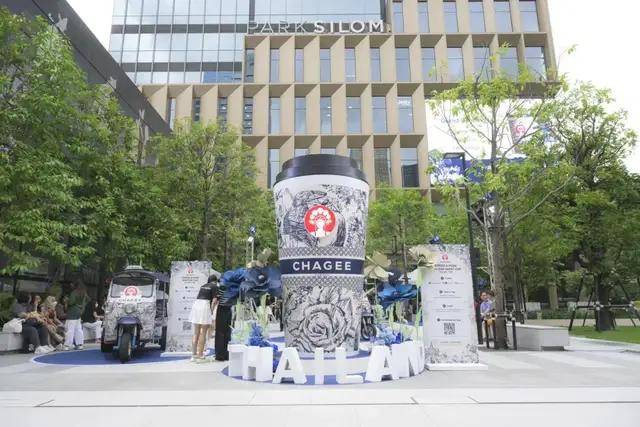
Core Insights - The company reported a total net revenue of 3.3319 billion RMB for Q2 2025, representing a year-on-year growth of 10.2% [2] - Global GMV reached 8.1031 billion RMB, with a year-on-year increase of 15.5% [2] - The overseas market GMV surged to 235.2 million RMB, marking a significant year-on-year growth of 77.4% [3] - The total number of global stores reached 7,038, with a gross margin improvement to 53.9% [2] - The brand's registered membership surpassed 200 million, with a net increase of 14.55 million in the quarter, reflecting a 42.7% year-on-year growth [2][6] Financial Performance - The adjusted net profit for the first half of 2025 was 1.3 billion RMB, showing a year-on-year increase of 6.8% [7] - The average monthly GMV per store in the Greater China region was 404,350 RMB, with same-store GMV decreasing by 23% year-on-year [6] Global Expansion - The overseas market GMV growth of 77.4% indicates successful implementation of the company's globalization strategy [3] - The company opened 39 new overseas stores, expanding its network to 208 stores across key markets including Malaysia, Singapore, Indonesia, Thailand, and the USA [3][4] - The launch of the "Hojicha Genmai Milk Tea" in Southeast Asia became a bestseller, significantly boosting brand visibility [3] Marketing and Product Innovation - The company emphasizes brand value and product innovation as core strategies, maintaining double-digit revenue growth [2][5] - New product launches, such as "Yi Qi Hong Chen" and the return of "Xia Meng Mei Long," have driven significant sales increases [6] - The collaboration with the British Library on the Earl Grey series has also contributed to strong sales performance in Singapore [3][4] Operational Strategy - The company is focusing on optimizing operational strategies and enhancing product innovation to navigate industry challenges [6] - A new North American management team has been appointed to strengthen market development efforts [4]

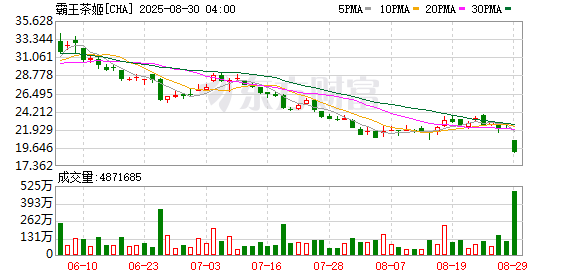
海外GMV同比涨77.4% 霸王茶姬公布二季度财报协议
新华网财经· 2025-09-01 02:42
Core Viewpoint - The financial report of Bawang Tea Ji for Q2 2025 shows strong growth in both domestic and overseas markets, with a significant increase in global store count and GMV, highlighting the company's resilience and strategic focus on value over price competition [1][7]. Financial Performance - As of June 30, 2025, Bawang Tea Ji's total GMV reached 8.1031 billion yuan, a year-on-year increase of 15.5% [1][7]. - The net revenue for Q2 was 3.3319 billion yuan, reflecting a year-on-year growth of 10.2% [1][7]. - Adjusted net profit for the quarter was 629.8 million yuan, with an adjusted net profit margin of 18.9% [1][8]. - Cumulatively, the adjusted net profit for the first half of the year was 1.31 billion yuan, up 6.8% year-on-year [7]. Store Expansion and Overseas Growth - The total number of global stores reached 7,038, including 208 overseas locations [3][7]. - Overseas GMV was 235.2 million yuan, showing a remarkable year-on-year increase of 77.4% and a quarter-on-quarter growth of 31.8% [2][3]. - The company successfully entered the Indonesian market, opening 8 new stores, and has plans for further expansion in North America [3][5]. Product Innovation and Marketing - Bawang Tea Ji launched region-specific products that have gained popularity, such as the Hojicha Genmai Milk Tea in Southeast Asia and the Earl Grey series in collaboration with the British Library [4][9]. - The company has introduced new products in its classic category, which have received positive market feedback [7][11]. Membership Growth and User Engagement - The registered membership count surpassed 200 million, reaching 206.9 million, with a year-on-year increase of 42.7% [6][8]. - The company emphasizes user engagement through initiatives like the CHAGEE TOWN membership system and offline communication events [8]. Strategic Focus - Bawang Tea Ji adheres to a "value-first" strategy, opting not to engage in price wars during the recent "takeout war" among internet platforms, which has helped maintain stable growth in GMV and net revenue [1][7][8].