前港后园模式

Search documents
日照构建“前港后园”全链条木材生态
Qi Lu Wan Bao· 2026-01-20 01:40
Core Viewpoint - Shandong Port Rizhao Port is transforming from a "timber channel" to an "industrial engine," showcasing the integration of port, industry, and city development, with significant advancements in timber import and processing capabilities [1]. Infrastructure Development - As the largest timber import port in China, Shandong Port Rizhao Port has six dedicated timber berths and the largest timber fumigation warehouse in the country, with an annual fumigation capacity of 1 million cubic meters, supporting timber imports effectively [1]. - By 2025, the port is expected to import over 10 million cubic meters of raw timber, accounting for one-third of the national total, covering 35 varieties from over 30 countries and regions [1]. Logistics and Technology Integration - The port has established a seamless land-sea transport corridor, with regular operations of the "New Zealand-Rizhao-Heze/Wuwei" timber sea-rail intermodal train, effectively addressing logistics bottlenecks for inland areas [2]. - Advanced technologies such as 5G, AI, and blockchain have been integrated into operations, enhancing efficiency and reducing time costs for enterprises [2]. - Customs innovations like "two-step declaration" and "appointment inspection" have significantly reduced the time from docking to customs clearance, preserving timber quality and profitability [2]. Value Chain Enhancement - The port is shifting from low-end processing to deep intelligent manufacturing by creating a comprehensive value chain system that includes logistics, trade, processing, and services [3]. - The establishment of a national-level imported timber trade processing demonstration zone is facilitating this transformation, allowing for efficient processing of timber products near the port [3]. Product Diversification and Innovation - Companies are increasingly focusing on high-value products, with examples of creative wooden products achieving significant sales, contributing to over 50% of revenue for some firms [5]. - The integration of cultural elements and modern design into products has led to substantial profit increases compared to traditional timber processing [5]. Regional Economic Impact - The development of the timber industry has led to the establishment of over 400 timber processing and trading enterprises in the area, creating a comprehensive industry chain from trade to waste utilization [6]. - The growth of the timber sector has positively impacted related industries, creating over 20,000 jobs and enhancing local economic conditions [7]. - Future plans include building an international timber trading center and increasing timber processing capacity to over 6 million cubic meters, aiming for an annual output value exceeding 15 billion yuan [7].

“产业行”走进山东:从港口到加工厂,探寻产业链升级与期货应用新路径
Qi Huo Ri Bao Wang· 2025-05-26 07:46
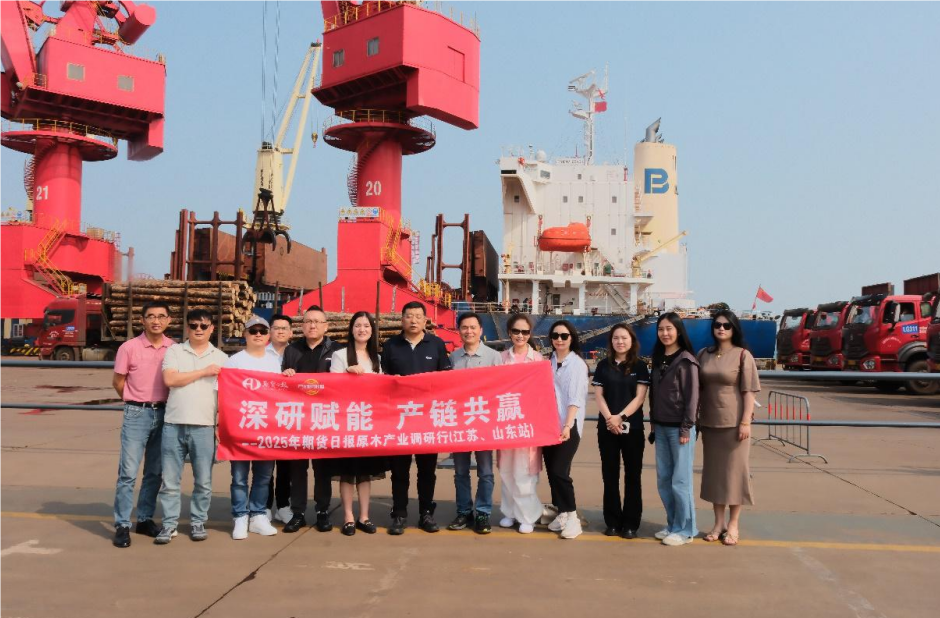
Group 1 - The "2025 Wood Industry Tour" aimed to explore the wood processing industry chain and promote risk management practices such as hedging through futures tools [1] - The Lianshan Port in Rizhao is the largest wood unloading port globally, with a throughput that ranks first among coastal ports in China, featuring six wood operation berths and over 3,000 acres of dedicated storage [3] - Despite a weak overall demand for logs and increased port inventory, the industry remains stable, with processing plant operating rates dropping to around 50% [5] Group 2 - The "front port and back garden" model is being utilized to enhance the wood supply chain, aiming to create the largest wood distribution center in Northern China [6] - Companies are increasingly exploring the use of futures tools for hedging, although some state-owned enterprises face restrictions that limit their ability to engage in buying hedges [7] - The current market environment has led companies to adopt a strategy of trading more when profitable and less when not, with a growing interest in utilizing futures for risk management [9] Group 3 - There is a general lack of understanding regarding futures contracts among industry participants, highlighting the need for improved education on delivery costs and quality standards [9] - The shift in demand from the real estate sector has led to a significant decrease in the proportion of construction wood processing, prompting companies to adapt their business models [9] - The research activity successfully established a communication bridge between industry enterprises and the futures market, promoting new risk management pathways and high-quality development of the wood industry chain [12]