
期货套期保值

Search documents
需求拖累,关注美伊和谈情况
Hua Tai Qi Huo· 2026-03-26 05:50
1. Report Industry Investment Rating - Not provided in the given content 2. Core View of the Report - The market is affected by demand drag, and attention should be paid to the US - Iran peace talks. The EG load continues to decline, and the port starts to reduce inventory. The domestic supply of ethylene glycol decreases due to concerns about the stability of upstream raw material supply, and overseas supply is also at a low level. The demand side shows that polyester and weaving loads are difficult to further increase, and downstream acceptance of high - price raw materials is low. It is recommended to cautiously go long on hedging at low prices, as inventory reduction is expected to accelerate in March and April [1][2][3] 3. Summary According to Relevant Catalogs Price and Basis - Yesterday, the closing price of the EG main contract was 5,036 yuan/ton (a change of - 83 yuan/ton from the previous trading day, a decrease of 1.62%), the EG spot price in the East China market was 4,863 yuan/ton (a change of - 373 yuan/ton from the previous trading day, a decrease of 7.12%), and the EG East China spot basis was - 47 yuan/ton (a month - on - month increase of 8 yuan/ton) [1] Production Profit and Operating Rate - According to Longzhong data, the production gross profit of ethylene - based EG was - 283 US dollars/ton (a month - on - month decrease of 35 US dollars/ton), and the production gross profit of coal - based syngas - based EG was 526 yuan/ton (a month - on - month decrease of 252 yuan/ton) [1] International Price Difference - Not elaborated in the content other than the mention of the chart "Ethylene glycol international price difference: US FOB - China CFR" [18] Downstream Sales, Production, and Operating Rate - The polyester and weaving loads are difficult to further increase, the downstream acceptance of high - price raw materials is low, the voices of production reduction are increasing, the sales of filament have been continuously sluggish recently, the inventory of filament and staple fiber has rapidly accumulated, and the polyester load is lower than that of the same period last year. If the downstream does not replenish inventory continuously, the load may decline [2] Inventory Data - According to CCF data released every Monday, the inventory of MEG in the main ports of East China was 1.039 million tons (a month - on - month increase of 28,000 tons), and the main ports had a slight inventory increase last week. This week, the total planned arrival volume at the main ports in East China is 117,000 tons, and the arrival volume at the secondary ports is 10,000 tons, and the inventory is expected to remain stable [1]
华润材料(301090) - 2026年3月11日投资者关系活动记录表
2026-03-11 08:36
Group 1: Company Overview - The company is a key business unit of China Resources Group, focusing on new materials and was listed on the Shenzhen Stock Exchange in October 2021 [1] - Main products include PET and PETG, with production capacities of 2.1 million tons for PET and 50,000 tons for PETG [1] - The company serves a global customer base, including major brands like Coca-Cola and Evian, and is recognized for its "Hualei" brand in the food-grade polyester segment [1] Group 2: Impact of Geopolitical Events - The ongoing US-Iran conflict has led to significant fluctuations in international crude oil prices, affecting upstream raw material costs such as PTA and MEG [4] - The company has experienced increased procurement costs and logistical challenges, particularly for shipments to the Middle East [4] - Despite these challenges, the company's revenue from the Middle East is relatively small, limiting the overall impact on sales and performance [4] Group 3: Risk Management and Business Strategy - The company employs futures hedging to mitigate risks associated with raw material price volatility, focusing on cost control rather than speculative gains [5] - The dual strategy of deepening core polyester business while developing new materials like PETG and rPET aims to enhance competitiveness and profitability [6] Group 4: Business Development and Production Capacity - The first phase of the 50,000 tons/year PETG project was successfully launched in early 2022, with a second phase currently in preparation [6] - The PETG business targets the daily chemical packaging market and has seen successful sales in 3D printing and medical applications [6] - The rPET business has achieved production of recycled PET with varying content levels, with plans for significant exports in 2024 [6]
欧莱新材:2025年亏损4049.74万元
Sou Hu Cai Jing· 2026-02-28 01:17
Core Viewpoint - The company is facing challenges due to rising raw material costs and increased operational expenses, which have negatively impacted its gross margin and net profit margins [6][14]. Group 1: Financial Performance - The company reported a decline in gross margin compared to the same period last year due to significant increases in material costs, depreciation, and labor expenses [6]. - The weighted average return on equity for 2025 is projected to be -4.84%, a decrease of 8.79 percentage points from the previous year [14]. - Revenue growth rates for total revenue and net profit have shown fluctuations, with a notable decline in 2023 [8]. Group 2: Operational Challenges - The company is experiencing increased costs related to labor, office expenses, and R&D investments as new projects in Hefei and Liuyuan are ramping up production [6]. - To mitigate risks from raw material price volatility, the company has engaged in futures hedging, which has resulted in investment losses and fair value changes affecting current performance [6]. Group 3: Revenue and Profit Trends - Historical data indicates a significant drop in revenue and net profit growth rates, with a notable decline of -55.44% in net profit in 2023 [8]. - Quarterly revenue and net profit figures show variability, reflecting the company's ongoing financial struggles [10].

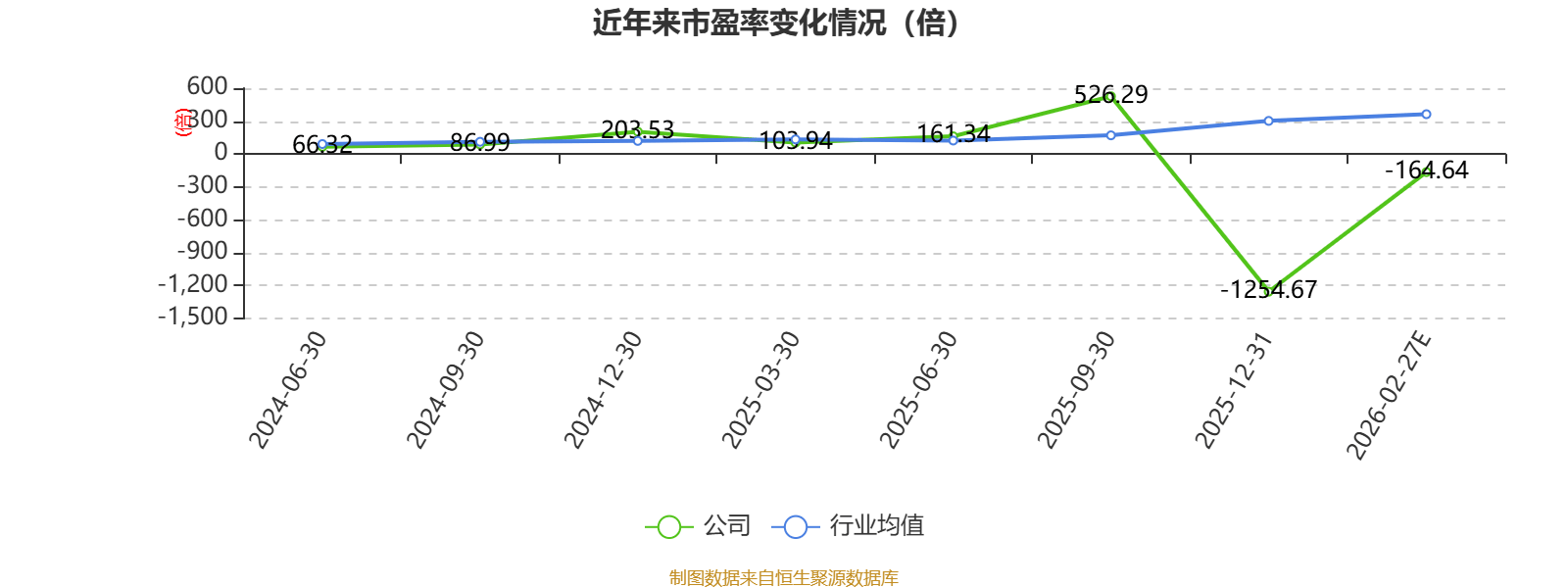
欧莱新材(688530.SH)业绩快报:2025年净亏损4049.74万元
Ge Long Hui A P P· 2026-02-27 11:39
Core Viewpoint - The company reported a significant increase in revenue but a substantial decline in net profit for the fiscal year 2025, indicating challenges in operational performance due to rising costs and ongoing project ramp-up phases [1] Financial Performance - The company achieved an operating revenue of 545 million yuan, representing a year-on-year growth of 24.77% [1] - The net profit attributable to the parent company was -40.4974 million yuan, a decrease of 243.76% compared to the same period last year [1] - The net profit attributable to the parent company, excluding non-recurring gains and losses, was -41.9459 million yuan, reflecting a decline of 325.50% year-on-year [1] Factors Affecting Performance - Major factors impacting operational performance included a significant increase in raw material prices and the ramp-up phase of investment projects in Hefei and Liuyuan, leading to higher material costs, fixed asset depreciation, and labor expenses [1] - The gross profit margin of the main business decreased compared to the same period last year due to these cost pressures [1] - The company experienced an increase in period expenses compared to the previous year, driven by rising labor costs, office expenses, and R&D investments for new product development as projects in Hefei and Liuyuan commenced production [1] Risk Management - To mitigate the risk of raw material price fluctuations, the company engaged in futures hedging activities [1] - At the end of the reporting period, significant increases in certain raw material prices led to investment losses and fair value changes in the company's hedging activities, which had a certain impact on the current period's performance [1]
双良节能2026年2月27日涨停分析:期货套期保值+国际业务突破+亏损收窄
Xin Lang Cai Jing· 2026-02-27 02:35
Group 1 - The core point of the article is that Shuangliang Energy has reached a trading limit with a price of 9.57 yuan, reflecting a 10% increase and a total market capitalization of 19.754 billion yuan [1] - The company has engaged in futures hedging, establishing a robust risk control system to mitigate raw material price volatility, which stabilizes operating profits [2] - Shuangliang Energy has successfully won bids for power station projects in the Middle East, marking a breakthrough in international business and enhancing its global influence [2] Group 2 - The company has been awarded a supercritical thermal power project, demonstrating its technical competitiveness in the air cooling system sector [2] - The expected loss for 2025 is projected to be between 780 million to 1.06 billion yuan, significantly reduced from a loss of 2.13 billion yuan in 2024, indicating a narrowing loss margin year-on-year [2] - The company announced it will not redeem its convertible bonds early, maintaining liquidity and reducing short-term debt pressure, reflecting confidence in its operations [2] Group 3 - The energy-saving and renewable energy sectors have recently attracted market attention, with some stocks in the same sector performing well [2] - Shuangliang Energy is involved in energy-saving and water-saving systems as well as renewable energy systems, aligning with current market trends [2] - On February 27, significant capital inflow was observed, indicating active positioning by major funds [2] Group 4 - The technical indicators for the stock show a MACD golden cross, suggesting increased short-term upward momentum and a breakout above previous resistance levels, attracting more investor interest [2]

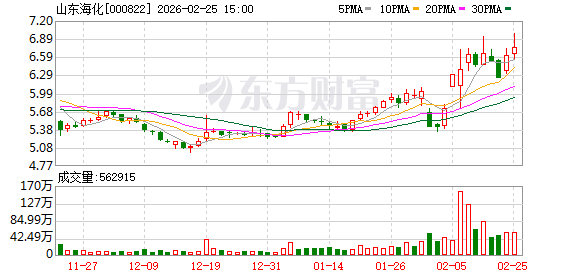
山东海化:关于开展期货套期保值业务的公告
Zheng Quan Ri Bao· 2026-02-25 12:07
Core Viewpoint - Shandong Haihua announced plans to engage in futures hedging business with a budget of up to 1.6 billion yuan, focusing on soda ash and caustic soda futures on the Zhengzhou Commodity Exchange, pending shareholder approval [2]. Group 1 - The company will hold its ninth board meeting on February 25, 2026, to review the proposal for futures hedging [2]. - The hedging strategy will utilize futures and options contracts to manage price risks associated with soda ash and caustic soda [2]. - The total investment for this hedging activity is capped at 1.6 billion yuan [2].

钢贸企业运用期货工具实现跨航线套保
Qi Huo Ri Bao Wang· 2026-02-14 14:14
Core Viewpoint - The volatility in the global shipping market and geopolitical disturbances are significantly impacting export profits for foreign trade companies, with rising shipping costs threatening to erode already thin profit margins [1]. Group 1: Shipping Cost and Profit Impact - The profit margins for steel exports are already low, and sudden increases in shipping costs can eliminate order profits entirely [1]. - The situation in the Red Sea has escalated, with threats from Houthi attacks on commercial vessels, leading to expectations of a rebound in freight rates on the Asia-Europe route [1]. - The container shipping index (European line) futures contract EC2506 saw a significant decline of 37.9%, dropping from around 2350 points in early November 2024 to a low of 1460 points in mid-December 2024, indicating market volatility [1]. Group 2: Hedging Strategy - The company has attempted to hedge against shipping rate fluctuations using the container shipping index (European line) futures, despite initial concerns about the correlation between the European line futures and the Middle Eastern shipping route [2]. - Historical data analysis revealed a strong correlation between the Asia-Europe route and the Middle Eastern route in terms of freight rate trends, justifying the hedging decision [2]. - The high market participation and mature price discovery mechanism of the European line futures were also factors in the decision to use this hedging strategy [2]. Group 3: Financial Outcomes of Hedging - On January 7, 2025, the company purchased 6 contracts of EC2506 futures at a price of 1520.20 points, and by March 13, 2025, sold them at 2102.90 points, realizing a profit of approximately 171,700 yuan [3]. - The increase in shipping costs due to rising freight rates resulted in an additional transportation cost of about 185,600 yuan, leading to a net loss of only 13,900 yuan after hedging, compared to a potential profit reduction of over 90% without hedging [3]. - This hedging operation is viewed as a significant and positive attempt to stabilize profits and ensure fulfillment capabilities for clients [3]. Group 4: Future Risk Management - The risks associated with shipping cost fluctuations include profit compression due to rising rates post-contract, weakened competitive pricing, and unexpected geopolitical events affecting cost calculations [4]. - The introduction of the container shipping index (European line) futures in August 2023 has provided a more standardized and market-oriented risk management tool for import and export traders [4]. - The company plans to integrate the use of container shipping index futures into its standardized processes for import and export operations, enhancing efficiency and maintaining long-term relationships with global clients [4][5].
期货工具护航实体企业永续发展
Qi Huo Ri Bao Wang· 2026-02-12 01:35
Core Viewpoint - Shandong Hengbang Smelting Co., Ltd. (Hengbang) has successfully integrated futures and derivatives into its business strategy, creating a robust risk management system that has enabled the company to achieve stable revenue and profit growth over more than a decade despite market volatility in gold and non-ferrous metals [1][2]. Group 1: Strategic Integration of Hedging - Futures hedging has played a critical role as a "stabilizer" and "protector" in Hengbang's strategic execution, allowing the company to manage price risks effectively while expanding its business [2]. - The company covers various commodities in its hedging strategy, including gold, silver, copper, and lead, aligning these tools with its strategic goals at different stages of development [2][5]. - Hengbang plans to deepen the integration of futures derivatives into all aspects of its operations, from strategic planning to production and sales, achieving comprehensive risk management [3]. Group 2: Operational Framework - Hengbang has established a leadership group for hedging operations, ensuring alignment between hedging strategies and overall business strategies [4]. - The company adheres to a strict management system for hedging, which includes defined business scope, approval authority, funding limits, and risk management protocols [4]. Group 3: Market Resilience - Hengbang's hedging logic is straightforward: it locks in processing profits through sell hedges during raw material procurement and manages sales price risks with buy hedges [5]. - The company has successfully navigated significant market disruptions, such as the 2008 financial crisis and the COVID-19 pandemic, by leveraging its hedging mechanisms to stabilize operations [5]. Group 4: Value Beyond Risk Management - The integration of futures markets has driven technological innovation within Hengbang, as the company aligns its production processes with high standards required for futures delivery [7]. - The successful certification of the "Humon" brand has enhanced brand value and market recognition, allowing Hengbang to command a premium in the market [8]. Group 5: Industry Empowerment - Hengbang actively shares its hedging experiences with small and medium-sized enterprises (SMEs) in the industry, helping them overcome barriers to using futures tools [9][10]. - The company provides tailored guidance to SMEs, assisting them in developing hedging strategies and risk management systems [11]. - As Hengbang's operational scale grows, its hedging activities are expanding to cover a broader range of products, reflecting its commitment to integrating futures tools into its future development [11].

期货“护航”稳盈利 钢铁行业交出亮眼答卷
Qi Huo Ri Bao Wang· 2026-02-10 16:38
Core Viewpoint - The Chinese steel industry has shown significant profit improvement in 2025, driven by multiple factors including raw material cost reductions and strategic adjustments by companies [1][2][6]. Group 1: Profit Improvement - The total operating profit of the steel industry in 2025 reached 109.8 billion yuan, indicating an overall improvement [1]. - Among 23 listed steel companies that announced 2025 performance forecasts, 12 reported profits while 11 incurred losses, with notable profit-makers including Hualing Steel and Shougang [1]. - The improvement in profitability is attributed to a combination of factors, including effective risk management through the use of futures and derivatives [1][2]. Group 2: Raw Material Market Dynamics - The primary reason for profit improvement is the decline in raw material costs, particularly iron ore and coking coal, which saw significant price drops [2]. - Steel prices have not decreased as sharply as raw material prices, allowing steel mills to expand their profit margins [2]. Group 3: Industry Structure and Demand - The "anti-involution" policy introduced last year has positively impacted industry valuations and steel mill profitability [3]. - The demand for steel in traditional construction has declined, but high-end manufacturing and emerging industries, particularly in electric vehicles, have seen robust demand growth [3]. - Regional disparities are evident, with eastern coastal steel companies benefiting from product structure adjustments, while central and western companies face more challenges due to reduced demand [3]. Group 4: Risk Management through Financial Tools - The use of financial derivatives for risk management has become a core competitive advantage for large steel companies [4][5]. - Baosteel exemplifies this approach by integrating futures into its operations to lock in raw material costs and stabilize profits [4]. Group 5: Future Outlook for 2026 - The steel industry is expected to continue its high-quality development trajectory, with overall profitability likely to improve but without significant changes [6]. - Profit totals for the industry in 2026 could reach or exceed 150 billion yuan, driven by recovering domestic demand and strong export performance [7]. - The competition will increasingly focus on cost control and high-end product competitiveness, with a shift towards optimizing structure and efficiency [8].

北方铜业、森麒麟、铭利达套期保值公告
Xin Lang Cai Jing· 2026-02-10 12:40
Core Viewpoint - The increasing volatility of global commodity prices has led more companies to recognize the importance of price risk management, engaging in futures and derivatives trading to support high-quality development [1][5]. Group 1: Company Announcements - **Northern Copper Industry**: The company plans to engage in copper, gold, and silver futures contracts through the Shanghai Futures Exchange, with a margin investment not exceeding RMB 700 million. The hedging strategy aims to align with operational activities to mitigate price volatility risks [2][7]. - **Qingdao Senqilin Tire**: The company intends to utilize futures market hedging to control market risks associated with raw material price fluctuations, with a maximum margin and premium limit of RMB 200 million for 2026. The hedging activities will include natural rubber futures contracts traded in China and Singapore [3][8]. - **Minglida**: The company aims to stabilize production costs and enhance predictability of profitability by engaging in futures hedging for aluminum and copper. The maximum margin and premium limit for this activity is set at RMB 250 million, with a maximum contract value of RMB 2.5 billion on any trading day [4][9].
