功能美学

Search documents
2026年中国眼镜消费趋势白皮书:“全域美学”驱动眼镜行业价值革新
艾瑞咨询· 2026-03-28 00:08
Core Viewpoint - The article discusses the evolving landscape of the eyewear industry, emphasizing the shift from basic functionality to a comprehensive aesthetic experience termed "All-Domain Aesthetics," which integrates product, technology, function, and service dimensions [1][18]. Group 1: New Paradigm - The "All-Domain Aesthetics" framework can be deconstructed into four dimensions: product, technology, function, and service, exemplified by BOLON eyewear's integration of titanium frame advantages with innovative design [1][2]. - BOLON eyewear has established a supply chain ecosystem that supports rapid delivery and exceptional experience, ensuring high-quality products and precise solutions in areas like myopia prevention [2]. Group 2: Future Trends - The eyewear industry is witnessing three core trends: a shift from basic functionality to product value, where eyewear is seen not just as a corrective tool but as a means of expressing personal taste and confidence [3][4]. - 89.1% of consumers have vision correction needs, but their perspectives are changing; 52.3% view eyewear as essential for enhancing confidence, and 44.2% see it as a symbol of personal taste [3][4]. Group 3: Experience Upgrade - Eyewear consumption is transitioning from a function-driven market to one driven by experience upgrades, with nearly 75% of users having a defined rhythm for purchasing or replacing eyewear, averaging every 13-14 months [6]. - The reasons for purchasing or replacing eyewear include damage (39.6%) and changes in prescription (37.2%), but there is a growing awareness of "active upgrades," indicating a shift towards experience-driven decisions [6]. Group 4: Aesthetic Demand - The demand for "product aesthetics" is increasingly significant, with over 50% of consumers viewing eyewear as essential for enhancing confidence and 44.2% as a marker of personal taste [10]. - 34.5% of consumers prioritize fashion and aesthetics in their purchasing decisions, with 47.1% willing to pay a premium for lighter, more durable materials [10]. Group 5: Technological Aesthetics - The focus of eyewear consumers is shifting from precise prescription to comfortable wear, with 48.2% prioritizing comfort over clarity [12]. - This transition reflects a broader trend where the essence of eyewear consumption is moving towards a warm, experience-based competition rather than a cold, parameter-based one [12]. Group 6: Functional Aesthetics - Eyewear consumption is evolving from a single-use tool to a "functional equipment" that meets diverse lifestyle needs, with over 40% of users owning multiple pairs of glasses for different scenarios [14]. - The key drivers for purchasing additional eyewear include meeting specific needs for various situations and eye protection [14]. Group 7: Service Aesthetics - The focus of eyewear consumption is shifting from one-time transactions to long-term trust relationships, with 84.1% of users valuing professional, non-pushy shopping experiences [16]. - Nearly 30% of users have experienced integrated lens and frame customization services, indicating a demand for comprehensive service coverage [16]. Group 8: Supply Chain Ecosystem - The supply chain ecosystem for "All-Domain Aesthetics" requires four core capabilities: continuous research and innovation, intelligent manufacturing with quality assurance, agile collaboration and response, and sustainable development [40]. - BOLON eyewear exemplifies a competitive edge through a comprehensive supply chain that emphasizes consumer experience [43]. Group 9: Industry Trends - The eyewear industry is focusing on consumption, competition, service, and technology, reflecting a trend towards "fashion quality, smart technology, and experiential service" [45]. - The industry is experiencing a dual transformation, moving from corrective tools to fashion accessories, driven by both supply-side innovations and demand-side aesthetic values [47].


波司登高级产品线AREAL第二季作品香港全球首发, 携手英国设计师Kim Jones探索当代时装表达新范式
21世纪经济报道· 2026-03-27 11:20
Core Viewpoint - The collaboration between Bosideng and Kim Jones is reshaping modern clothing by merging Eastern pragmatism with Western high fashion, showcasing the second season of the AREAL premium product line in Hong Kong [1][2]. Group 1: Global Strategy and Brand Positioning - The launch coincides with Art Basel Hong Kong, marking a significant step in Bosideng's global strategy and celebrating its 50th anniversary, aiming to redefine industry dialogues around functionality, design, and cultural exchange [2][11]. - The event gathered key figures from the fashion industry, including Bosideng executives and Kim Jones, highlighting the brand's ambition to establish a new narrative in global fashion [2][4]. Group 2: Design Philosophy and Product Development - Kim Jones has refined the functional clothing criteria for the AREAL product line, presenting lighter, more precise, and fluid forms that embody "functional aesthetics" [7]. - The second season expands from down jackets to a broader ready-to-wear collection, emphasizing layering as a core principle, reflecting a strategic shift towards a complete wardrobe solution [9]. Group 3: Cultural Context and Market Expansion - The launch in Hong Kong places Bosideng within a broader cultural context, with K11 MUSEA serving as a hub for art, commerce, and community, enhancing the brand's narrative beyond mere clothing [10]. - Bosideng's global strategy has evolved from "product export" to "brand value export," aiming to integrate global high-potential resources and tell the story of a Chinese brand [10][11]. Group 4: Innovation and Future Vision - The AREAL premium product line is positioned as an essential choice in modern wardrobes, moving beyond seasonal necessities to embody a timeless selection [10]. - The collaboration with Kim Jones reflects a forward-looking narrative that places Chinese innovation within the global design context, contributing to a larger creative dialogue [11][12].

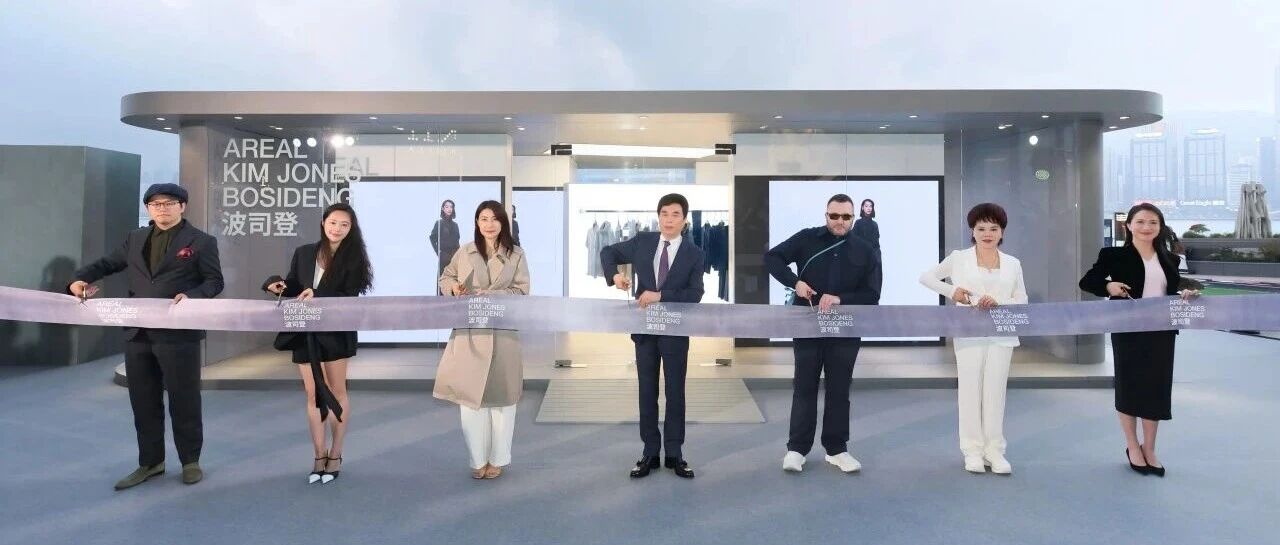
波司登高级产品线AREAL第二季作品香港全球首发
Xin Lang Cai Jing· 2026-03-27 10:27
Core Viewpoint - Bosideng's AREAL high-end product line launched its second season at K11 MUSEA in Hong Kong, coinciding with Art Basel Hong Kong, marking a significant step in the brand's global strategy and celebrating its 50th anniversary [1][8]. Group 1: Product Launch and Design Philosophy - The AREAL product line aims to redefine functional clothing by merging Eastern pragmatism with Western design language, enhancing the brand's global influence and unique value [1][8]. - Designer Kim Jones emphasized the importance of creating clothing that balances functionality with a modern, confident aesthetic, focusing on designs suitable for urban living [5][7]. - The second season expands from down jackets to a broader ready-to-wear collection, including tailored trousers, lightweight shirts, and transitional layering pieces, with layering as a core styling principle [7][8]. Group 2: Strategic Globalization - The launch in Hong Kong is part of Bosideng's long-term strategy to transition from "product export" to "brand value export," aiming to tell the story of Chinese brands on a global stage [8][9]. - The brand's participation in high-profile events like Art Basel reflects its ambition to engage in broader cultural dialogues and enhance its fashion influence internationally [9][11]. - Bosideng's collaboration with Kim Jones represents a forward-looking narrative that positions Chinese innovation within the global design context, moving from "Made in China" to "Created in China" [8][9].
2026年中国眼镜消费趋势白皮书:“全域美学”驱动眼镜行业价值革新
艾瑞咨询· 2026-03-21 00:06
Core Viewpoint - The article discusses the evolving landscape of the eyewear industry, emphasizing the shift from basic functionality to a comprehensive aesthetic experience termed "All-Domain Aesthetics," which integrates product, technology, function, and service dimensions [1][18]. Group 1: New Paradigm - The "All-Domain Aesthetics" framework can be deconstructed into four dimensions: product, technology, function, and service, exemplified by BOLON eyewear's integration of titanium frame advantages with innovative design [1][2]. - BOLON eyewear has established a supply chain ecosystem that supports rapid delivery and exceptional experience, ensuring high-quality products and reliable solutions in areas like myopia prevention [2]. Group 2: Future Trends - The eyewear industry is witnessing three core trends: a shift from basic functionality to product value, where eyewear is seen not just as a corrective tool but as a means of personal expression and confidence [3][4]. - 89.1% of consumers have vision correction needs, but their perspectives are changing; only 62.5% view eyewear as a medical tool, while 52.3% see it as essential for confidence and 44.2% as a symbol of personal taste [3][4]. Group 3: Experience Upgrade - Eyewear consumption is transitioning from a function-driven market to one driven by experience upgrades, with nearly 75% of users having a defined replacement cycle of 13-14 months, faster than the industry average [6]. - The reasons for purchasing or replacing eyewear include damage (39.6%) and prescription changes (37.2%), but there is a growing trend of proactive upgrades based on innovation and aesthetic needs [6]. Group 4: Aesthetic Demand - The demand for "product aesthetics" is increasingly significant, with over 50% of consumers viewing eyewear as essential for enhancing confidence and 44.2% as a marker of personal taste [10]. - 34.5% of consumers prioritize fashion and aesthetics in their purchasing decisions, with 47.1% willing to pay a premium for lighter, more durable materials [10]. Group 5: Technological Aesthetics - The focus of eyewear consumers is shifting from precise prescription to comfortable wear, with 48.2% prioritizing comfort over clarity [12]. - This shift indicates a demand for eyewear that provides a comprehensive experience, including features like blue light protection and lightweight materials [12]. Group 6: Functional Aesthetics - Over 40% of surveyed users own multiple pairs of eyewear to meet diverse lifestyle needs, indicating a shift from single-use tools to multifunctional equipment [14]. - The key drivers for purchasing additional eyewear include meeting specific usage scenarios and eye protection [14]. Group 7: Service Aesthetics - The focus of eyewear consumption is moving from one-time transactions to long-term relationships, with 84.1% of users valuing professional, non-pushy shopping experiences [16]. - A significant portion of users has experienced integrated lens and frame customization services, highlighting the importance of comprehensive service coverage [16]. Group 8: Supply Chain Ecosystem - The supply chain ecosystem for "All-Domain Aesthetics" requires four core capabilities: continuous research and innovation, smart manufacturing with quality control, agile collaboration and response, and sustainable development [40][43]. - BOLON eyewear exemplifies this ecosystem by creating a consumer-centric supply chain that integrates all aspects of the eyewear experience [43]. Group 9: Industry Trends - The eyewear industry is focusing on four areas: consumption, competition, service, and technology, reflecting a trend towards fashionable quality, smart technology, and enhanced service experiences [45]. - The industry is experiencing a transformation from parameter-based competition to deep experience competition, emphasizing user-centered design and comfort [49].

2026年中国眼镜消费趋势白皮书:“全域美学”驱动眼镜行业价值革新
艾瑞咨询· 2026-03-13 00:07
Core Viewpoint - The article discusses the evolving landscape of the eyewear industry, emphasizing the shift from basic functionality to a comprehensive aesthetic experience termed "All-Domain Aesthetics," which integrates product, technology, function, and service dimensions [1][18]. Group 1: New Paradigm - The "All-Domain Aesthetics" framework can be deconstructed into four dimensions: product, technology, function, and service, exemplified by BOLON eyewear's integration of titanium frame advantages with innovative design [1][2]. - BOLON eyewear has established a supply chain ecosystem that supports rapid delivery and exceptional experience, ensuring high-quality products and precise solutions in areas like myopia prevention [2]. Group 2: Future Trends - The eyewear industry is witnessing three core trends: a shift from basic functionality to product value, where eyewear is seen not just as a corrective tool but as a means of expressing personal taste and confidence [3][4]. - 89.1% of consumers have vision correction needs, but their perspectives are changing; 52.3% view eyewear as essential for enhancing confidence, and 44.2% see it as a symbol of personal taste [3][4]. Group 3: Experience Upgrade - Eyewear consumption is transitioning from a function-driven market to one driven by experience upgrade needs, with nearly 75% of users having a defined rhythm for purchasing or replacing eyewear [6]. - The average replacement cycle for eyewear is 13-14 months, faster than the industry average of 15-18 months, indicating a growing awareness of proactive upgrades beyond basic needs [6]. Group 4: Aesthetic Demand - The demand for "product aesthetics" is increasingly significant, with over 50% of consumers viewing eyewear as essential for enhancing confidence and 44.2% as a marker of personal taste [10]. - 34.5% of consumers prioritize fashion and aesthetics in their purchasing decisions, with 47.1% willing to pay a premium for lighter, more durable materials [10]. Group 5: Technological Aesthetics - The focus of eyewear consumers is shifting from precise prescription to comfortable wear, with 48.2% prioritizing comfort over clarity [12]. - This shift indicates a demand for eyewear that provides a comprehensive experience, including features like fatigue relief and blue light protection [12]. Group 6: Functional Aesthetics - Over 40% of surveyed users own multiple pairs of eyewear to meet diverse lifestyle needs, indicating a shift from single-use tools to multifunctional equipment [14]. - The primary motivations for purchasing additional eyewear include meeting specific usage scenarios and eye protection [14]. Group 7: Service Aesthetics - Consumers are increasingly valuing long-term relationships over one-time transactions, with 84.1% prioritizing professional shopping experiences and 86.3% valuing comprehensive after-sales service [16]. - This trend highlights the importance of service as a core asset and competitive strength in the eyewear industry [16]. Group 8: Supply Chain Ecosystem - The supply chain ecosystem for "All-Domain Aesthetics" requires four core capabilities: continuous research and innovation, intelligent manufacturing with quality assurance, agile collaboration and response, and sustainable development [40]. - These capabilities are essential for ensuring high-quality delivery and supporting ongoing product and service innovation [40]. Group 9: Industry Trends - The eyewear industry is focusing on four areas: consumption, competition, service, and technology, reflecting a trend towards "fashion quality, smart technology, and experiential service" [45]. - The industry is experiencing a dual transformation, moving from corrective tools to fashion accessories and cultural symbols, driven by both supply and demand dynamics [47].

烟台机场T2航站楼出圈!荣获2025“全球最美机场”称号
Qi Lu Wan Bao Wang· 2025-07-09 01:31
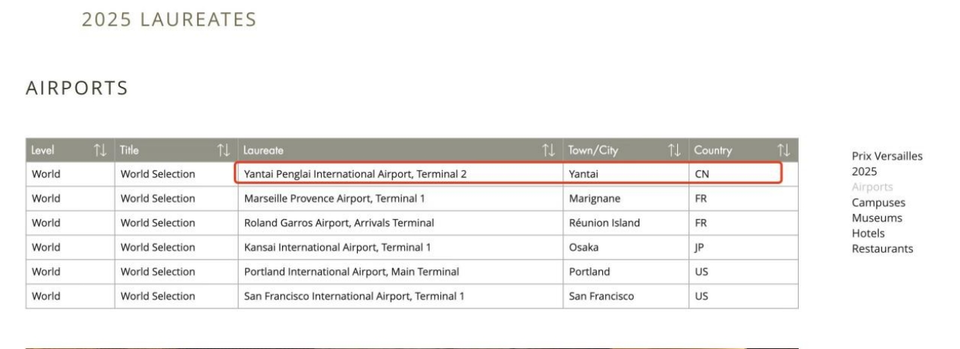
Core Viewpoint - Yantai Airport's Terminal 2 has been awarded the title of "World's Most Beautiful Airport" in the 2025 global rankings by UNESCO and the International Union of Architects, highlighting its exceptional design, unique architectural aesthetics, and leading sustainability practices [1][6]. Design Philosophy - The design of Yantai Airport's Terminal 2, covering an area of approximately 172,000 square meters, is inspired by the unique mountain-sea culture of Yantai, embodying the concept of "Fairy Sea Sacred Land, Cloud-Top Fairy Mountain" throughout its architectural form and spatial layout [3]. - The terminal's silhouette resembles the undulating Kunyu Mountain range, harmonizing with the surrounding natural landscape, while the roof lines are fluid and dynamic, reflecting the charm of this coastal city [3]. Planning Features - The terminal employs a shallow bay layout parallel to the runway, balancing aircraft operational efficiency with passenger convenience [4]. - The flexible configuration of aircraft parking positions enhances utilization rates and accommodates both international and domestic flight needs, supporting transit flights to Japan and South Korea [4]. Highlights - Terminal 2 prioritizes functionality and human-centered design, utilizing skylights for natural light and ventilation, and incorporating energy-efficient materials [5]. - The design includes a central commercial area that integrates culture, trade, and display, enhancing non-aeronautical revenue while providing travelers with diverse shopping and cultural experiences [5]. Significance - The recognition of Yantai Airport as a symbol of openness and connectivity in the Shandong Peninsula reflects not only its capabilities but also China's advancements in airport construction on the international stage [6]. - This accolade is expected to strengthen Yantai Airport's position as an international aviation hub, attracting more international routes and passengers, thereby invigorating economic development in the Shandong Peninsula and the broader East China region [6].
2025秋冬淘宝天猫运动户外行业鞋服趋势白皮书
Sou Hu Cai Jing· 2025-05-04 11:27
Core Insights - The report titled "2025 Autumn and Winter Taobao Tmall Sports and Outdoor Industry Footwear and Apparel Trend White Paper" analyzes the current state, trends, and platform strategies of the sports and outdoor footwear and apparel market for the upcoming seasons [1][5][28] - The sports industry is experiencing robust growth driven by policies, industry developments, and events, with outdoor products becoming popular gifts and a continuous influx of new customers [1][5] - Consumer behavior is evolving, with a shift towards multi-dimensional sports engagement, allowing businesses to precisely target potential users [1][5][16] Market Trends - The report highlights significant growth in core categories such as down jackets, jackets, and pants, with ongoing upgrades in functionality and aesthetics to meet diverse scene requirements [1][5][28] - Popular style themes include "Modern Snow Domain," "Symbiotic Wilderness," "Dimensional Awakening," "Elegant Intelligence," "Urban Wilderness," and "Light Oxygen Healing," each characterized by unique design, functionality, and color combinations [1][5][28] Platform Strategies - Taobao Tmall is enhancing its operational strategies by upgrading inventory trends to help merchants discover opportunities and expose new products [1][5][28] - The platform is focusing on serving the MVP (Most Valuable Player) demographic, improving user engagement, and utilizing live streaming to amplify new product launches [1][5][28] Consumer Insights - The report indicates that over 70% of consumers choose sports and outdoor products for holiday and gift-giving purposes, emphasizing practicality and emotional value [1][20][23] - New customer segments are emerging, particularly among young professionals who view outdoor activities as a means of self-reward and stress relief [1][16][20] Industry Outlook - The sports and outdoor market is expected to continue its growth trajectory, with new customer influx and increasing diversity in product categories and purchase frequency [1][28][29] - The integration of advanced technologies and data-driven insights is anticipated to drive product innovation and enhance consumer experiences [1][30][31]