动力蓄电池回收利用

Search documents
政策查询要点汇总
Sou Hu Cai Jing· 2025-12-02 03:46
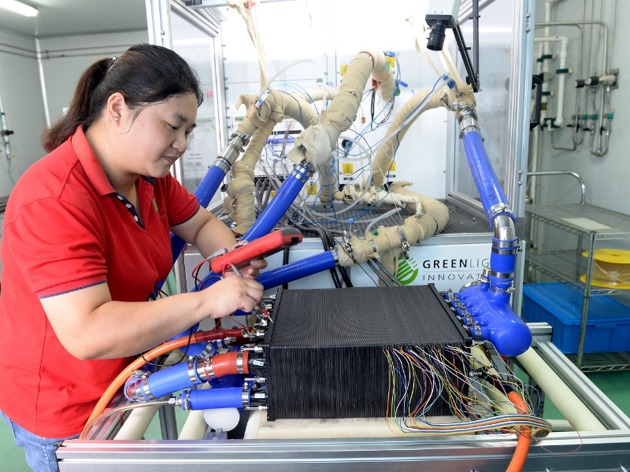
Core Insights - The article focuses on five key national industrial policies that are currently effective, aimed at helping companies quickly grasp policy benefits and align with development needs [1] Group 1: 5G and Industrial Internet - The Ministry of Industry and Information Technology (MIIT) aims to build 10,000 5G factories and create at least 20 integrated application pilot cities by 2027 [2] - Key opportunities for companies include subsidies for high-energy-consuming industries to build independent 5G networks and collaboration with leading enterprises for small and medium-sized enterprises (SMEs) [2] - The policy emphasizes the need for planning technology solutions and application timelines by the end of 2025 for the first batch of independent network pilot assessments [2] Group 2: SME Challenge Mechanism - The policy encourages SMEs to lead or participate in major national and provincial technology projects, offering up to 5 million yuan in financial support for successful projects [3] - Companies should focus on "breakthrough" and "results transformation" projects, highlighting collaboration with universities and clear timelines for results [3] - Financial support is disbursed in stages, with 40% at project initiation, 30% after mid-term evaluation, and the remaining 30% upon project completion [3] Group 3: Battery Recycling - The interim measures for the recycling of new energy vehicle batteries require manufacturers to establish recycling networks with a minimum recovery rate of 90% [4] - Companies can apply for "white list" qualifications to enjoy tax reductions and priority subsidies, and collaborate with battery manufacturers for additional funding [4] - The policy mandates full coverage of recycling points by 2025, with penalties for non-compliance [4] Group 4: Smart Photovoltaics - The action plan for smart photovoltaic industry aims for over 80% smart upgrade rate of photovoltaic components by 2025, supporting integration with 5G and AI [5] - Companies can apply for up to 1 million yuan in rewards for smart photovoltaic pilot projects and should focus on smart upgrades and scenario integration [5] - Requirements for pilot projects include meeting six indicators related to smart levels and energy efficiency, necessitating third-party evaluations [5] Group 5: Innovation Support for SMEs - The policy increases the tax deduction rate for R&D expenses to 175% and establishes a 20 billion yuan innovation fund for SMEs [6] - Companies should maintain documentation for R&D projects and focus on applying for the innovation fund through local technology departments [6] - SMEs participating in national standard formulation can apply for special subsidies linked to the standard's level [6] Additional Insights - The article highlights that there are more detailed policies at national and local levels for companies to explore [7] - Companies can utilize the platform for in-depth policy queries and application tracking to better seize policy opportunities [10]

七部门:京津冀等地及中国铁塔开展动力电池回收利用试点
Mei Ri Jing Ji Xin Wen· 2025-11-24 04:09
Core Viewpoint - The Chinese government is promoting the recycling and utilization of power batteries from new energy vehicles (NEVs) through a joint initiative by multiple ministries, aiming to enhance the sustainability of the NEV industry and improve the recycling system [1][2]. Group 1: Policy Initiatives - The Ministry of Industry and Information Technology (MIIT) and other departments have issued a notification to establish pilot programs for the recycling of power batteries from NEVs [1]. - The action plan aims to increase NEV production and sales to approximately 2 million units by 2020, with a target of 80% of new public and logistics vehicles in key areas to be powered by new energy or clean energy [1]. Group 2: Pilot Regions and Enterprises - The pilot regions include major areas such as Beijing-Tianjin-Hebei, Shanghai, Jiangsu, and Guangdong, along with specific enterprises like China Tower Corporation [1]. - The notification emphasizes the need for automotive manufacturers to implement extended producer responsibility and establish recycling service networks [1]. Group 3: Business Model Innovation - The initiative encourages the exploration of innovative business models, promoting collaboration among upstream and downstream enterprises in the industry chain to form a cross-industry community of interests [2]. - The use of information technology is highlighted to drive commercial model innovation, including the establishment of third-party service platforms and online-offline battery residual value trading [2]. Group 4: Resource Utilization and Standards - The notification calls for the integration of existing resources and the collaboration of key enterprises, research institutions, and certification bodies to enhance the recycling and disposal standards for power batteries [3]. - It aims to establish a mechanism for technological innovation and application in the recycling and utilization of power batteries, focusing on key common technology breakthroughs [3].