劳动者休息休假权

Search documents
【社评】超长春节假让众人羡慕的是什么?
Xin Lang Cai Jing· 2026-01-20 19:55
Core Viewpoint - The emergence of "super long holidays" reflects not only generous time off but also the respect and support companies show towards their employees, emphasizing the importance of recognizing the human aspect of labor beyond productivity and efficiency [1][4]. Group 1: Company Practices - A manufacturing company in Wenzhou, Zhejiang, announced a 35-day holiday from February 1 to March 8, rewarding employees with a 5,000 yuan bonus for timely leave and return, highlighting the company's commitment to employee well-being [1]. - The concept of "super long holidays" is gaining popularity, with companies adopting measures like extended leave and return bonuses to attract and retain talent, especially in industries facing labor shortages post-holiday [2]. Group 2: Employee Well-being - Ensuring the right to rest and vacation is crucial for workers' mental health and quality of life, which in turn can stimulate consumer potential and promote social harmony [3]. - There are still challenges in the workplace, such as reluctance to take leave and strict monitoring of employee time, which can hinder the recognition of workers' rights [3]. Group 3: Corporate Culture and Management - Companies need to enhance their "soft power" through management philosophy and corporate culture, which includes optimizing work environments, improving compensation systems, and providing comprehensive social insurance [4]. - The increasing presence of younger generations in the workforce brings higher expectations for emotional value and psychological needs, prompting companies to adopt innovative practices to foster a supportive work environment [5]. Group 4: Mutual Commitment - Companies and employees are seen as partners sharing both risks and opportunities, with the notion that investing in employees is tantamount to investing in the future of the company [5].
强制加班、隐形加班时有发生,劳动者应如何维权?
Nan Fang Du Shi Bao· 2025-05-15 16:15
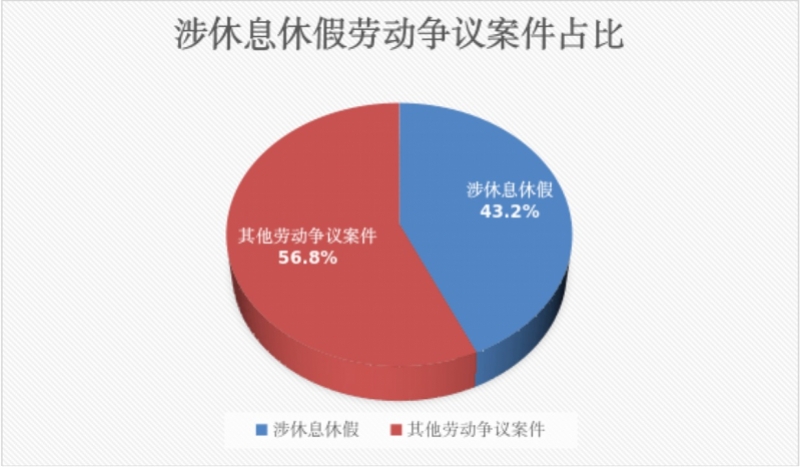
Core Viewpoint - The phenomenon of forced overtime and hidden overtime is prevalent, with some employers viewing overtime as a corporate culture to motivate employees to extend working hours and forgo vacations to create value for the company [1][7][8] Group 1: Trends in Labor Disputes - The number of labor dispute cases related to rest and vacation rights has been increasing annually, with 4,942 cases out of 11,440 total labor disputes from 2022 to 2024, accounting for approximately 43.2% of all labor disputes [2][3] - The number of cases adjudicated has risen from 1,266 in 2022 to 1,982 in 2024, indicating a consistent upward trend [2] Group 2: Nature of Disputes - Laborers' claims often involve multiple requests, including statutory annual leave wages, overtime wages, sick leave wages, and enforcement of labor contracts, reflecting a complex and intertwined nature of disputes [5] - Among the cases involving overtime wages, 705 cases (41.6%) pertained to delayed overtime, while 1,469 cases (86.7%) involved rest day overtime, and 792 cases (46.7%) related to statutory holiday overtime [5] Group 3: Reasons for Disputes - The primary reasons for disputes include statutory annual leave (3,479 cases, 70.4%), overtime wages (1,740 cases, 35.2%), and sick leave (227 cases, 4.6%) [6] - Cases where employers restrict laborers' vacation rights through regulations accounted for 598 cases (12.1%), while unreasonable refusals of vacation requests made up 421 cases (8.5%) [6] Group 4: Outcomes of Disputes - In the last three years, 76.9% of cases adjudicated in favor of laborers, with 32.7% of cases fully supporting claims for unpaid annual leave wages [6] - For overtime wage claims, 26.4% of cases fully supported laborers' requests, while 52.8% were partially supported [6] Group 5: Recommendations for Laborers - Laborers are advised to enhance their awareness of legal rights and maintain evidence of their work hours and communications to avoid disputes [8][9] - It is recommended that laborers carefully review labor contracts and company regulations regarding vacation rights and raise objections to any unreasonable restrictions [8][9]

劳动者休息休假权是否被侵害如何认定? 法院以案释法阐明裁判规则
Yang Guang Wang· 2025-05-14 12:02
Core Viewpoint - The article highlights the increasing violations of workers' rights regarding rest and vacation, particularly in the context of overtime and the enforcement of paid annual leave, with a significant rise in related labor dispute cases in recent years [1][6]. Group 1: Labor Disputes and Trends - From 2022 to 2024, the Beijing Third Intermediate People's Court handled 11,440 labor dispute cases, with over 43% related to workers' rights to rest and vacation, indicating a yearly increase in such cases [1]. - The court's analysis reveals that the nature of work and the characteristics of specific roles can influence the recognition of overtime claims, particularly in industries with cyclical work demands [3][4]. Group 2: Overtime and Work Conditions - The phenomenon of "online overtime" has emerged as a significant issue, characterized by its hidden and fragmented nature, making it challenging to determine actual working hours and the extent of labor performed [4][6]. - Employers often impose excessive workloads and expect employees to be available during rest periods, leading to a culture where overtime is normalized and workers feel pressured to forgo their rights [6][8]. Group 3: Legal Framework and Employer Responsibilities - Courts have established that employers cannot restrict workers' legal rights to paid annual leave through internal regulations, and they must comply with labor laws regarding various types of leave [8][10]. - Employers are advised to create reasonable leave policies and ensure timely payment of overtime wages to mitigate risks associated with labor disputes and potential economic compensation for wrongful termination [10].