
北货南销入湾

Search documents
借“黔货出海”通道, 内蒙古谋划农畜产品出口东南亚
Zhong Guo Xin Wen Wang· 2025-12-15 11:47
Core Viewpoint - Inner Mongolia is leveraging the "Qian Goods Going to Sea" channel to plan the export of agricultural and livestock products to Southeast Asia, with a focus on breaking regional barriers and tapping into the southwestern consumer market [1][2]. Group 1: Investment and Collaboration - A signing event in Guiyang resulted in cooperation agreements worth 580 million RMB between Inner Mongolian agricultural enterprises and relevant companies in Guizhou [1]. - The collaboration aims to promote Inner Mongolia's high-quality beef and lamb products, adapting them to local tastes in the southwestern and southern markets [2]. Group 2: Market Potential and Product Offerings - Inner Mongolia leads the nation in the production of milk, lamb, beef, and cashmere, with over 8 million tons of milk and 1.8 million tons of lamb and beef produced annually [2]. - The demand for beef and lamb in Southeast Asia, particularly within the Chinese dining culture, presents a significant opportunity for promoting these products [2]. Group 3: Trade and Distribution Strategy - Inner Mongolia plans to utilize its cross-border trade advantages to integrate Guizhou's specialty products, such as tea and chili, into its international export network [4]. - The initiative aims to create a dual circulation model, facilitating the export of southern goods to the north and the import of northern goods to the Bay Area [4].

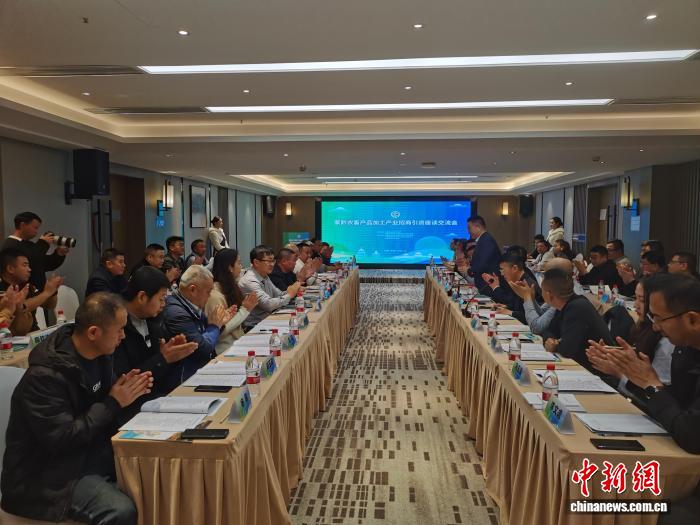
蒙黔农畜产品加工产业达成5.8亿元合作
Zhong Guo Xin Wen Wang· 2025-12-15 10:45
Core Viewpoint - The collaboration between Inner Mongolia and Guizhou in the agricultural and livestock processing industry has resulted in a signed agreement worth 580 million yuan, aiming to enhance market access in Southwest China and Southeast Asia [1][3]. Group 1: Collaboration Details - The signing event took place in Guiyang, where Inner Mongolian agricultural enterprises partnered with Guizhou companies [1]. - A key objective of the collaboration is to break regional barriers and tap into the consumer market in Southwest China, with plans to expand into Southeast Asia [1][3]. Group 2: Product and Market Strategy - Inner Mongolia aims to promote its high-quality beef and lamb products by adapting them to local tastes in Guizhou, facilitating acceptance in the Southern market [3]. - The region's agricultural products, including beef, lamb, dairy, and cashmere, rank among the top in China, positioning Inner Mongolia as a significant supplier [3]. Group 3: Supply Chain and Trade Opportunities - Guizhou has established an efficient production and sales system that connects high-end markets in the Guangdong-Hong Kong-Macao Greater Bay Area and Southeast Asia [3]. - Inner Mongolia plans to leverage its cross-border trade advantages to integrate Guizhou's specialty products, such as tea and chili, into its international export network, creating a bi-directional flow of goods [3][4].