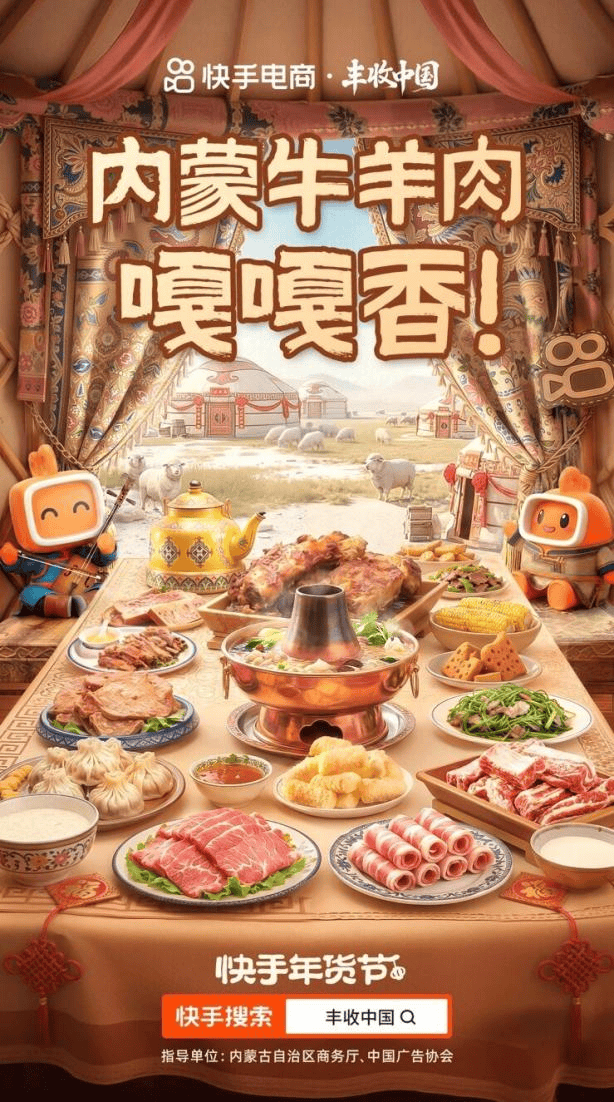
农畜产品加工

Search documents
青海玛沁:牦牛肉丸带动县域经济
Ke Ji Ri Bao· 2026-02-27 07:21
Core Viewpoint - The establishment of the fully automated yak meatball production line by Qinghai Yuanxiang Food Co., Ltd. marks the completion of the largest yak meatball processing base in the Qinghai-Tibet Plateau, facilitating a high-quality transformation of the Qinghai yak industry from "raw grazing" to "green organic" and from "raw material output" to "brand output" [1][4]. Group 1: Production and Technology - The production line is approximately 300 meters long and can process fresh organic yak meat into meatballs in under 4 hours, utilizing advanced techniques such as rapid freezing to preserve flavor and nutrition [2][3]. - Once fully operational, the company can produce up to 30 tons of high-quality yak meatballs daily [2]. Group 2: Market Development - Yuanxiang Food has established brand stores at key locations, including the production site and major airports, and is actively expanding its online presence through platforms like Douyin [3]. - The company has secured orders exceeding 5 million yuan from regions such as Shanghai, Jiangsu, and Guangdong, indicating strong market acceptance [3]. Group 3: Economic Impact and Employment - The yak meatball processing project is expected to directly employ over 200 local herders, providing stable income and skill development opportunities [3][4]. - The project aligns with the Qinghai provincial strategy to enhance the organic agricultural product output, leveraging the region's significant yak population [4][5]. Group 4: Industry Collaboration and Growth - The project benefits from support through East-West cooperation, which aims to upgrade the livestock industry in Qinghai, emphasizing deep processing and value enhancement [4][5]. - The "enterprise + cooperative + herder" model ensures a stable supply of organic yak meat while providing herders with guaranteed prices, fostering a beneficial cycle within the industry [4][6].
向新向优真抓实干 向上向好再攀高峰
Xin Lang Cai Jing· 2026-02-25 18:57
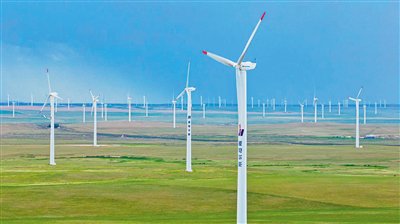
Group 1 - Hohhot is focusing on high-end, intelligent, and green development through technological innovation and industrial integration, aiming to drive six major industrial clusters [4][5] - From 2021 to 2024, Hohhot's GDP increased from 317.78 billion to 410.71 billion, with an average annual growth rate of 6.4%, moving up in national ranking from 23rd to 22nd [5] - In 2025, the industrial added value above designated size grew by 6.2%, with emerging industries like electrical machinery and pharmaceutical manufacturing showing strong performance [5][6] Group 2 - Hohhot's six industrial clusters, including green agricultural products processing, new materials, and biomedicine, now account for over 90% of the city's industrial output [6] - The city has made significant ecological improvements, with 80% of the land on the front slope of Daqing Mountain achieving ecological greening [6] - Hohhot has established partnerships with 116 medical institutions, enhancing healthcare access and resources across the region [7] Group 3 - Tongliao's GDP has surpassed 170 billion, with fixed asset investment maintaining double-digit growth for four consecutive years [9] - The city is focusing on upgrading traditional industries and developing strategic emerging industries, particularly in corn and beef production [8][9] - Tongliao's new energy sector has seen significant investment, with 160 billion in projects and a focus on integrated development of wind, solar, and hydrogen energy [10] Group 4 - Baotou is undergoing a transformation by integrating green and low-carbon technologies into traditional industries, such as the coal-to-olefins project [12][13] - The city's renewable energy capacity has reached 12.14 million kilowatts, accounting for 52.45% of total power generation [13] - Baotou is also focusing on waste recycling and circular economy initiatives, achieving a 68.25% utilization rate of industrial solid waste [13] Group 5 - Ulanqab is enhancing its modern industrial system, with a focus on renewable energy and data centers, achieving a total power capacity of 30.1 million kilowatts by 2025 [16][17] - The city aims to complete 260 major projects with an investment of 70 billion, while also promoting new consumption scenarios [18] - Ulanqab is positioning itself as a key player in the hydrogen economy, with plans for green hydrogen and ammonia projects [18]

创新重塑西藏园区经济格局
Xin Lang Cai Jing· 2026-02-24 23:26
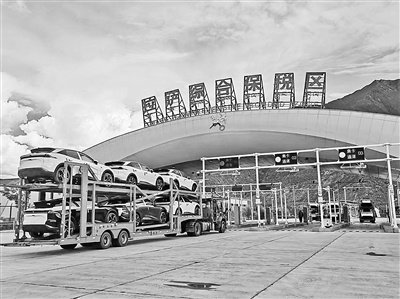
Core Insights - The article discusses the transformative impact of technology on the economic landscape of Tibet's industrial parks, highlighting the integration of smart systems and digital technologies in operations [1][3]. Group 1: Economic Contributions - Tibet has established a development framework consisting of 4 national-level and 10 autonomous region-level development zones, which occupy approximately 0.01% of Tibet's area but contribute about 10% of the region's GDP, over 80% of tax revenue, and the majority of import-export totals [3]. - The Lhasa High-tech Zone, known as the "Digital Valley," houses over 55% of Lhasa's large-scale digital economy enterprises, while the Lhasa Economic Development Zone has developed six major industrial clusters, including biomedicine and health [3]. Group 2: Technological Innovations - The Lhasa Comprehensive Bonded Zone has implemented a customized regulatory system that enhances efficiency by over 80% compared to traditional methods, allowing for safe and efficient circulation of high-value goods in the unique high-altitude environment [4]. - A complete digital processing trade ledger has been established for the precious metals processing project, enabling real-time monitoring and data storage for each production step [4]. Group 3: Cross-Border Trade and Logistics - The Jilong Port, located approximately 800 kilometers from Lhasa, has upgraded its functions to improve trade efficiency, utilizing smart customs and positioning technologies for real-time monitoring of goods [5][6]. - The Jilong Customs aims to enhance service quality through tailored strategies for enterprises and products, facilitating convenient customs clearance and supporting high-quality development of the port [5]. Group 4: Future Projections - The Lhasa Economic Development Zone and the Comprehensive Bonded Zone are projected to account for 58.34% of Tibet's total trade volume by 2025 [4]. - The Lhasa South Asia Cross-Border E-commerce Industrial Park has attracted 12 enterprises, with expectations for transaction volumes to exceed 2 billion yuan by 2026 [6].
内蒙古广东商会会长王鹏翔:广货已成为“高品质”与“智能化”代名词
Xin Lang Cai Jing· 2026-02-16 00:28
Group 1 - The "Guangdong goods going north" trend has deepened, evolving from basic commodity circulation to industrial collaboration and shared concepts between Guangdong and Inner Mongolia [1] - Guangdong's products have transitioned from representing "novelty" to being synonymous with "high quality" and "intelligent" offerings, reshaping consumption and production in Inner Mongolia [1] - Over 2,000 Guangdong enterprises have invested in Inner Mongolia, with actual investments exceeding several hundred billion yuan, making them a significant force in foreign investment in the region [1] Group 2 - Guangdong enterprises have contributed to Inner Mongolia through three main aspects: bringing talent and technology, financial investment exceeding 100 billion yuan, and creating over 50,000 local jobs, primarily in technical positions [2] - Recommendations for future cooperation include enhancing the "flying economy" model, promoting talent mobility between the two regions, and integrating digital industries with Inner Mongolia's computing resources [3]
内蒙古启动实施农牧业“十大工程”
Xin Lang Cai Jing· 2026-02-12 01:01
Core Viewpoint - Inner Mongolia is implementing the "Ten Major Projects" in agriculture and animal husbandry to enhance the supply of high-quality green agricultural and livestock products [1] Group 1: Major Projects - The "Ten Major Projects" include initiatives such as "Seed Core," innovation chain construction, grain production capacity enhancement, dairy industry revitalization, corn biomanufacturing, beef and mutton production efficiency, forage supply improvement, cold-cool vegetable foundation strengthening, deep processing of agricultural and livestock products, brand cultivation, and trading platform construction [1] - The aim is to improve the comprehensive production capacity and quality efficiency of agriculture and animal husbandry, promoting steady growth in the production of key agricultural and livestock products like grain, meat, and milk [1] Group 2: Product Development and Branding - Inner Mongolia plans to enhance deep processing of agricultural and livestock products and develop green organic brands, focusing on high-value industries such as corn biomanufacturing, solid-state dairy products, premium beef and mutton, animal vaccines, probiotics, and small variety amino acids [1] - The region aims to create influential brands for green agricultural and livestock products, including beef, cheese, miscellaneous grains, cold-cool vegetables, sunflower seeds, and fresh corn, to ensure high-quality products reach consumers nationwide [1] Group 3: Economic Development and Farmer Support - Inner Mongolia will promote multi-channel income growth for farmers, vigorously develop county economies and industries that enrich the population, and advance new urbanization with county towns as key carriers [1] - The strategy includes improving mechanisms that connect farmers with agricultural development and continuously enhancing the effectiveness of policies that support agriculture and benefit farmers [1] Group 4: Current Production Status - Inner Mongolia ranks fifth in the country for grain production, with annual outputs of over 1 million tons for both beef and mutton, and maintains leading positions in milk, cashmere, forage production, and the number of "famous, special, excellent, and new" agricultural products [2]

1.6亿元资金续航乡村振兴
Xin Lang Cai Jing· 2026-02-03 19:46
Core Insights - The article highlights the allocation of 160 million yuan in financial support for rural revitalization in Haibei Prefecture, aimed at enhancing industrial upgrades, infrastructure improvements, and livelihood guarantees [1] Group 1: Financial Support and Project Implementation - The first batch of financial support for rural revitalization in Haibei Prefecture amounts to 160 million yuan, which will empower various sectors [1] - Since the beginning of the 14th Five-Year Plan, a total of 778 projects have been implemented, with 347 industrial projects contributing to a diversified development pattern [1] - The financial support has directly benefited over 110,000 farmers and herders, with collective village earnings exceeding 34.72 million yuan [1] Group 2: Infrastructure Development - A total of 926 million yuan has been allocated to infrastructure projects, resulting in the upgrade of 701.81 kilometers of rural roads and the establishment of 65 drinking water safety projects [1] - Environmental improvements in rural areas have led to cleaner water and greener landscapes [1] Group 3: Targeted Financial Assistance - An additional 6.2 million yuan in subsidies has been provided to benefit nearly 20,000 individuals through programs like the "Rain and Dew Plan" and small loan interest subsidies [1] - The newly allocated 160 million yuan will focus on advantageous industries such as specialty farming, livestock product processing, and rural tourism, as well as addressing shortcomings in roads and water resources [1]
年货节上年味儿浓
Xin Lang Cai Jing· 2026-02-01 19:21
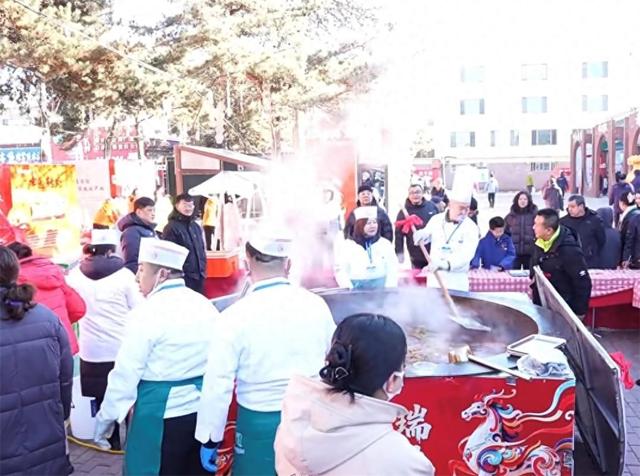
Group 1 - The "2026 New Spring Festival Goods Fair" in Hohhot aims to promote local agricultural and livestock products, featuring various interactive activities to enhance the festive atmosphere [1][2] - The fair showcases high-quality agricultural products from 12 leagues and cities in Inner Mongolia, including beef, lamb, dairy products, and local specialties, with over a hundred enterprises participating [2] - An online shopping platform has been launched to complement the physical fair, allowing customers to order local products conveniently, ensuring timely delivery before the Spring Festival [2] Group 2 - The event serves as a significant platform for promoting consumption and enhancing the market for local agricultural products, facilitating direct connections between farmers and consumers [3] - Various themed photo spots have been created to blend traditional cultural elements with festive greetings, attracting visitors and enhancing the overall experience [2][3] - The fair is part of a broader initiative by the Inner Mongolia Agricultural and Animal Husbandry Department to promote local products in major cities like Beijing and Shanghai, contributing to increased income for farmers [3]
赶集啦!年货节上年味儿浓
Xin Lang Cai Jing· 2026-01-31 14:20
Core Viewpoint - The "2026 New Year Goods Festival" in Hohhot, Inner Mongolia, aims to promote local agricultural and livestock products while enhancing the festive atmosphere through various activities and offerings [3][5]. Group 1: Event Overview - The festival lasts for 11 days and features a variety of local delicacies, including fish and roasted lamb, to celebrate the New Year [1][3]. - Organized by the Inner Mongolia Agricultural and Animal Husbandry Department, the event aligns with the regional government's initiatives to boost local consumption and promote agricultural products [3][5]. Group 2: Product Offerings - The festival showcases over a thousand types of specialty agricultural and livestock products from 12 leagues in the region, including beef, lamb, dairy products, grains, and local specialties [5]. - An online shopping platform is available, allowing customers to order products that will be delivered before the Spring Festival, ensuring accessibility for those outside the region [5]. Group 3: Cultural Activities - The festival includes cultural elements such as traditional calligraphy and themed photo spots that blend local culture with New Year celebrations, enhancing the overall experience for visitors [7][9]. - Various promotional activities are being held across multiple cities, aiming to connect farmers with markets and boost sales of high-quality agricultural products [9].
人大代表当起推荐官
Xin Lang Cai Jing· 2026-01-28 21:00
Core Insights - The article highlights the promotion of local products and industries by county leaders during the 2026 provincial two sessions, showcasing the unique offerings of Qinghai province [1] Group 1: Local Product Promotion - County leaders are acting as ambassadors for their hometowns, emphasizing the value of local specialties such as yak meat, yak butter hot pot base, and yak cheese [1] - The introduction of "Yak Respect Gel," derived from yak hides, represents a new approach to utilizing yak resources, transforming low-value materials into high-value collagen-rich products [2] - The "3R" (dairy, meat, and wool products) industry in Zhido County is being developed with a focus on ecological livestock farming, supported by government initiatives [4][5] Group 2: Economic Development and Innovation - The production line for Yak Respect Gel, established in Xining, signifies a successful exploration of the "flying economy" model, enhancing the comprehensive utilization of yak resources [2] - The 3R industry alliance in Zhido County has produced 18 types of products, generating an annual output value of 20 million yuan, benefiting local herders [5] - The promotion of highland honey and handmade milk skin in Menyuan County illustrates the potential for deep processing of local agricultural products, enhancing their market value [7][8] Group 3: Cultural and Ecological Integration - The cultivation of Yanjin root in Nangqian County, known as "highland ginseng," combines traditional knowledge with modern technology, promoting ecological protection and rural revitalization [10][11] - The article emphasizes the integration of technology, ecology, market strategies, and cultural values in the development of Qinghai's local industries, moving from passive resource utilization to proactive sustainable development [13]
兴安盟商务口岸局组织企业参加快手“丰收中国”双选会 助力本地特色商品销售增长
Sou Hu Cai Jing· 2026-01-28 07:45
Group 1 - Kuaishou e-commerce launched the "Harvest China" IP series in Hohhot, Inner Mongolia, as part of its 2026 strategic plan, aiming to enhance local economic development through monthly events [1] - The first event in Hohhot focuses on connecting local products with quality influencers to explore new sales opportunities [1] - The Inner Mongolia online New Year goods festival and Kuaishou dual selection event were initiated to promote local agricultural and livestock products through live streaming [3] Group 2 - Four key local enterprises participated in the dual selection event, facilitating face-to-face discussions with Kuaishou influencers to meet live streaming collaboration needs [3] - The dual selection event serves as a bridge for Inner Mongolia enterprises to connect with top influencers and quality platforms, laying a solid foundation for sales growth during the New Year festival [3] - A special live streaming event for Inner Mongolia products is scheduled for January 30, aiming to reach millions of consumers nationwide [3] Group 3 - The Inner Mongolia Business Port Bureau plans to deepen strategic cooperation with Kuaishou and other e-commerce platforms to secure more live streaming events and resource allocation [8] - The initiative aims to integrate local特色产业 with e-commerce, promoting high-quality development and rural revitalization [8]