
贵州茶叶

Search documents
年货班列驰山海 万里春风暖万家
Xin Lang Cai Jing· 2026-02-11 06:25
Core Viewpoint - The Western Land-Sea New Corridor's New Year goods trains are enhancing logistics efficiency and connecting domestic and international markets, reflecting China's commitment to open development and mutual benefit [1][2][3] Group 1: Logistics Efficiency - The New Year goods trains enable rapid customs clearance, achieving a 3-hour processing time and seamless transfer from ship to truck, with a total delivery time of 72 hours to inland areas [1] - The volume of goods transported via the corridor is projected to reach 1.425 million TEUs by 2025, representing a growth of approximately 420 times since its inception [1] - The corridor currently handles over 1,300 types of goods, serving 18 provinces and reaching 584 ports in 127 countries and regions [1] Group 2: Economic Development - The New Year goods trains serve as a vital economic corridor, reducing logistics costs by 28% and facilitating the formation of an industrial chain that connects overseas raw materials with domestic processing [2] - Local products such as Gansu onions, Chongqing lemons, and Guizhou tea are being exported, while products like Liuzhou snail noodles are reaching over 30 countries and regions [2] - The corridor promotes a dual circulation model, enhancing regional economic vitality and transforming inland areas into open frontiers [2] Group 3: Historical and Future Context - The initiative reflects a historical continuity of connectivity from the ancient Silk Road to the modern steel corridor, emphasizing the spirit of cooperation and mutual benefit [2] - The corridor is a strategic move for the development of the western region and a practical implementation of the high-quality Belt and Road Initiative [2] - The New Year goods trains symbolize the aspirations for family reunions, industrial prosperity, and national rejuvenation, contributing to a new chapter in China's modernization path [3]
多式联运 跨越山海 年货班列“速递”全球年味
Zhong Guo Qing Nian Bao· 2026-02-09 22:14
Core Viewpoint - The news highlights the efficiency and growth of the Guangxi Beibu Gulf Port's automated container terminal and the Western Land-Sea New Corridor, which significantly enhances cross-border logistics and trade, particularly for seasonal goods during the Spring Festival [2][4][6]. Group 1: Logistics Efficiency - The Western Land-Sea New Corridor has drastically reduced logistics time, allowing for fresh goods like cassava flour from Vietnam to be transported efficiently, benefiting both local farmers and the processing industry [2][4]. - The customs at Qinzhou Port have implemented tailored clearance measures, enabling rapid inspections and facilitating a smooth flow of goods, with some inspections completed in under three hours [3][4]. - The integration of rail and port operations has improved efficiency, with the elimination of barriers allowing for direct transfer from ship to train, thus enhancing operational speed [4][5]. Group 2: Growth Metrics - Since its inception in 2017, the annual transport volume of the Western Land-Sea New Corridor has surged from 3,382 TEUs to 1.425 million TEUs by 2025, marking an increase of approximately 420 times [4][5]. - The variety of goods transported via this corridor has expanded to over 1,300 types, reaching 18 provinces and 75 cities in China, and connecting to 584 ports in 127 countries and regions globally [5]. - In January alone, the corridor transported 114,000 TEUs, reflecting a year-on-year growth of 9% [5]. Group 3: Infrastructure Development - The completion of the Ma Huang Station upgrade has enhanced the railway capacity, transitioning from a single track to a double track, which improves the overall efficiency of the Western Land-Sea New Corridor [5]. - The establishment of modern logistics bases, such as Nanning International Railway Port and Qinzhou Railway Container Center, has further bolstered freight capacity and operational capabilities [4][5]. Group 4: Economic Impact - The operations at the Qinzhou automated container terminal not only facilitate the import of goods like Thai coconuts and Cambodian rice but also support local employment in Vietnam through the establishment of subsidiaries [2][6]. - The corridor plays a crucial role in the dual-directional trade strategy, enhancing both imports and exports, thereby contributing to the broader "Belt and Road" initiative [6].


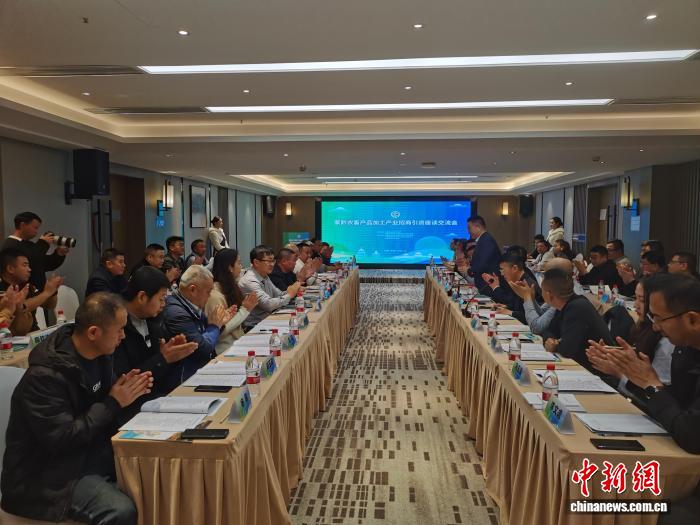
蒙黔农畜产品加工产业达成5.8亿元合作
Zhong Guo Xin Wen Wang· 2025-12-15 10:45
Core Viewpoint - The collaboration between Inner Mongolia and Guizhou in the agricultural and livestock processing industry has resulted in a signed agreement worth 580 million yuan, aiming to enhance market access in Southwest China and Southeast Asia [1][3]. Group 1: Collaboration Details - The signing event took place in Guiyang, where Inner Mongolian agricultural enterprises partnered with Guizhou companies [1]. - A key objective of the collaboration is to break regional barriers and tap into the consumer market in Southwest China, with plans to expand into Southeast Asia [1][3]. Group 2: Product and Market Strategy - Inner Mongolia aims to promote its high-quality beef and lamb products by adapting them to local tastes in Guizhou, facilitating acceptance in the Southern market [3]. - The region's agricultural products, including beef, lamb, dairy, and cashmere, rank among the top in China, positioning Inner Mongolia as a significant supplier [3]. Group 3: Supply Chain and Trade Opportunities - Guizhou has established an efficient production and sales system that connects high-end markets in the Guangdong-Hong Kong-Macao Greater Bay Area and Southeast Asia [3]. - Inner Mongolia plans to leverage its cross-border trade advantages to integrate Guizhou's specialty products, such as tea and chili, into its international export network, creating a bi-directional flow of goods [3][4].
大通道上的繁忙夜班
Jing Ji Ri Bao· 2025-07-09 21:51
Core Insights - The article highlights the rapid development and increasing importance of the Qinzhou Port East Station as a key hub in the Western Land-Sea New Corridor, facilitating iron-sea intermodal transport for various goods, including electric vehicles and agricultural products [2][3]. Group 1: Development of Qinzhou Port East Station - Qinzhou Port East Station was initially a small station with only 3 tracks and minimal operations, but has transformed into a major intermodal hub with 13 tracks and over 40 employees [2]. - The station's cargo transportation volume reached nearly 13 million tons last year, which is 98 times the volume at the beginning of the Western Land-Sea New Corridor's operations in 2017 [2]. - The station is expected to handle over 1 million TEUs (Twenty-foot Equivalent Units) this year, enhancing its role in connecting China with ASEAN, Europe, and global logistics [2]. Group 2: Operational Efficiency - The station has set multiple records this year, including a single-day loading record of 711 cars and a maximum of 1,401 loading and unloading operations in one day, with an average of over 1,200 operations daily [3]. - The variety of goods transported has expanded significantly, including international products like Thai durians and Cambodian rice, as well as domestic goods such as Guizhou tea and automotive parts from Liuzhou [2].