区域协同共治

Search documents
北京空气质量多项指标创监测以来最优 蓝天成为常态
Xin Lang Cai Jing· 2026-01-04 03:30
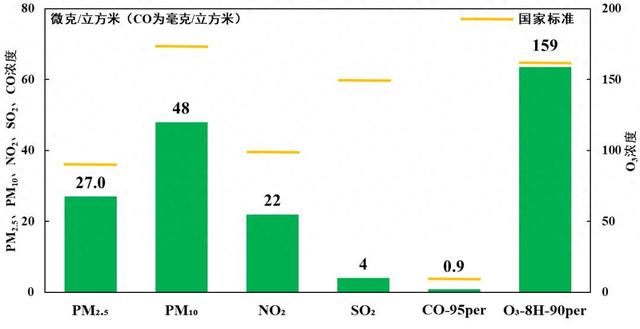
Core Viewpoint - In 2025, Beijing achieved significant improvements in air quality, with PM2.5 annual average concentration dropping to 27.0 micrograms per cubic meter, marking a historic low and a milestone in air pollution control efforts [2][4]. Group 1: Air Quality Improvements - The annual average concentration of PM2.5 in Beijing reached 27.0 micrograms per cubic meter in 2025, a year-on-year decrease of 11.5%, marking the first time it fell below 30 micrograms [2][4]. - Other major pollutants also saw improvements, with PM10, NO2, and O3 concentrations at 48, 22, and 159 micrograms per cubic meter respectively, showing year-on-year declines of 11.1%, 8.3%, and 7.0% [2][4]. - The number of days with good air quality reached 311 in 2025, an increase of 21 days from the previous year, resulting in a good air quality rate of 85.2%, the highest since monitoring began [4][10]. Group 2: Long-term Trends - Since 2013, PM2.5 levels in Beijing have shown a consistent downward trend, decreasing from 89.5 micrograms per cubic meter to 27.0 micrograms per cubic meter, a reduction of 69.8% [6][8]. - Heavy pollution days dropped dramatically from 58 days in 2013 to just 1 day in 2025, a reduction of 98.3% [8][10]. Group 3: Policy and Management Initiatives - Beijing's air quality improvements are attributed to comprehensive pollution control measures, including the promotion of new energy vehicles, with over 60% of new cars being electric by 2025 [12][13]. - The city implemented a range of green initiatives, including the creation of 1,803 "green" enterprises, representing 39.7% of the total, and the establishment of a robust regulatory framework for pollution control [12][14]. - Collaborative efforts with neighboring regions, such as Tianjin and Hebei, have enhanced air quality through joint pollution control strategies [15].

北京:新能源车保有量超128万辆 机动车结构达到全国最优
Xin Lang Cai Jing· 2026-01-04 03:30
Core Viewpoint - By 2025, Beijing aims to achieve an annual average concentration of PM2.5 below 30, marking a significant improvement in air quality and establishing "blue skies" as the norm [2] Group 1: Air Quality Improvement - The realization of "normal blue skies" in Beijing is attributed to collective efforts from society and regional collaborative governance [2] - As of now, the structure of motor vehicles in Beijing has reached the best level in the country [2] Group 2: Policy Measures - The local government is implementing a comprehensive policy approach to address mobile sources, which are the largest pollution contributors, by promoting the use of new energy vehicles [2] - Policies include financial subsidies, prioritizing green vehicles, and facilitating easier access for these vehicles [2] Group 3: New Energy Vehicle Goals - By 2025, over 60% of newly added vehicles will be new energy vehicles, with a total of more than 1.28 million new energy vehicles, which is over three times the number at the end of the 13th Five-Year Plan [2] - New energy and vehicles meeting the National V standard or above will account for over 80% of the total vehicle structure, achieving the best level in the country [2] Group 4: Non-Road Mobile Machinery - The new energy rate for non-road mobile machinery is expected to reach 45%, positioning Beijing as a national leader in this area [2]