
大气污染防治

Search documents
全市推动新一年良好开局动员部署会召开 锚定目标任务 强化责任担当 推动全年经济社会发展开好局起好步
Zheng Zhou Ri Bao· 2026-02-28 01:10
Group 1 - The city is mobilizing efforts to ensure a strong start to the economic operations and pollution prevention in the first quarter, aligning with the central economic work conference and provincial requirements [1][2] - Emphasis on enhancing awareness of challenges, practical action, and innovation to fully implement the "1+7+7+7" work deployment, aiming for comprehensive reform and expansion of openness [2][3] - The city aims to focus on project breakthroughs, secure policy funding, and improve financial service quality to expand effective investment [3] Group 2 - There is a strong push to deepen consumption potential and optimize the consumption environment to enhance domestic demand's role in economic growth [3] - Efforts are being made to strengthen open investment and improve the quality and efficiency of attracting investments, creating more economic growth points [3] - The city is committed to ensuring public welfare and safety, promoting stable employment, and supporting agricultural production [3]
2025年全国空气质量为有监测记录以来最优用更多的蓝天白云惠及公众
Zhong Yang Ji Wei Guo Jia Jian Wei Wang Zhan· 2026-02-27 12:11
Group 1 - The core viewpoint of the articles emphasizes the importance of precise, scientific, and law-based pollution control to achieve air quality improvement goals, particularly in the context of the "14th Five-Year Plan" [1][3] - By 2025, the average PM2.5 concentration in cities at or above the prefecture level is targeted to be 28.0 micrograms per cubic meter, with a good air quality days ratio of 89.3% and heavy pollution days ratio of 0.9%, marking the best levels since monitoring began [1] - The "14th Five-Year Plan" aims to complete significant reductions in industrial capacities, including 9.4 billion tons of crude steel, 3.6 billion tons of coke, 4.7 billion tons of cement clinker, and the ultra-low emission transformation of 170 million kilowatts of coal power units [1] Group 2 - The autumn and winter seasons are critical for air pollution prevention, with a focus on proactive measures during the summer to plan for emission reduction projects [2] - The current major source of air pollution in China is mobile sources, particularly heavy-duty trucks, which account for 75% of nitrogen oxide emissions [2] - The government plans to enhance standards for vehicles and machinery, implement structural adjustments in transportation, and improve regulatory enforcement to address mobile source pollution [2] Group 3 - Air quality improvement in China remains uneven and insufficient, indicating that air pollution control has entered a challenging phase [3] - The Ministry of Ecology and Environment will focus on air quality standards and PM2.5 concentration reduction as part of the "15th Five-Year Plan" to promote energy and transportation structure upgrades [3] - The goal is to ensure that more blue skies and white clouds benefit the public, reinforcing the foundation for a beautiful China [3]
守护蓝天,“十五五”期间将有这些“硬招”
Xin Hua Wang· 2026-02-27 11:47
Core Viewpoint - The article discusses the strategies and actions planned for air pollution prevention during the "14th Five-Year Plan" period, emphasizing the importance of maintaining blue skies as a key indicator of a beautiful China. The focus is on reducing PM2.5 concentrations and improving air quality through various measures and policies. Group 1: Strategic Planning - The "14th Five-Year Plan" has achieved historic results in air quality improvement, and the "15th Five-Year Plan" aims to further enhance public access to clean air by implementing the fourth "Air Ten Measures" [1] - The strategy will focus on a main line of reducing PM2.5 concentrations while also addressing nitrogen oxides and volatile organic compounds emissions, and controlling ozone pollution [1] Group 2: Regional Optimization - The plan includes optimizing three major regions: the Beijing-Tianjin-Hebei area, the Fenwei Plain, and the Yangtze River Delta, with a focus on structural transformation and collaborative governance [1] - Other regions such as the Yangtze River middle urban agglomeration, the Sichuan-Chongqing area, and the Tianshan North Slope urban agglomeration will also be aligned with key areas to enhance governance effectiveness [1] Group 3: Action Initiatives - The plan emphasizes two main actions: deepening structural transformation and accelerating the green and low-carbon transformation of traditional industries, while promoting non-fossil energy and clean coal utilization [2] - Pollution control will focus on industrial clusters and low-efficiency facilities, with the implementation of key emission reduction projects to ensure continuous decline in pollutant emissions [2] Group 4: Support Mechanisms - The plan will strengthen multi-faceted support through standard guidance, policy assurance, and technological empowerment to enhance efforts in protecting blue skies [3] Group 5: Mobile Source Management - Mobile sources have become a significant contributor to air pollution, with nitrogen oxides being the primary emissions source from these vehicles [4] - The plan will intensify efforts to manage mobile sources, particularly heavy-duty trucks, through targeted regulatory measures and standards upgrades for passenger vehicles [4] - There will be a focus on promoting clean transportation, implementing electrification projects for non-road mobile machinery, and developing zero-emission freight initiatives [4]
生态环境部:2025年全国环境空气质量实现历史最优
Zhong Guo Xin Wen Wang· 2026-02-27 09:50
Core Viewpoint - The Ministry of Ecology and Environment of China announced that by 2025, the national air quality will achieve its historical best, with significant reductions in major pollutants and improvements in air quality across various regions [2][3]. Group 1: Air Quality Improvement - By 2025, the average PM2.5 concentration in cities at or above the prefecture level will reach 28.0 micrograms per cubic meter, with a good air quality day ratio of 89.3% (excluding dust) and heavy pollution days at 0.9% [2]. - Major pollutants, including sulfur dioxide, nitrogen oxides, carbon monoxide, ozone, PM2.5, and PM10, are expected to decrease by 15% to 20% compared to 2020, achieving historical lows [2]. - The southern regions of China will have better air quality, while northern regions will show significant improvement, with PM2.5 concentrations in key areas like Beijing-Tianjin-Hebei and Fenwei Plain dropping by 27.7% and 32.1%, respectively [2]. Group 2: Economic Development and Air Quality - During the 14th Five-Year Plan period, China's GDP grew by 30%, while PM2.5 concentrations decreased by 20%, indicating a "win-win" relationship between economic growth and air quality improvement [3]. - The number of cities meeting air quality standards increased from 206 to 246, a growth of 20% [3]. - In 2025, cities with a GDP exceeding 1 trillion yuan will have an average PM2.5 concentration of 27.8 micrograms per cubic meter, better than the national average [3]. Group 3: Future Strategies for Air Quality Improvement - The 15th Five-Year Plan will focus on continuous reduction of PM2.5 concentrations, with the introduction of the "Air Quality Continuous Improvement Action Plan 2026-2030" [4]. - The strategy will involve optimizing three major zones for targeted pollution control, particularly in key areas like Beijing-Tianjin-Hebei, Fenwei Plain, and the Yangtze River Delta [4]. - Key focus areas include consolidating existing improvements, enhancing governance efficiency, and strengthening regulatory measures to ensure effective pollution reduction [5].
生态环境部:支持大湾区对标世界一流,探索大气污染改善路径
Nan Fang Du Shi Bao· 2026-02-27 08:09
Core Viewpoint - The Ministry of Ecology and Environment emphasizes the importance of pollution reduction, precise governance, and comprehensive policy measures in air pollution prevention and control efforts [1][3][4] Group 1: Experience in Air Pollution Prevention - Pollution reduction is a fundamental principle, focusing on promoting green and low-carbon development in industries, energy, and transportation to reduce emissions at the source [1] - Precise governance is key, adhering to five precision aspects: problem, time, location, target, and measures, avoiding one-size-fits-all approaches [1] - Comprehensive policy measures act as a toolbox, utilizing various policy instruments, legal frameworks, market mechanisms, and technology to stimulate societal engagement in pollution control [1] Group 2: Future Plans for Air Pollution Control - The Ministry plans to develop the "Air Quality Continuous Improvement Action Plan 2026-2030," which aims to lower PM2.5 concentrations and reduce nitrogen oxides and volatile organic compounds emissions [3] - A structured approach will be adopted, focusing on key regions such as Beijing-Tianjin-Hebei, Fenwei Plain, and the Yangtze River Delta, to enhance governance effectiveness [3] - The plan includes promoting green transformation in traditional industries, developing non-fossil energy, and encouraging green transportation [3] Group 3: Support Mechanisms - Strengthening standards and revising pollution emission and product quality standards will be prioritized [4] - Innovative financial, pricing, fiscal, and differentiated environmental management policies will be implemented to enhance the internal motivation for air pollution control [4] - The application of new technologies, including "artificial intelligence," will be deepened to improve monitoring and enforcement efficiency [4]

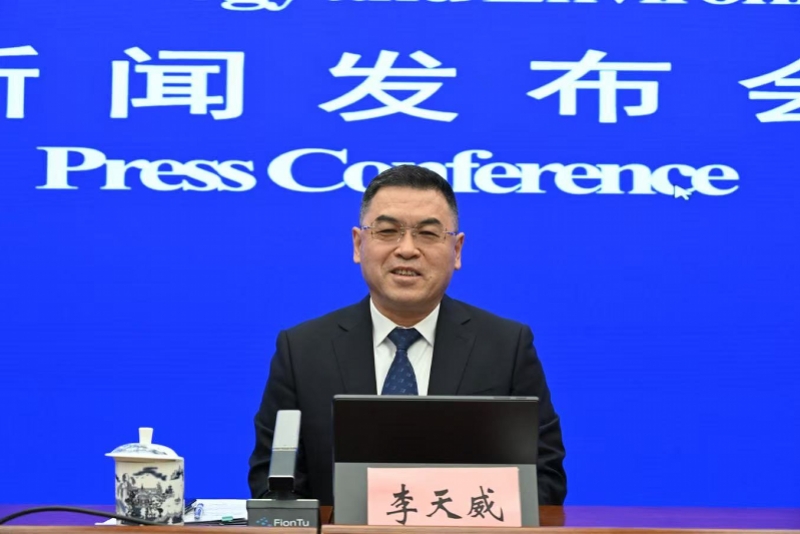
全国环境空气质量创有记录以来最优
Xin Lang Cai Jing· 2026-02-27 06:02
Core Insights - The Ministry of Ecology and Environment announced significant improvements in air quality, aiming for a national average PM2.5 concentration of 28.0 µg/m³ by 2025, with a good air quality day ratio of 89.3% and heavy pollution days at 0.9%, marking the best levels recorded since monitoring began [1] Group 1 - The average PM2.5 concentration in cities with a GDP over 1 trillion yuan is 27.8 µg/m³, which is better than the national average and shows significant improvement during the 14th Five-Year Plan [2] - Beijing's PM2.5 concentration has decreased from 89.5 µg/m³ in 2013 to 27 µg/m³ in 2025, showcasing a successful long-term air pollution control effort [2] - The six major pollutants have seen a reduction of 15% to 20% compared to 2020, with the exception of ozone, which has remained stable [1] Group 2 - The spatial distribution of air quality shows that southern regions generally have better air quality, while northern regions have seen the most significant improvements, particularly in key areas like Beijing-Tianjin-Hebei and the Fenwei Plain [2] - Shanxi's Linfen has achieved the largest reduction in PM2.5 concentration, dropping by 30.5 µg/m³ to 35.1 µg/m³, a decrease of 46.5% [2] - The continuous improvement in air quality is aligned with economic growth, demonstrating a dual win for both environmental and economic development [2]
生态环境部:“十五五”面临挑战 将继续以PM2.5浓度下降为工作主线
Yang Shi Xin Wen· 2026-02-27 03:02
Group 1 - The core viewpoint of the articles highlights the ongoing challenges in air pollution prevention during the "14th Five-Year Plan" period, with a focus on reducing PM2.5 concentrations and improving air quality through structural optimization and refined pollution control measures [1][2] - The Ministry of Ecology and Environment reports that regions like Beijing-Tianjin-Hebei and the Fenwei Plain experience 1-2 instances of severe pollution lasting over 7 days each autumn and winter, with a 3-day pollution event potentially increasing a city's annual PM2.5 concentration by 1 microgram [1] - There remains a significant gap between China's PM2.5 levels and international standards, with deep emission reductions facing challenges due to reliance on fossil fuels, heavy industry, and road-based transportation structures [1] Group 2 - The Ministry plans to introduce the "Air Quality Continuous Improvement Action Plan (2026-2030)" during the "14th Five-Year Plan" period, focusing on innovative financial, pricing, tax, and differentiated environmental management policies [2] - The strategy includes optimizing three major regions, enhancing governance effectiveness in key areas, and supporting regions like the Guangdong-Hong Kong-Macao Greater Bay Area to explore pathways for continuous improvement under low concentration conditions [2] - The approach aims to achieve overall air quality enhancement through a structured, phased advancement strategy [2]
新版《环境空气质量标准》发布,PM2.5等污染物排放将迎更严管控
Xin Lang Cai Jing· 2026-02-25 04:34
Core Viewpoint - The Ministry of Ecology and Environment, in collaboration with the State Administration for Market Regulation, has released a revised "Ambient Air Quality Standard" (GB 3095-2026), tightening the limits for PM2.5 annual and daily concentrations, with full implementation set for 2031 [1][6]. Group 1: New Standards and Implementation - The new standard sets the PM2.5 annual concentration primary limit at 10 micrograms per cubic meter, down from 15 micrograms, and the secondary limit at 25 micrograms, down from 35 micrograms [6]. - The daily concentration limits for PM2.5 are also tightened, with the primary limit set at 25 micrograms (previously 35 micrograms) and the secondary limit at 50 micrograms (previously 70 micrograms) [6]. - The implementation will occur in two phases: the first phase from March 1, 2026, to December 31, 2030, with transitional limits, and the second phase starting January 1, 2031, with the revised limits fully in effect [7]. Group 2: Air Quality Improvement and Health Impact - Since the current standard was implemented in 2012, the average PM2.5 concentration has decreased by 36% compared to 2015, with heavy pollution days reduced by 68% [2]. - The World Health Organization has indicated that PM2.5 is the leading driver of global air pollution-related health burdens, and the revised guidelines aim to better protect public health [5]. - The new standard aligns with the WHO's updated guidelines, which recommend a PM2.5 annual concentration of 5 micrograms per cubic meter for optimal health protection [5]. Group 3: Future Actions and Strategic Goals - The Ministry of Ecology and Environment plans to implement a new round of air quality improvement actions, focusing on reducing PM2.5 concentrations and promoting structural adjustments in energy, industry, and transportation sectors [8]. - The revised standards reflect China's commitment to leading continuous improvements in environmental quality with higher standards [7].
(古)市监罚〔2026〕47号
Xin Lang Cai Jing· 2026-02-24 14:11
Group 1 - The administrative penalty was issued by the Gulang County Market Supervision Administration on February 11, 2026 [1] - The penalty includes a fine and confiscation of illegal gains, based on the Air Pollution Prevention and Control Law of the People's Republic of China [1] - The specific violation involves the sale of coal and petroleum coke that do not meet quality standards, which can incur fines ranging from one to three times the value of the goods [1]
人防技防相结合抓实烟花爆竹管控 群策群力打赢大气污染防治攻坚战
Xin Lang Cai Jing· 2026-02-19 00:29
Core Viewpoint - The city is intensifying control measures on fireworks and firecrackers to combat air pollution during the Spring Festival, emphasizing a combination of human and technical defenses to ensure effective management and public safety [1][2]. Group 1: Pollution Control Measures - The city has achieved preliminary success in reducing air pollution and safety hazards from fireworks through strict enforcement and public awareness campaigns during the Spring Festival [1]. - The city management is focusing on enhancing the digital management platform and the urban pollution prevention center to create a scientific system for urban management and air pollution control [2]. Group 2: Implementation Strategies - The city plans to strengthen grassroots responsibilities and coordinate efforts among various departments, including public security and market regulation, to effectively manage and control fireworks [2]. - The use of advanced technologies such as high-altitude monitoring, drone surveillance, and big data analysis will be employed to monitor and address illegal fireworks activities [2]. - There is an emphasis on educating the public to enhance safety awareness and encourage voluntary surrender of stored fireworks, fostering a safe and orderly festive environment [2].