新能源化

Search documents
长城汽车营收2228亿创新高盈利降22% 欧拉销量降逾23%调整品牌定位谋变
Chang Jiang Shang Bao· 2026-03-29 23:47
Core Insights - In 2025, Great Wall Motors achieved a record high revenue of 222.82 billion yuan, marking a 10.20% year-on-year increase, while net profit decreased by 22.07% to 9.87 billion yuan [1][5]. Financial Performance - The company reported a net profit of 9.87 billion yuan, down 22.07% year-on-year, and a non-recurring net profit of 6.06 billion yuan, down 37.76% [5]. - Sales expenses reached 11.27 billion yuan, an increase of 43.93%, marking the first time they exceeded 10 billion yuan [6]. - Research and development expenses also surpassed 10 billion yuan, totaling 10.43 billion yuan, with a year-on-year growth of 12.13% [7]. Sales and Market Position - Overall sales for Great Wall Motors in 2025 reached 1.32 million units, a 7.33% increase year-on-year [11]. - The Haval brand sold 758,600 units, up 7.41%, while the Ora brand saw a significant decline, with sales of 48,300 units, down 23.68% [11]. - The company aims for a sales target of at least 1.8 million units in 2026, requiring a growth rate of approximately 36% [12][13]. Brand Strategy and Transformation - The Ora brand is undergoing a strategic transformation, shifting from a focus on "refined women" to targeting "global young urban dwellers," expanding from a pure electric brand to a full-power coverage brand [4][12]. - The company plans to adopt a new naming convention for the Ora brand, moving away from the "cat series" to a "brand + number" format [12]. International Expansion - In 2025, Great Wall Motors achieved overseas sales of 506,800 units, a year-on-year increase of 11.60%, with cumulative overseas sales exceeding 2 million units [10][13]. - The company has established a sales network covering over 170 countries and regions, with more than 1,500 channels [13].

全球视野看电车之五:基于能源安全视角看全球新能源增长潜力
Changjiang Securities· 2026-03-23 23:30
Investment Rating - The investment rating for the automotive and automotive parts industry is "Positive" and maintained [7] Core Insights - The rise in oil prices, influenced by the Middle East situation, has raised energy security concerns, prompting South Korea to initiate a resource security crisis alert and consider implementing vehicle restrictions [2][17] - The transportation sector accounts for a significant portion of oil consumption in many countries, and the current low penetration of new energy vehicles (NEVs) globally means that reliance on traditional fuel vehicles exacerbates risks associated with energy supply constraints. Diversifying the energy structure can mitigate these risks, and rising oil prices can accelerate the transition to NEVs in the global passenger vehicle market [2][19] - The potential for domestic NEVs to expand internationally is substantial, with projected sales for EVs, PHEVs, and HEVs in regions excluding China, the US, and Japan reaching 3.54 million, 1.4 million, and 4.62 million units respectively by 2025. If domestic NEVs capture 50%-60% of the market share in these categories, it could represent a growth potential of 4.3-5.3 times [23][24] Summary by Sections Global Energy Security Perspective - The recent increase in oil prices has raised energy security issues, with Brent crude oil futures reaching $108.65 per barrel, a 70% increase over the past two months. South Korea has raised its resource security crisis alert level and is considering measures such as vehicle restrictions to manage demand [17][19] New Energy Vehicle Market Potential - The transportation sector's oil consumption is significant, with many countries having low NEV penetration rates. High oil prices can drive the shift towards NEVs, as traditional fuel vehicles' dependence on oil resources increases risks associated with supply constraints [19][20] - Major regions for NEV exports from China include Western Europe, Southeast Asia, and Latin America, where leading companies like BYD, SAIC, and Geely are currently underrepresented in market share. As NEV penetration increases, these companies are expected to capture a larger share of the market [26][29]



锂电行业节后直播回顾:市场动态与新趋势全解析
鑫椤锂电· 2026-02-26 07:49
Core Viewpoint - The lithium battery industry is experiencing a post-holiday market characterized by domestic differentiation and overseas adjustments, with increasing competition, cost pressures, and significant policy impacts affecting the market dynamics [10]. Group 1: Market Overview - Domestic production of new energy passenger vehicles in January was 938,000 units, a year-on-year decrease of 0.6%, while retail sales dropped by 20%, primarily due to adjustments in the vehicle purchase tax policy [4]. - Exports of new energy vehicles saw a significant increase of 103.6% year-on-year, while new energy commercial vehicles, particularly heavy trucks, experienced a year-on-year sales growth of 128.8% [4]. - The overall profit margin for the automotive industry is projected to decline to 4.1% by 2025 due to policy rollbacks and rising costs of raw materials like lithium carbonate and chips [4]. Group 2: Global Market Performance - In the U.S. market, January sales fell by 25.6% year-on-year, with major automakers like Stellantis, General Motors, and Ford adjusting their electrification strategies towards hybrid and internal combustion engine optimization [5]. - The European market showed a mixed performance, with new car sales declining year-on-year, but the penetration rate of new energy vehicles reached 33.3%. BYD experienced a growth of 165%, while Tesla's sales decreased by 17% [5]. Group 3: Raw Materials Market and Policy Impact - Indonesia's nickel mining quota for 2026 is set to decrease to 250-260 million tons, a reduction of over one-third, which is expected to drive nickel prices up as the country shifts towards becoming a core participant in the new energy supply chain [6]. - Changes in U.S. tariff policies include a Supreme Court ruling that limits the president's ability to impose large-scale tariffs, with customs shifting to impose additional fees instead [7]. Group 4: March Production and Market Outlook - Domestic battery manufacturers are expected to see a month-on-month production increase of 4-5% in March, while overseas production remains stable. There is an unexpected replenishment of lithium carbonate stocks, with inventory at historically low levels [8]. - The storage market is experiencing a boost due to the introduction of capacity compensation policies across various regions, presenting new growth opportunities for the lithium battery industry [9].


商用车2026 | “以旧换新”政策延续 2026置换+出口需求主导
汽车琰究· 2026-02-24 03:46
Core Viewpoint - The commercial vehicle industry is entering a new growth cycle driven by domestic demand recovery and strong export performance, with significant contributions from the "old-for-new" policy and the expansion of new energy vehicles [9][10]. Group 1: Heavy Truck Market Overview - In 2025, the wholesale sales of heavy trucks are projected to reach 1.144 million units, representing a year-on-year increase of 26.8% [2][12]. - Domestic sales are expected to be 799,000 units, up 32.7% year-on-year, driven by the "old-for-new" policy [2][14]. - Exports are forecasted to be 341,000 units, a 17.4% increase year-on-year, with Southeast Asia and the Middle East as key growth drivers [2][28]. Group 2: Heavy Truck Outlook for 2026 - The heavy truck industry has exited a three-year downturn and is entering a new upward cycle, with the "old-for-new" policy likely to continue supporting domestic demand [3][67]. - The share of diesel heavy trucks is declining, while natural gas and new energy heavy trucks are expected to see stable growth [3][67]. - Exports to non-Russian regions are anticipated to remain strong, with Southeast Asia, the Middle East, and Africa becoming core markets [3][67]. Group 3: Bus Market Overview - The bus industry is entering a new cycle characterized by stable domestic demand recovery and high export growth, with wholesale sales of buses projected at 122,000 units in 2025, up 5.1% year-on-year [4][10]. - Domestic sales of buses are expected to decline by 10.6% to 65,000 units, while exports are projected to grow by 34.6% to 59,000 units [4][10]. - New energy buses are expected to see significant export growth, with 15,000 units projected for 2025, a 33.7% increase year-on-year [4][10]. Group 4: Bus Outlook for 2026 - Domestic demand for buses is expected to continue growing steadily, with wholesale sales projected at 146,000 units, a 20.0% increase year-on-year [5][10]. - Exports are anticipated to reach 78,000 units, up 32.0% year-on-year, with Europe and Latin America becoming key markets [5][10]. - The penetration of new energy buses in overseas markets is expected to accelerate, with exports projected at 20,000 units, a 34.0% increase year-on-year [5][10]. Group 5: Investment Recommendations - For heavy trucks, the domestic market is expected to achieve high growth in 2025, supported by the "old-for-new" policy, with leading companies like Weichai Power and China National Heavy Duty Truck Corporation recommended for their comprehensive advantages [6][10]. - In the bus sector, companies with strong export capabilities and superior products, such as Yutong Bus and King Long, are recommended, with Zhongtong Bus suggested for further attention [6][10].




“十五五”前瞻:解放/重汽/东风/福田/远程等战略目标揭秘,谁将问鼎新霸主?| 头条
第一商用车网· 2026-02-10 07:27
Core Viewpoint - The article discusses the strategic goals and implementation paths of seven major commercial vehicle companies in China for the "15th Five-Year Plan," focusing on the transformation towards electrification, intelligence, and globalization in the commercial vehicle industry. Group 1: FAW Jiefang - FAW Jiefang aims to enter the "world-class commercial vehicle camp" by 2030, with a focus on "international Jiefang, green Jiefang, and technological Jiefang" [2] - The company targets a total sales volume of 320,000 units in 2026, with 75,000 units being electric vehicles and 80,000 units for overseas sales [4] Group 2: Dongfeng Motor Corporation - Dongfeng aims to regain its position as the industry leader with a total sales target of 750,000 commercial vehicles by 2030 [5] - The company plans to achieve industry-leading positions in total sales, heavy-duty trucks, and new energy trucks during the "15th Five-Year Plan" [8] Group 3: China National Heavy Duty Truck Group (CNHTC) - CNHTC targets to exceed 800,000 units in total sales and achieve a revenue of 400 billion yuan by 2030 [11] - The company has proposed a "six transformations" strategy focusing on green, digital, service, international, diversified, and high-end development [12] Group 4: Shaanxi Automobile Group - Shaanxi aims to maintain a top-three position in the industry and targets a sales volume of 100,000 heavy-duty trucks in 2026 [14] - The company emphasizes a unified development strategy called "One Shaanxi" to enhance overall competitiveness [18] Group 5: Foton Motor - Foton aims for a 50% penetration rate of new energy vehicles and 300,000 units in overseas sales by 2030 [20][22] - The company has set ambitious targets for 2026, aiming for 200,000 units in both exports and new energy vehicles [22] Group 6: Yuantong New Energy Commercial Vehicles - Yuantong aims to become the domestic sales leader and the global leader in new energy commercial vehicles by 2030, targeting 1 million units in annual sales [24][26] - The company plans to launch a comprehensive product matrix covering various vehicle types by 2026 [26] Group 7: Chery Commercial Vehicles - Chery targets to achieve 1 million units in sales by 2030, with a focus on becoming the leading brand in China's new energy commercial vehicle sector [28] - The company plans to invest over 10 billion yuan in heavy-duty truck research and development in the coming years [31]




销量增80%迎开门红 多细分市场大涨 1月福田欧曼为何这么强?
第一商用车网· 2026-02-06 07:36
Core Viewpoint - In January 2026, Foton Heavy Truck achieved significant sales growth, reflecting its strong market position and effective strategy in the competitive heavy truck industry, particularly in the context of electrification and intelligent transformation [1][11]. Group 1: Sales Performance - In January 2026, Foton Heavy Truck sold nearly 15,000 units, marking an 86% year-on-year increase [1]. - The Euman heavy truck segment alone surpassed 10,000 units in sales, with an 80% year-on-year growth; specifically, the sales of tractors increased by 60%, dump trucks by 50%, and flatbed and special vehicles saw remarkable increases of 160% and 110% respectively [1]. Group 2: Strategic Direction - Euman Heavy Truck adheres to Foton's forward-looking strategy of "comprehensive internationalization, comprehensive electrification, and comprehensive intelligence," which has enhanced its core competitiveness and accelerated sales growth [2]. - Innovation is prioritized as the "first productive force," with Euman Heavy Truck focusing on self-developed technologies to meet diverse operational needs in traditional energy sectors [2]. Group 3: New Energy Initiatives - The transition to new energy in the heavy truck sector is expected to accelerate in 2026, with Euman Heavy Truck implementing Foton's ESG sustainable development principles and addressing various transportation challenges through advanced technologies [4]. - Euman Heavy Truck's "three electric" system has set new industry benchmarks in energy consumption and reliability, supporting the logistics industry's green and low-carbon transformation [4]. Group 4: Product Delivery and Market Penetration - In January 2026, Euman Heavy Truck achieved bulk deliveries in Northeast, North China, and South China regions, demonstrating its deep market penetration and high-quality product offerings [4]. - The first batch of 50 Euman Xingyi tractors was delivered to a major client in Beijing, showcasing the model's advantages in logistics efficiency and operational quality [6]. - Additionally, 30 Euman Xinghui intelligent auxiliary driving tractors were delivered to a cold chain client in Liaoning, significantly reducing energy consumption and maintenance costs [8]. Group 5: Specific Product Launches - In January, 54 Euman Galaxy 5M battery-swappable port tractors were delivered to Shenzhen Yantian Port, providing a replicable "green capacity" solution for the port transportation sector [9]. - The Euman Galaxy series products were launched in various cities, with significant orders and deliveries, including 166 units in Shanxi and 108 units in Fujian, contributing to local logistics transformation [9]. Group 6: Customer Recognition - Euman Galaxy pure electric trucks have been recognized for their effective solutions in harsh transportation conditions, particularly in the northern regions, leveraging local charging networks and advanced features [12].

2025年度中国汽车产业盘点——销量篇 车企竞争进入深水区
Zhong Guo Zhi Liang Xin Wen Wang· 2026-02-04 06:51
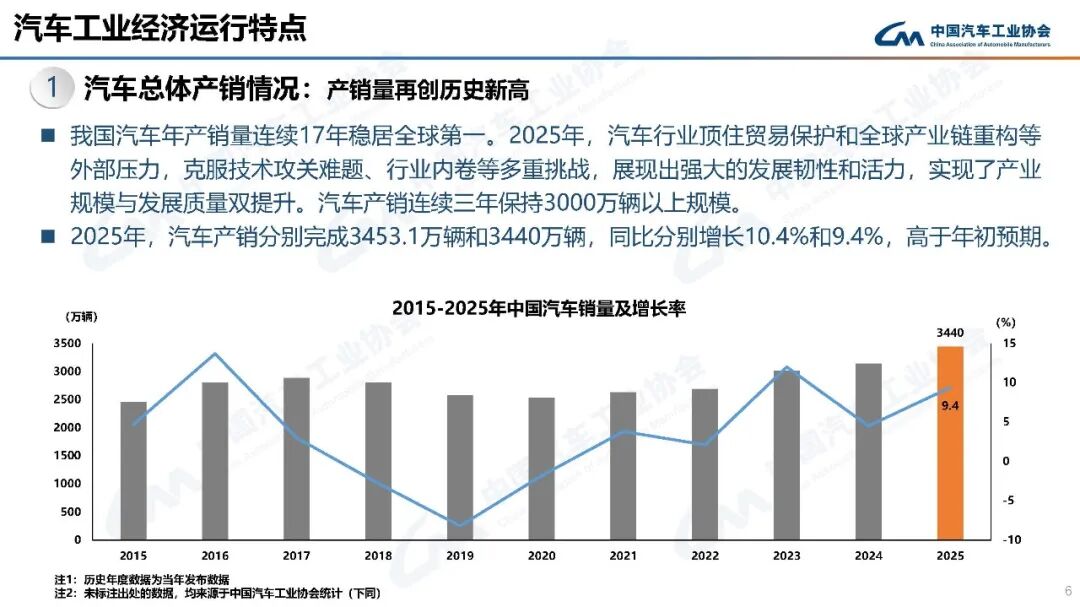
Overall Market - In 2025, China's automotive industry achieved record production and sales, with 34.53 million vehicles produced and 34.40 million sold, marking year-on-year growth of 10.4% and 9.4% respectively, driven by policy support and market dynamics [1][5] - The market demonstrated strong resilience against global trade protectionism, supply chain restructuring, and intensified competition [1] Market Dynamics - The "Two New" policy expanded consumer goods categories and support for equipment upgrades, stimulating vehicle replacement demand, particularly in lower-tier cities [5] - The transition to electric vehicles (EVs) was facilitated by stable tax policies and improved charging infrastructure, lowering barriers for potential EV buyers [5] - Consumer preferences are shifting towards intelligent features and green travel, pushing the market towards higher quality development [5] Segmented Market - In 2025, new energy vehicles (NEVs) became the dominant growth segment, with production and sales reaching 16.63 million and 16.49 million respectively, reflecting year-on-year growth of 29% and 28.2% [6] - NEVs accounted for 47.9% of total new vehicle sales, a 7 percentage point increase from the previous year [6] - The traditional fuel vehicle market is undergoing structural adjustments, with demand for high-displacement, high-fuel-consumption models declining, while smaller, hybrid models remain popular [10] Market Structure - Domestic brands solidified their leading position, with their market share exceeding 60% for the first time, driven by strong performances from companies like BYD, Geely, and Changan [13][15] - BYD led the market with over 4.6 million units sold, benefiting from its technological advancements in NEVs [15] - Joint venture brands faced significant pressure, with declining market shares due to slow adaptation to the NEV market and product homogenization [16] Export Market - In 2025, China's automotive exports exceeded 7 million units, achieving a year-on-year growth of 21.1%, maintaining its position as the world's largest automotive exporter for three consecutive years [18] - Emerging markets in Southeast Asia, the Middle East, and South America remain key destinations for Chinese automotive exports, with NEVs becoming a significant export category [18] Sales Rankings - The top ten automotive brands in 2025 showcased a strong performance from domestic brands, with five spots occupied by them, and a combined market share of 37.3% [21] - BYD, Geely, and Changan maintained their positions through a dual strategy of fuel and NEV offerings [21] - Traditional joint venture brands like FAW-Volkswagen and SAIC Volkswagen continued to experience declines, unable to offset losses from fuel vehicle sales with NEV growth [21] Emerging Brands - New entrants like Leap Motor and Hongmeng Zhixing showed remarkable growth, with Leap Motor doubling its sales through self-developed technology and competitive pricing [23] - Traditional automakers' NEV sub-brands also performed well, rapidly capturing market share through targeted strategies [23] Consumer Trends - Successful models in 2025 aligned with market trends, focusing on price adaptability, user needs, and technological highlights [24] - Family and young consumers emerged as core target groups, with vehicles designed for spaciousness and smart features gaining popularity [26] - The integration of new energy and intelligent technologies became essential for popular models, addressing consumer concerns about range and charging [26] Future Outlook - The strong rise of NEVs indicates China's automotive industry is positioned advantageously in the global transformation of the sector [28] - Continued policy support for NEVs and smart vehicles is expected, alongside growing consumer demand for high-quality, intelligent products [28] - The industry is likely to see further integration across the supply chain, enhancing competitiveness [28]

3.8万辆创佳绩!中国重汽专用车以四大主轴领航新程
Zhong Guo Qi Che Bao Wang· 2026-02-02 02:41
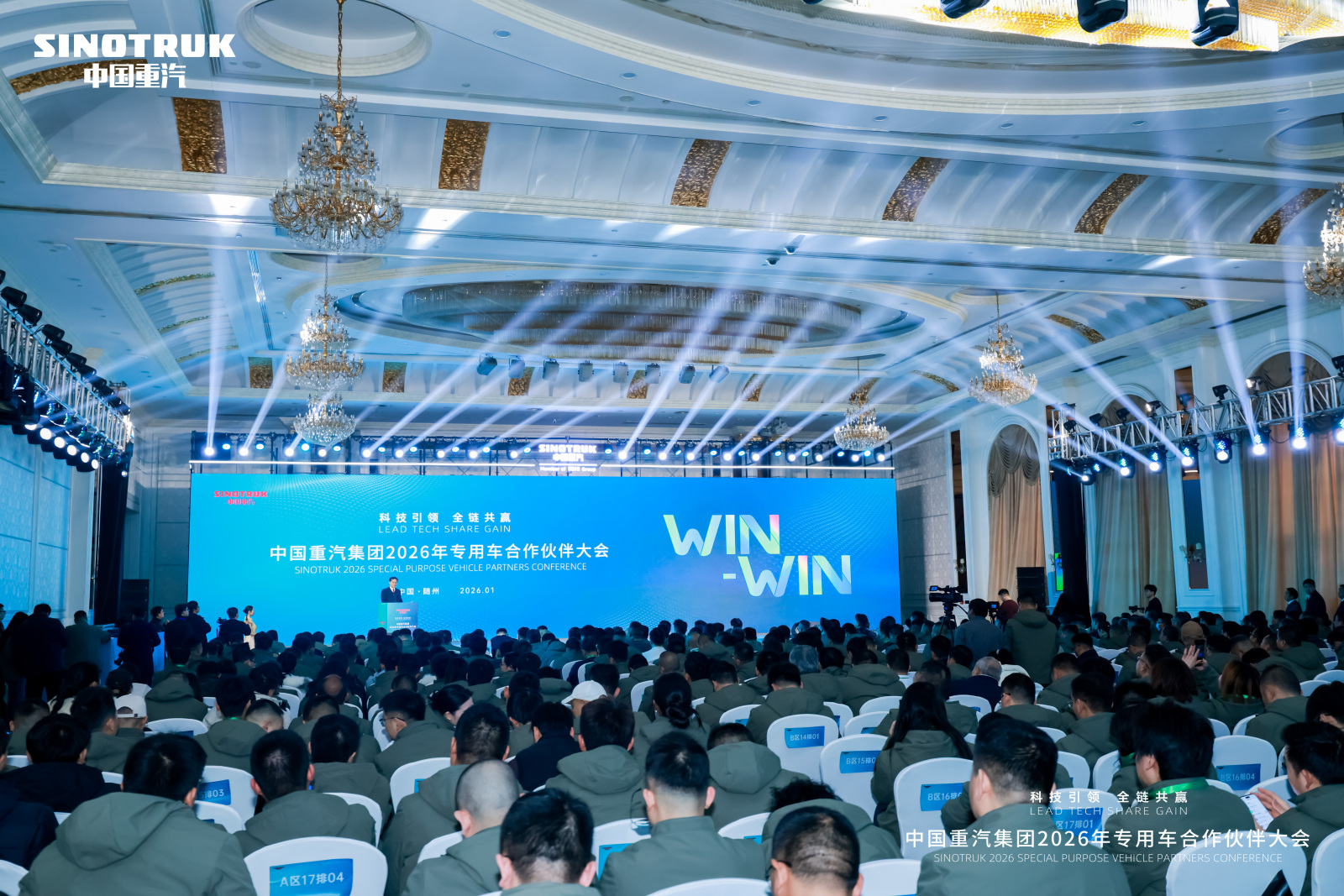
Core Insights - The Chinese special vehicle industry is accelerating its transformation towards electrification, intelligence, and efficiency, showing a positive trend in scale and quality improvement as it enters the "14th Five-Year Plan" period [1] - China National Heavy Duty Truck Group (CNHTC) aims to solidify its industry position by balancing market stability and progress, as well as integrating new and old strategies during the new competitive cycle [3] Market Performance - In 2025, the overall Chinese special vehicle market is stabilizing and growing, with CNHTC achieving annual sales of 38,000 units, including 20,000 medium and heavy-duty special vehicles and 18,000 light-duty special vehicles, marking significant breakthroughs in various segments [4] - CNHTC's market share in the medium and heavy-duty special vehicle sector reached its best performance in recent years, with over 75% market share in high-end special vehicles like fire and emergency trucks [4][6] Product Development - CNHTC's brands have shown strong performance in niche markets, with the HOWO brand leading in several categories, including a 44.8% market share in fire trucks and a 31.9% share in recovery vehicles [6] - The company emphasizes a dual approach of fuel and new energy products, showcasing over 40 vehicles and 20 key components at its recent partner conference, highlighting advancements in energy efficiency and adaptability [10] Strategic Focus - As part of its strategy for 2026, CNHTC has identified four key development pillars: product enhancement, ecosystem development, value marketing, and international expansion [12][14] - The company aims to deepen its understanding of market scenarios, enhance technical capabilities, and innovate business models to seize opportunities during structural transformations [11][14] Future Outlook - CNHTC is committed to customer satisfaction and aims to lead the special vehicle sector through technological innovation and collaboration with industry partners, focusing on creating high-quality, efficient products that meet market demands [16]
南京依维柯深耕江北再出发
Xin Hua Ri Bao· 2026-02-01 20:42
Core Viewpoint - The signing of the cooperation agreement marks a significant step towards enhancing industrial capacity and promoting high-quality development in Jiangbei New District, with Nanjing Iveco celebrating its 30th anniversary and focusing on transformation and upgrades in the automotive industry [1] Group 1: Company Overview - Nanjing Iveco has been a key player in the automotive market for 30 years, contributing to regional industrial construction and urban development [1] - The company has gained the trust of nearly one million users and is recognized as a model for the transformation and upgrading of manufacturing in Jiangbei [1] Group 2: Strategic Initiatives - The cooperation aims to solidify the industrial foundation, optimize the production system, and build a new industrial ecosystem [1] - The partnership will involve significant investment and collaboration to enhance product iteration and technological upgrades [1] Group 3: Industry Context - The automotive industry is undergoing profound changes towards electrification and intelligence, prompting Nanjing Iveco to adapt and innovate [1] - The favorable business environment in Jiangbei New District is seen as a catalyst for expanding investment and deepening cooperation with Nanjing Iveco [1] Group 4: Stakeholder Commitment - SAIC Group expresses strong commitment to strengthening its commercial vehicle segment through this partnership, integrating resources in technology, research and development, supply chain, and market [1]
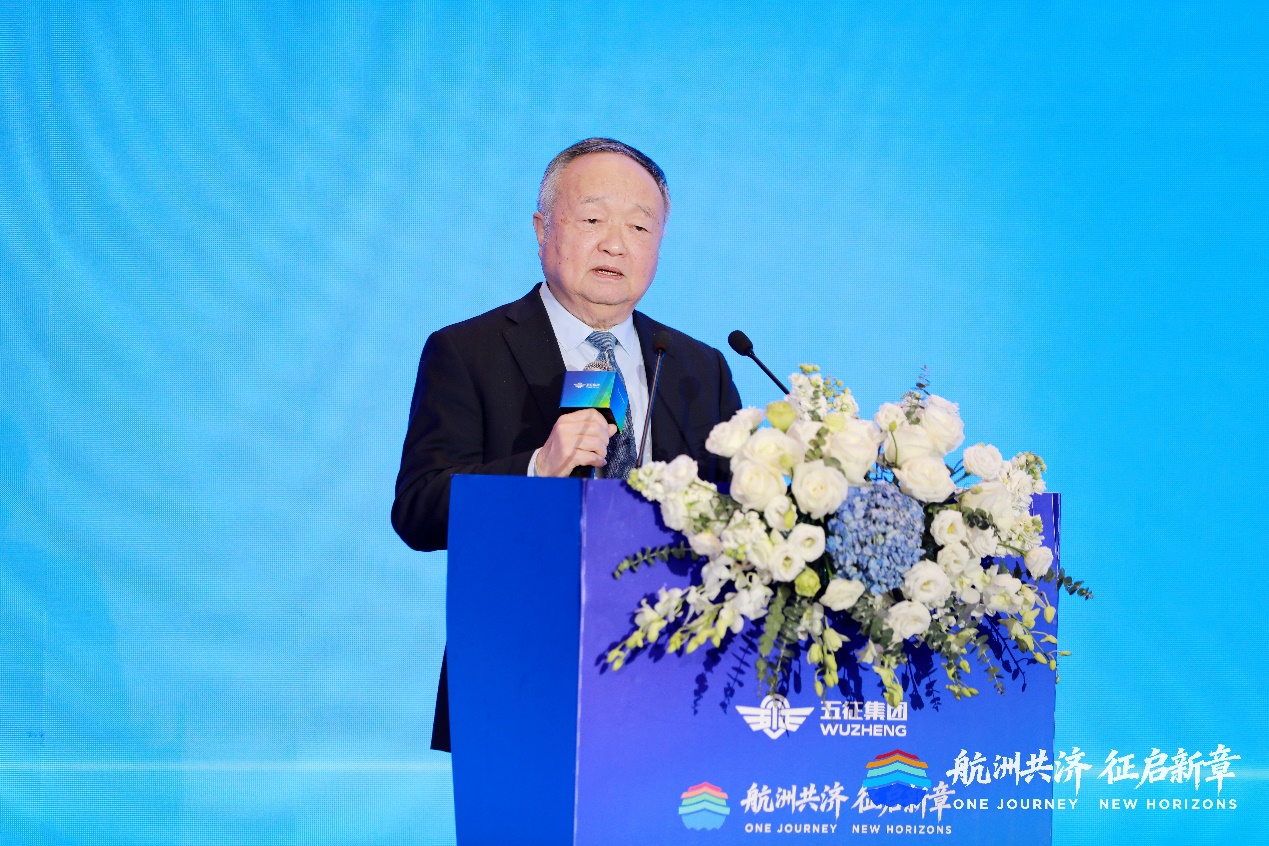
以实干共赴新程 五征集团锚定“十五五”发展新航向
Zhong Guo Qi Che Bao Wang· 2026-01-26 01:24
Core Insights - The commercial vehicle industry in China is undergoing a transformation and adjustment, building solid development momentum as it enters a new cycle of value competition during the "15th Five-Year Plan" period [1][3] - Wuzheng Group held the 2026 Global Practitioners Ecological Conference, showcasing achievements and outlining a strategic development blueprint for the future [1][3] Group 1: Achievements and Growth - Over the past five years, Wuzheng Group has transformed from a traditional manufacturer to a platform solution leader, achieving a total revenue growth of 27% year-on-year [4] - The automotive segment saw significant performance, with sales of Feidian vehicles increasing by 44% year-on-year, capturing a market share of 2.6%, and a 4% share in the new energy vehicle segment [6] - The total sales volume of Wuzheng Group increased by 184% in overseas markets, with substantial investments in Southeast Asia, Europe, and the Middle East [6] Group 2: Strategic Vision and Goals - Wuzheng Group has set a long-term strategic vision for 2035, aiming to build a green ecosystem in collaboration with global practitioners, with a mission to provide optimal solutions for real-world conditions [7][9] - The "24531" strategic goal includes achieving total revenue exceeding 20 billion yuan, total sales of over 400,000 units, and over 50% of sales from new energy and 30% from overseas by 2030 [7][9] Group 3: Action Plans and Initiatives - Wuzheng Group's action plan focuses on four key areas: enhancing customer value through innovation, improving efficiency in product development and service delivery, deepening international operations, and creating a diversified growth model [9][10] - The company aims to achieve total sales of 205,000 units in 2026, with over 48,000 units from overseas markets and more than 42,000 units from automotive sales [10] Group 4: Ecosystem Development - The company launched ecological solutions covering sanitation, agriculture, and logistics, and established three ecological alliances to enhance collaboration within the industry [13][15] - The establishment of the Green Logistics Ecological Alliance aims to create an open and collaborative ecosystem, focusing on data sharing, user value creation, and a comprehensive service system [15]