区域市场一体化

Search documents
协同通办加速区域市场一体化
Shan Xi Ri Bao· 2025-12-29 22:50
Core Viewpoint - The article highlights the progress of cross-province administrative services in the border areas of Shaanxi and Hubei, emphasizing the efficiency and convenience brought to local residents and businesses through the "cross-province handling" agreements. Group 1: Cross-Province Administrative Services - White County has signed "cross-province handling" agreements with multiple regions, facilitating the mutual recognition of 270 high-frequency administrative matters, significantly reducing processing times from 1-3 days to as little as half an hour [1][2] - The average processing time for over 15,000 completed matters has been reduced by more than 60% in terms of the number of trips required for residents [1] Group 2: Regional Market Integration - The initiative is part of a broader strategy to promote regional market integration, aligning with national guidelines that encourage the development of unified markets and regional cooperation [3] - Shaanxi is leveraging its border areas as "experimental fields" for reform, focusing on institutional innovation and collaborative efficiency to enhance service sharing and market connectivity [3] Group 3: Healthcare Integration - In the healthcare sector, a new mutual recognition system for medical test results has been established, expanding the range of recognized results and improving service quality across 500+ medical institutions [4][5] - The initiative aims to reduce the burden on residents seeking medical services across regions, facilitating the flow of talent and resources [5] Group 4: Cultural and Tourism Integration - The introduction of a "tourism all-in-one card" allows access to 214 scenic spots across five provinces, promoting cross-regional tourism and addressing management challenges in resource allocation [6][7] - The collaboration between regions aims to create a unified operational management platform, enhancing the overall tourism experience and breaking down administrative barriers [7]
推进区域协作 拓宽发展空间——加快建设全国统一大市场一线观察之七
Xin Hua She· 2025-07-13 02:10
Core Viewpoint - Accelerating the construction of a unified national market and promoting regional market integration is an essential path for resource allocation, industrial layout, and economic activities in China [1] Group 1: Regional Market Integration - The central government encourages regions such as Beijing-Tianjin-Hebei, Yangtze River Delta, Guangdong-Hong Kong-Macao Greater Bay Area, Chengdu-Chongqing Economic Circle, and the Central Yangtze River City Cluster to prioritize regional market integration while maintaining a unified national market [1] - The integration of regional markets is being accelerated by breaking down administrative barriers, enhancing the unification of market basic systems, and deepening both domestic and foreign openness [2][3] Group 2: Infrastructure and Logistics - The first cross-provincial construction project in the country, the Fangting Water Institute, was completed through innovative approval systems among three regions, allowing for integrated project management [3] - Infrastructure connectivity is crucial for facilitating the efficient gathering of people and goods within regions, as seen in various projects like the interprovincial subway line and the operational stability of intercity railways [5] Group 3: Economic Growth and Resource Efficiency - The economic output of the Beijing-Tianjin-Hebei region is projected to reach 11.5 trillion yuan in 2024, while the Yangtze River Delta's GDP is expected to exceed 33 trillion yuan, and the Chengdu-Chongqing Economic Circle's GDP is anticipated to grow to 8.7 trillion yuan [6] - The integration of regional markets effectively activates regional development momentum by enhancing resource allocation efficiency and reducing institutional transaction costs [9] Group 4: Open Market and Trade - The establishment of a unified market is aimed at global openness, with initiatives like the "Hefei-Ningbo Zhoushan Port" sea-rail intermodal service significantly reducing logistics time from 40 days to 27 days for shipments to Europe [10][11] - Regions are focusing on expanding both domestic and international trade, breaking down local protectionism and market segmentation to deepen regional market integration [12] Group 5: Strategic Positioning and Collaboration - Each region is enhancing internal collaboration and exploring strategies based on local characteristics, such as the industrial transfer in the Beijing-Tianjin-Hebei area and the financial services in the Yangtze River Delta [8] - The development of regional industrial alliances and cross-regional innovation coalitions is encouraged to promote the gathering of high-end resources and create an efficient collaborative market system [12]
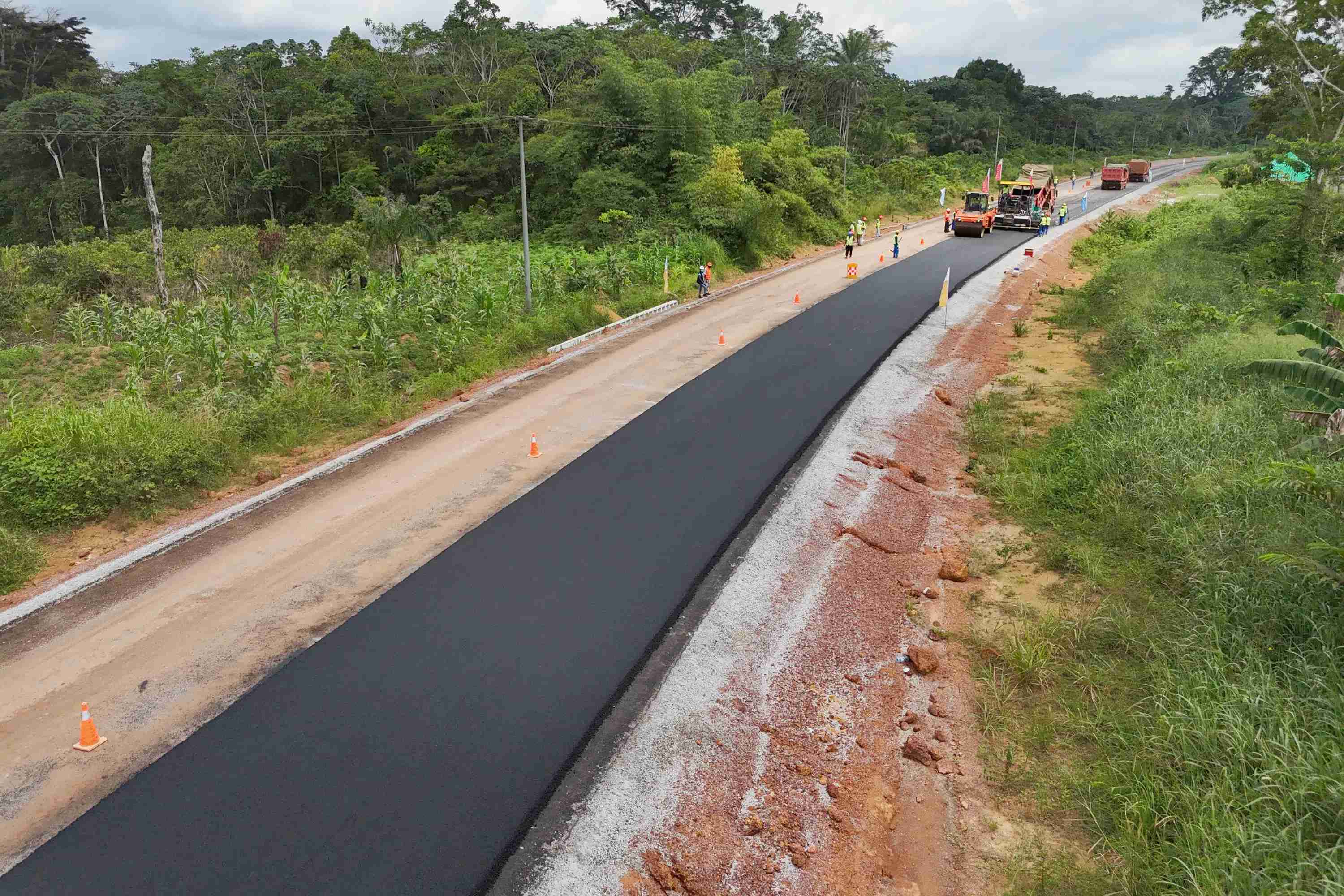
泥路变坦途、村庄焕生机:中企在加蓬铺就一条“民生路”
人民网-国际频道 原创稿· 2025-07-04 05:45
Core Insights - The government of Gabon has initiated a project to improve transportation conditions in Oyem, enhancing trade with Equatorial Guinea and Cameroon, with China Communications Construction Company (CCCC) winning the contract [6][12][13] Group 1: Project Overview - The Oyem project includes the construction of two major roads and a 90-meter bridge, with a total length of 36 kilometers for the Oyem-Asok-Mizang road, significantly reducing travel time from 2 hours to 30 minutes [12] - The project is part of a strategic initiative emphasized by Gabon's President, aimed at improving regional connectivity and infrastructure [12][13] Group 2: Economic Impact - The project is expected to enhance logistics networks, lower transportation costs, and open new trade routes for agricultural and mineral resources, thereby improving the income levels and living standards of local residents [12][15] - Over 500 jobs have been created locally, with more than 120 technical personnel trained, contributing to skill development in the region [15] Group 3: Community Response - Local residents express optimism about the project, noting that improved roads will encourage people to return to their villages, revitalizing the community [15] - The project has fostered a positive perception of Chinese companies in Gabon, with local workers appreciating the skills gained through collaboration [13][15]