医务社工

Search documents
部署医务社工 北京颇下实功
Ren Min Ri Bao Hai Wai Ban· 2025-11-24 23:08
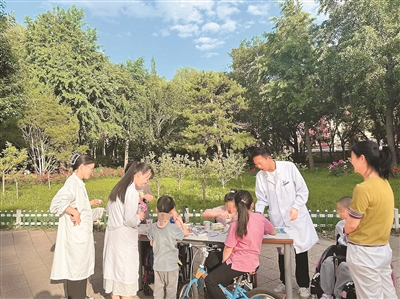
Core Viewpoint - The development of medical social work in Beijing has significantly progressed over the past five years, with a structured approach initiated by the Beijing Municipal Health Commission, resulting in a comprehensive support system integrated into public healthcare institutions [4][5][6]. Policy Framework - In October 2020, the Beijing Municipal Health Commission and four other departments issued the "Implementation Opinions on the Development of Medical Social Work," establishing clear goals, content, positions, and support for the initiative [5]. - A series of supporting policies have been implemented, including talent training, title promotion, financial support, and continuing education, leading to a coordinated effort across various health departments [5][6]. Resource Integration - The government has focused on building a platform for social participation, collaborating with organizations like the Han Hong Charity Foundation to enhance the medical social work system through project co-construction and resource sharing [7]. - Various medical institutions have tailored their approaches, such as organizing art therapy in pediatric wards and grief counseling in palliative care, showcasing a diverse development landscape [7]. Local Adaptation - Medical social work, originally a Western concept, has been localized in Beijing by integrating traditional Chinese values and methods, ensuring that services meet local needs [8]. - The approach emphasizes problem-solving and deep integration into healthcare services, enhancing communication between patients and healthcare providers and linking resources in community health [8]. Project Initiatives - Beijing has adopted a "nurturing + stationed" dual strategy to promote medical social work, supporting weaker units while encouraging innovation in established institutions [9]. - Over five years, 190 projects have been completed across various fields, with 50 projects creating replicable models and 140 projects helping hospitals achieve initial breakthroughs [9]. Professional Standards - The city is focused on improving the quality of medical social work by developing a composite talent team that includes industry supervisors, professional social workers, and volunteers [10][11]. - Standardization efforts are underway, with the establishment of industry standards to ensure the quality of services provided by medical social workers [11]. Public Awareness - Efforts to raise public awareness of medical social work include media visits, storytelling, and competitions to showcase the impact of social workers, helping to bring this "invisible" profession into the public eye [12]. - The development of medical social work in Beijing has evolved from non-existence to a comprehensive system, emphasizing collaboration among various healthcare levels [12].

“医护社”协同 让服务更温暖
Bei Jing Wan Bao· 2025-09-26 06:52
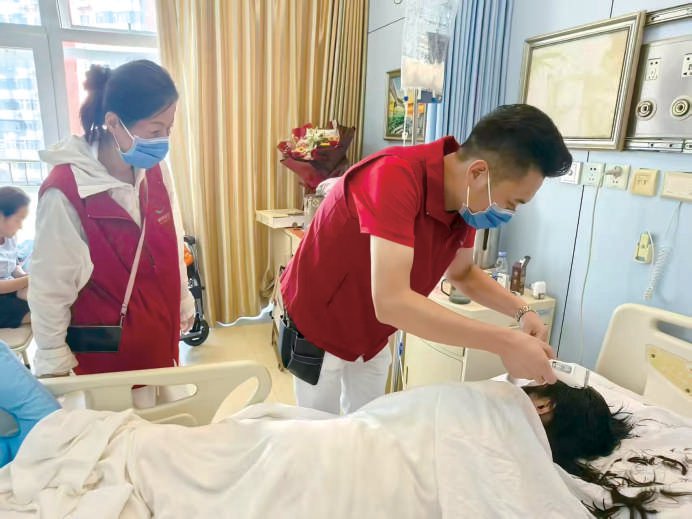
Core Viewpoint - Palliative care, particularly through the integration of medical social workers and volunteers, is evolving to provide more personalized and comprehensive support for patients and their families, enhancing the quality of life even in the final stages of life [1][8][10] Group 1: Development of Palliative Care - The implementation of the local standard "Palliative Care Service Specification" in Beijing in April 2025 emphasizes the inclusion of medical social workers in core service teams, promoting a collaborative model of care [1] - The palliative care team at Tsinghua University Beijing Tsinghua Changgung Hospital has evolved from specialized medical staff to a multidisciplinary collaboration, integrating social workers and volunteers for enhanced support [1][10] Group 2: Role of Medical Social Workers - Medical social workers are crucial in providing psychological support, repairing social relationships, and connecting families with community resources, thus facilitating personalized care approaches [1][8] - They play a vital role in addressing the emotional needs of both patients and families, helping them navigate the complexities of illness and end-of-life issues [8][9] Group 3: Volunteer Contributions - Volunteers are trained to provide various services, such as haircuts and music therapy, which significantly enhance the comfort and happiness of patients in palliative care [9] - The involvement of volunteers not only meets the practical needs of patients but also fosters a sense of community and support for both patients and their families [9] Group 4: Future of Palliative Care - There is an increasing demand for palliative care services, and the future will see an expansion of service areas, with community and home-based care becoming primary settings [10] - The development of more standards and guidelines based on practical experiences will aid in the training of palliative care professionals and improve service levels to meet diverse patient needs [10]
这家医院的康复科管得有点儿“宽”(退病录·走近医务社工②)
Ren Min Ri Bao Hai Wai Ban· 2025-04-28 22:57
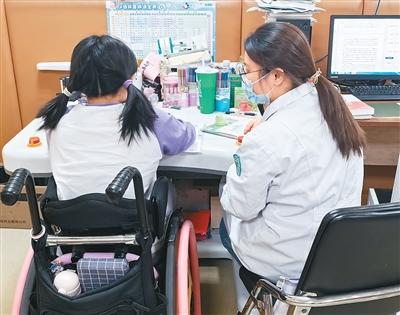
Core Insights - The article highlights the importance of social rehabilitation services provided by the China Rehabilitation Research Center, focusing on the need for home modifications and support for patients with disabilities to enhance their quality of life [2][3][4]. Group 1: Home Modification Services - The center provides detailed home modification plans to ensure accessibility for patients, including specific recommendations for bathroom and living space adjustments [2][3]. - Five key principles guide the home modification process: safety, self-sufficiency, affordability, resource reuse, and suitability to the environment [3][4]. - The aim is to help patients transition back to their homes with a supportive environment that accommodates their needs [2][3]. Group 2: Rehabilitation and Training - Rehabilitation at the center includes not only physical recovery but also psychological support and life skills training to help patients regain independence [5][6]. - Activities such as occupational therapy (OT) and physical therapy (PT) are essential for addressing physical limitations, while social workers facilitate emotional and psychological recovery [6][7]. - The center emphasizes the importance of patient education and peer support to foster a sense of community and shared experience among patients [5][6]. Group 3: Educational Support - Social workers provide educational support to children undergoing rehabilitation, helping them maintain academic progress and social skills [8][9]. - The approach includes simulating school environments and conducting themed activities to enhance social awareness and rule understanding among young patients [9][10]. Group 4: Legal and Rights Advocacy - Social workers at the center are also involved in educating patients about their legal rights, particularly regarding work-related injuries and compensation claims [10][11]. - This advocacy is crucial for ensuring that patients are aware of their entitlements and can navigate complex legal processes effectively [10][11]. Group 5: Professional Development of Social Workers - The article discusses the ongoing professionalization of medical social work in China, highlighting the need for specialized training and the challenges faced in the field [11]. - There is a recognition that while the role of social workers is critical, many still operate in administrative capacities rather than as specialized practitioners [11].