
医疗特区

Search documents
邓铂鋆:免签后老外扎堆来中国看病,不用担心医疗资源被挤占
Xin Lang Cai Jing· 2026-01-10 00:55
Core Viewpoint - The article discusses the evolving landscape of China's healthcare system, particularly in relation to foreign patients seeking medical services, and addresses concerns about potential resource competition between domestic citizens and foreign visitors [1]. Group 1: Foreign Patients in China's Healthcare System - China's medical institutions adhere to principles of fairness, regulation, and transparency when treating foreign patients, with unified pricing for domestic and foreign patients [3]. - Special medical services for foreigners are regulated to ensure they do not exceed 10% of total services in public hospitals, maintaining a balance between public welfare and diverse needs [4]. - The majority of foreign patients in China are long-term residents, such as expatriates and students, who often participate in the national health insurance system, thus not "taking advantage" of local resources [4]. Group 2: International Medical Competition - The global cross-border medical service market features three competitive models: technology-driven, marketing-driven, and cost-effective models, with countries like India and Thailand leading in cost-effectiveness [5][6]. - China's healthcare sector is moving away from low-cost competition, as its GDP per capita exceeds $12,000, leading to increased labor costs and a shift in the perception of healthcare services [6]. Group 3: Challenges in International Insurance Certification - A significant barrier for Chinese medical institutions in entering the global market is the lack of international commercial insurance certification, which is essential for attracting foreign patients [8]. - The complexity of international insurance certification includes hospital evaluations, insurance management system certifications, and payment process certifications, with the hospital evaluation being the most critical [8][9]. - The Chinese government has restricted public hospitals from pursuing certain international certifications, leading to a focus on domestic standards like CIHA, which are more aligned with public hospital operations [9]. Group 4: Role of Private Hospitals - Private hospitals are emerging as key players in China's international medical service sector, with the Boao Lecheng International Medical Tourism Pilot Zone serving as a notable example [10]. - Despite the success of Boao Lecheng in attracting domestic patients, it has yet to establish a strong reputation for treating foreign patients, indicating a need for further development [11]. Group 5: Future Directions for China's Healthcare Industry - The article suggests that China's healthcare sector should focus on three main areas to enhance its international competitiveness: leveraging policy advantages for innovative medical services, improving local certification systems for international recognition, and strengthening the capabilities of private healthcare institutions [13].


德展健康:公司海南德澄国际医康养综合体项目未被纳入“特许医疗” 政策覆盖范围
Cai Jing Wang· 2025-11-11 09:16
Core Insights - The company is developing the Hainan Decheng International Medical and Health Complex project, which is not currently covered by the "Special Medical" policy but benefits from the general policies of the Hainan Free Trade Port [1][2] - The project has been recognized as a major project in Hainan Province for 2025 and has signed a strategic cooperation framework agreement with China General Technology Group's subsidiary, aiming to enhance the company's health service capabilities [2][3] - The company reported a revenue of 278 million yuan for the first nine months of 2025, a year-on-year decrease of 21.71%, and a net loss of 64 million yuan, with losses expanding by 1493.85% compared to the previous year [1] Project Details - The Hainan Decheng International Medical and Health Complex project includes a secondary rehabilitation hospital with a construction area of approximately 15,500 square meters and a total of about 182 beds [2] - The project has a total investment of approximately 489 million yuan and a total construction area of about 71,828 square meters [2] - The project aims to create an international health complex that integrates medical, research, tourism, and wellness services, leveraging high-quality global medical resources [3]

乐城“行医” 未来方舟 特区先行
Shang Hai Zheng Quan Bao· 2025-11-03 18:16
Core Insights - The International Innovation Medical Device Exhibition in Boao, Hainan, has showcased 810 innovative medical devices since its opening in April 2021, with 441 of them not yet available in China and 394 making their debut in the country [1][2] - The Boao Lecheng International Medical Tourism Pilot Zone has successfully attracted over 510 global innovative medical devices and expedited the domestic launch of 21 innovative medical devices, positioning itself as a "hope city" for patients with rare diseases and complex conditions [2][4] Group 1 - The Boao Lecheng Pilot Zone has implemented a "four special" policy framework, including special medical, research, operation, and international medical exchange policies, along with zero-tariff benefits, facilitating its transformation from a policy testing ground to an industrial highland [1][4] - The first prescription for the innovative drug Matazizumab for hemophilia was issued at the Shanghai Jiao Tong University School of Medicine Affiliated Ruijin Hospital in Hainan in February this year [2] - As of now, the Boao Lecheng Pilot Zone has completed the "first use in China" for 522 international innovative medical devices, benefiting over 180,000 patients [2] Group 2 - The "zero-tariff" and "first trial" policies in the Boao Lecheng Pilot Zone are highly attractive to enterprises, supported by a mature "research-registration-industrialization" chain and an ecosystem of "policy innovation + industrial agglomeration" [4] - The zone has gathered over 30 top domestic and international medical institutions, creating a structure that includes public, private, and international entities [4] - The Boao Lecheng Pilot Zone is set to benefit from a more open development environment and broader market space as the Hainan Free Trade Port prepares for its closure operation [4]
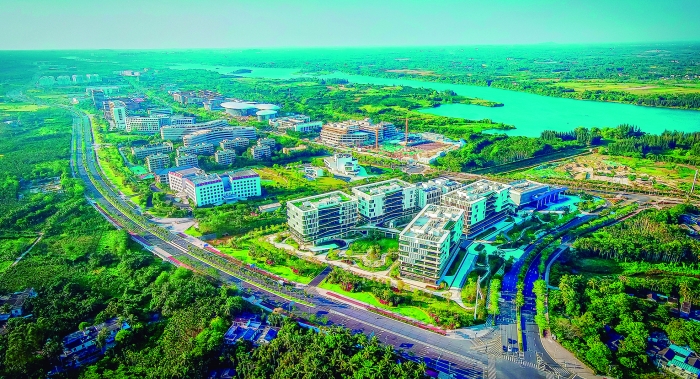
听力巨头落子海南乐城 助中国听障患者同步先进治疗方案
Zhong Guo Xin Wen Wang· 2025-07-09 17:44
Core Insights - Sonova Group has opened a subsidiary in the Boao Lecheng International Medical Tourism Pilot Zone, enhancing access to advanced hearing technology for hearing-impaired patients in China [1][2] - The Lecheng Pilot Zone is recognized as a "medical special zone" in China, facilitating the entry of international innovative medical devices and drugs [1] - Sonova has previously leveraged Lecheng's policies to introduce the Ultra 3D cochlear implant, which has benefited numerous patients since its approval [2] Group 1 - The new subsidiary aims to integrate resources with local hospitals to create innovative hearing health service models, ensuring advanced technologies reach patients efficiently [1] - The Marvel M30 cochlear implant technology has been rapidly introduced in China, completing over 300 clinical applications within a few months [1] - Lecheng has introduced 498 types of urgently needed medical devices and drugs that are available internationally but not yet in China, with over 30 medical institutions operational [2] Group 2 - Sonova's strategy is to utilize the Hainan Free Trade Port's policy advantages to expedite the delivery of cutting-edge hearing solutions to Chinese users [2] - The management of the Lecheng Pilot Zone anticipates that companies will leverage their technological strengths and the zone's policy benefits to accelerate the development of high-end hearing device manufacturing and application [2]