
医药

Search documents
2026年4月金股组合:反攻之路:科技制造与稳定内需
GUOTAI HAITONG SECURITIES· 2026-04-01 05:16
Group 1 - The report emphasizes that the adjustment in the market presents an opportunity to invest in Chinese assets, highlighting the emergence of significant bottom points in the Chinese stock market after recent adjustments [11][12][14] - The report identifies that China's energy consumption has a low oil and gas proportion of less than 30%, which is below the global average, enhancing resilience against risks [11][12] - The report notes that China's relatively stable security situation, complete supply chain system, and proactive industrial development are unique advantages that can counteract the prevailing narrative of stagflation [11][12] Group 2 - The report suggests that the focus on domestic demand and expansionary fiscal policies in 2026 will support consumption and stabilize investment, which is expected to counterbalance the decline in global demand [12][13] - The report highlights the acceleration of capital expenditure in new economic sectors and the growth of global energy transition demands as key drivers for China's growth logic in 2026 [13][14] - The report recommends sectors such as finance, technology manufacturing, and stable domestic demand as primary investment targets, emphasizing the value of high dividend yield in financial and stable sectors [14] Group 3 - The report discusses the performance of Tencent Holdings, which is expected to see solid growth driven by AI investments, with projected revenues of 830.2 billion CNY in 2026 [21] - The report highlights the launch of Claude Cowork, which is anticipated to accelerate CPU demand due to its role in AI applications, suggesting a significant growth opportunity in the electronic sector [24][29] - The report mentions that the communication sector, particularly optical interconnection, is expected to experience high growth due to increasing demand in AI infrastructure [36][39]






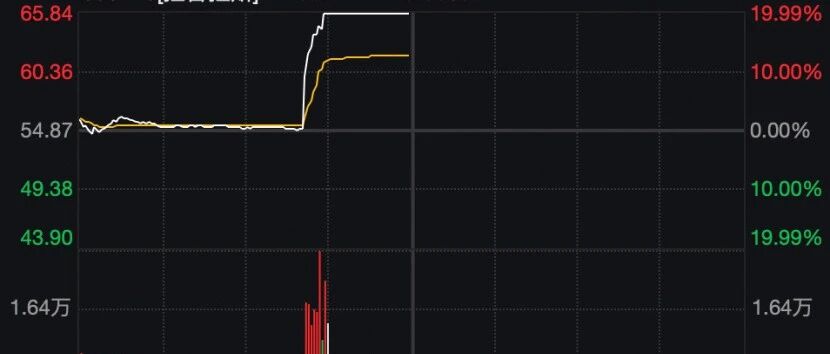
直线拉升!688726,10分钟20%涨停!
证券时报· 2026-04-01 04:36
Core Viewpoint - The A-share market experienced an overall rise on April 1, with the Shanghai Composite Index surpassing 3900 points, driven by significant gains in the pharmaceutical and biotechnology sectors, as well as speculation surrounding Tesla's procurement impacting the space photovoltaic sector [2][4]. Group 1: Market Performance - The Shanghai Composite Index increased by 1.36%, while the Shenzhen Component Index rose by 1.20%, with the Sci-Tech Innovation Board index surging by 2.79% [4]. - The pharmaceutical and biotechnology sector led the market with a gain exceeding 3%, featuring multiple stocks hitting the daily limit up [4]. Group 2: Key Stocks and Movements - Notable stocks in the pharmaceutical sector included: - Guangshengtang (300436) and Xiangzhi Pharmaceutical (300149), both hitting the 20% limit up [5]. - Other stocks like Aidi Pharmaceutical (688488) and Yifang Bio (688382) also showed significant gains, with increases of 18.25% and 15.30% respectively [5]. - The space photovoltaic concept saw rapid movement, with Laplace (688726) hitting a 20% limit up within 10 minutes due to rumors about Tesla's procurement [9][11]. Group 3: Company Financials - Laplace reported a revenue of 5.459 billion yuan and a net profit of 612 million yuan for 2025 [9]. - Sunshine Power, despite a drop of over 13%, reported a revenue of 89.184 billion yuan for 2025, marking a year-on-year growth of 14.55%, with a net profit of 13.461 billion yuan, up 21.97% [6]. - Baize Medical announced a revenue of approximately 1.1198 billion yuan for 2025, a decrease of about 5.8% from 2024, but with an adjusted profit increase of approximately 43.2% [20].

复星国际郭广昌:聚焦高增长核心赛道 出于谨慎原则进行计提减值
Jing Ji Guan Cha Bao· 2026-04-01 00:33
Core Viewpoint - Fosun International reported a significant loss in 2025, primarily due to non-cash impairment provisions made out of prudence, rather than a deterioration in operational fundamentals [1][2] Financial Performance - Total revenue for Fosun International reached RMB 173.43 billion, a year-on-year decline of 9.74% - The net profit attributable to shareholders was a loss of RMB 23.396 billion - Excluding the impact of non-cash asset impairments, the operating profit from core industries remained stable at RMB 4 billion [1] Impairment and Strategic Focus - The impairment provisions were mainly related to subsidiaries, particularly Yuyuan Sh股份, which conducted year-end impairment tests on certain commercial real estate projects and goodwill - The company aims to exit underperforming assets and concentrate resources on high-growth core sectors, including healthcare, insurance, and cultural tourism [1][2] Future Financial Goals - Fosun International has set mid-term financial targets, aiming to gradually restore profits to RMB 10 billion and reduce total liabilities to below RMB 60 billion - The company plans to achieve an "investment grade" rating and has announced a share buyback plan, with major shareholders and management committing to increase their holdings [2] Net Asset Value and Market Stability - The adjusted net asset value (NAV) of Fosun International is RMB 133.5 billion, with a per-share NAV of HKD 18.1 - Future initiatives will include optimizing the dividend mechanism in line with operational improvements and cash flow conditions [2]

A股清明节休市安排公布;美伊释放愿意推动冲突解决信号……盘前重要消息一览
证券时报· 2026-04-01 00:17
Group 1 - A new stock subscription for Chuangda New Materials is available with a subscription code of 920012 and an issue price of 19.58 yuan per share, with a subscription limit of 554,800 shares [3] - The Ministry of Industry and Information Technology (MIIT) and other departments have issued an action plan for the innovation and development of the Internet of Things (IoT) industry, aiming for the core industry scale to exceed 3.5 trillion yuan by 2028 [5] - Huawei reported a revenue of 880.9 billion yuan for 2025, with R&D investment of 192.3 billion yuan [8] Group 2 - Vanke A is projected to incur a loss of 88.556 billion yuan for 2025 [9] - Huaxin Cement expects a net profit increase of 126% to 213% year-on-year for the first quarter [12] - Shengtun Mining anticipates a net profit increase of 226.27% to 294.95% year-on-year for the first quarter [15] Group 3 - Spring Airlines' controlling shareholder proposed a share buyback of 300 million to 500 million yuan [16] - BOE Technology Group plans to repurchase 500 million to 1 billion yuan of its A-shares [21] - Two Mian Zhen's controlling shareholder will change to Guangxi Guokong, leading to a stock resumption [17]

2026年4月金股月度金股:财通策略、多行业-20260331
CAITONG SECURITIES· 2026-03-31 09:47
Core Insights - The report highlights the ongoing geopolitical conflicts and their impact on capital markets, particularly the volatility in the A-share market and the upcoming earnings disclosure period [2][5] - It discusses the potential outcomes of the Iran conflict, suggesting that military results may emerge in April, which could affect market risk preferences [2][5] - The report anticipates strong performance in sectors with high economic momentum, including non-bank financials, chemicals, and telecommunications, while also identifying recovery sectors such as home appliances and retail [6] Industry Overview - The report categorizes industries based on their economic momentum, identifying expansionary sectors like non-bank financials, chemicals, and telecommunications, and recovery sectors including home appliances, food and beverage, and retail [6] - It notes that the chemical sector benefits from rising upstream energy prices, while the coal sector is seeing improved supply-demand dynamics [6] - The consumer chain is expected to recover gradually, with food and beverage production showing year-on-year growth, and home appliances benefiting from overseas inventory replenishment [6] Investment Strategy - The report recommends a "HALO PLUS" strategy, focusing on defensive investments in high cash flow and low correlation sectors, such as coal and utilities, while also targeting growth sectors with low competition and sensitivity to interest rates [6] - It emphasizes the importance of maintaining a balanced portfolio to hedge against macroeconomic volatility [6] Stock Recommendations - The report lists ten recommended stocks, including TCL Electronics, Anjuke Food, Muyuan Foods, and Tencent Holdings, highlighting their growth potential and market positioning [3][4]




机器学习因子选股月报(2026年4月)-20260331
Southwest Securities· 2026-03-31 08:05
Quantitative Models and Construction GAN_GRU Model - **Model Name**: GAN_GRU - **Construction Idea**: The GAN_GRU model combines Generative Adversarial Networks (GAN) for feature generation and Gated Recurrent Units (GRU) for time-series feature encoding to create a stock selection factor[4][13][22] - **Construction Process**: 1. **GAN Component**: - **Generator**: Generates realistic data samples from random noise using the loss function: $$L_{G}\,=\,-\mathbb{E}_{z\sim P_{z}(z)}[\log(D(G(z)))]$$ where \(z\) represents random noise, \(G(z)\) is the generated data, and \(D(G(z))\) is the discriminator's output probability that the generated data is real[24][25][26] - **Discriminator**: Distinguishes real data from generated data using the loss function: $$L_{D}=-\mathbb{E}_{x\sim P_{data}(x)}[\log\!D(x)]-\mathbb{E}_{z\sim P_{z}(z)}[\log(1-D(G(z)))]$$ where \(x\) is real data, \(D(x)\) is the discriminator's output probability for real data, and \(D(G(z))\) is the output probability for generated data[27][29][30] - **Training Process**: Alternating training of the generator and discriminator until convergence[30][34] 2. **GRU Component**: - Two GRU layers (GRU(128,128)) followed by an MLP (256,64,64) to encode time-series features and predict future returns[22] - Input features include 18 price-volume metrics (e.g., closing price, turnover rate) sampled over 40 days to predict cumulative returns for the next 20 trading days[14][18][19] - Data preprocessing involves outlier removal, normalization, and cross-sectional standardization[18] - Training uses semi-annual rolling windows with hyperparameters such as batch size equal to the number of stocks, Adam optimizer, learning rate of \(1e-4\), and IC-based loss function[18][22] 3. **Feature Generation**: - GAN's generator processes raw price-volume time-series features (Input_Shape=(40,18)) and outputs transformed features with preserved time-series properties[37] - **Evaluation**: The model effectively combines GAN's feature generation capabilities with GRU's time-series encoding, providing robust predictive power for stock selection[4][22][37] --- Model Backtesting Results GAN_GRU Model Performance Metrics - **IC Mean**: 0.1095*** - **ICIR (Non-Annualized)**: 0.88 - **Turnover Rate**: 0.82X - **Recent IC**: 0.1008*** - **One-Year IC Mean**: 0.0514*** - **Annualized Return**: 36.03% - **Annualized Volatility**: 21.87% - **IR**: 1.55 - **Max Drawdown**: 27.29% - **Annualized Excess Return**: 21.87%[41][42][45] Industry-Level Performance - **Top 5 Industries by Recent IC**: - Media: 0.4279*** - Coal: 0.2355*** - Retail: 0.2003*** - Food & Beverage: 0.1701*** - Chemicals: 0.1395***[41][42][45] - **Top 5 Industries by One-Year IC Mean**: - Media: 0.1304*** - Steel: 0.1212*** - Retail: 0.1191*** - IT: 0.1064*** - Food & Beverage: 0.0988***[41][42][45] - **Top 5 Industries by Recent Excess Return**: - Media: 4.57% - Agriculture: 3.26% - Construction Materials: 3.19% - Light Manufacturing: 2.53% - Coal: 2.22%[45][46][48] - **Top 5 Industries by One-Year Average Excess Return**: - Real Estate: 1.83% - Retail: 1.41% - Consumer Services: 1.39% - Automotive: 1.18% - Utilities: 1.07%[45][46][48] --- Quantitative Factors and Construction GAN_GRU Factor - **Factor Name**: GAN_GRU - **Construction Idea**: Derived from the GAN_GRU model, this factor leverages GAN for feature generation and GRU for time-series encoding to predict stock returns[4][13][22] - **Construction Process**: - Input features include 18 price-volume metrics sampled over 40 days[14][18][19] - GAN generates transformed features while preserving time-series properties[37] - GRU encodes these features and outputs predicted returns as the factor[22][37] - Factor values undergo industry and market-cap neutralization and standardization[22] - **Evaluation**: The factor demonstrates strong predictive power across multiple industries and time periods, with significant IC values and excess returns[4][22][37] --- Factor Backtesting Results GAN_GRU Factor Performance Metrics - **IC Mean**: 0.1095*** - **ICIR (Non-Annualized)**: 0.88 - **Turnover Rate**: 0.82X - **Recent IC**: 0.1008*** - **One-Year IC Mean**: 0.0514*** - **Annualized Return**: 36.03% - **Annualized Volatility**: 21.87% - **IR**: 1.55 - **Max Drawdown**: 27.29% - **Annualized Excess Return**: 21.87%[41][42][45] Industry-Level Performance - **Top 5 Industries by Recent IC**: - Media: 0.4279*** - Coal: 0.2355*** - Retail: 0.2003*** - Food & Beverage: 0.1701*** - Chemicals: 0.1395***[41][42][45] - **Top 5 Industries by One-Year IC Mean**: - Media: 0.1304*** - Steel: 0.1212*** - Retail: 0.1191*** - IT: 0.1064*** - Food & Beverage: 0.0988***[41][42][45] - **Top 5 Industries by Recent Excess Return**: - Media: 4.57% - Agriculture: 3.26% - Construction Materials: 3.19% - Light Manufacturing: 2.53% - Coal: 2.22%[45][46][48] - **Top 5 Industries by One-Year Average Excess Return**: - Real Estate: 1.83% - Retail: 1.41% - Consumer Services: 1.39% - Automotive: 1.18% - Utilities: 1.07%[45][46][48]
创新药对外授权交易超600亿美元,如何布局?
Datong Securities· 2026-03-30 23:47
Market Overview - The equity market saw most major indices decline, with only the Wind Micro Index rising by 1.54% during the week. The North Securities 50 index fell by 3.40%, while the ChiNext Index and the Shanghai Composite Index decreased by 1.68% and 1.09%, respectively [4][5] - In the bond market, both short and long-term interest rates declined, with the 10-year government bond yield falling by 1.27 basis points to 1.817%. The credit spreads for both short and long-term bonds also narrowed [7][8] Equity Product Allocation Strategy - Event-driven strategy highlights include: - China's innovative drug licensing transactions exceeding $60 billion, with recommended funds such as Harvest Mutual Selection A (006603), ICBC Health A (006002), and Penghua Medical Technology A (001230) [12][13] - Attacks on two major aluminum plants in the Middle East, suggesting a focus on funds like Harvest Resource Selection A (005660) and Huaxia Prosperity Driven A (017598) [13] - The official naming of "Token" as "词元," indicating potential investment opportunities in computing power and chip sectors, with recommended funds including Nord New Life A (006887) and Harvest Frontier Innovation (009993) [14] - Asset allocation strategy recommends a balanced core with a barbell strategy, focusing on dividend and technology/high-end manufacturing sectors. Suggested funds include Anxin Dividend Selection A (018381) and Harvest Military Industry Theme A (004698) [16][17] Stable Product Allocation Strategy - Market analysis indicates a net injection of 281.9 billion yuan by the central bank, maintaining a balanced and loose funding environment. The 2025 China International Balance of Payments Report shows a current account surplus of $735 billion, representing 3.7% of GDP [20][22] - Industrial profits for large-scale enterprises grew by 15.2% in the first two months of 2026, indicating a positive economic outlook [22] - Recommended products include short-term bond funds like Nord Short Bond A (005350) and Guotai Lian A (016947), with a focus on maintaining liquidity while managing risk [23][24]
复星国际2025年总收入1734.3亿元 经调整产业运营利润40亿元
Shang Hai Zheng Quan Bao· 2026-03-30 15:41
Core Viewpoint - Fosun International and its subsidiaries reported a solid performance for the year ending December 31, 2025, with total revenue reaching 173.43 billion yuan and adjusted operating profit of 4 billion yuan, driven by strong growth in core sectors such as healthcare and insurance [2] Group 1: Financial Performance - Total revenue for the group was 173.43 billion yuan, with adjusted operating profit of 4 billion yuan [2] - The four core subsidiaries generated revenue of 128.2 billion yuan, accounting for 74% of the group's total revenue [2] - Fosun Pharma, a key subsidiary, reported a net profit of 3.371 billion yuan, representing a year-on-year growth of 21.69% [2] - Fosun Portugal Insurance, another core subsidiary, achieved a net profit of 201 million euros, up 15.8% year-on-year [2] Group 2: Strategic Initiatives - The company is implementing a "streamlining and focusing on core business" strategy, resulting in a non-cash impairment charge of 23.4 billion yuan due to asset revaluation, with real estate-related impairments accounting for approximately 55% [2] - The chairman emphasized the need to optimize asset structure and focus on high-growth sectors to seize industry opportunities amid global economic fluctuations [3] Group 3: Financial Health and Goals - The company's financial condition remains healthy, with a total debt to total capital ratio of 57% and cash reserves of 61.1 billion yuan [3] - Unutilized bank credit amounts to 144.6 billion yuan, enhancing the company's ability to manage risks and seize opportunities [3] - The mid-term financial goal includes restoring profit levels to 10 billion yuan and reducing total liabilities to below 60 billion yuan, aiming for an "investment-grade" rating [3]

ETF周报20260323-0327:能源替代或是ETF投资者主要思路-20260330
East Money Securities· 2026-03-30 14:56
Group 1 - The overall market for stock ETFs (excluding cross-border) experienced a net outflow of 12.22 billion, which is a decrease of 5.58 billion compared to the previous week, indicating an expansion of net outflow scale [1][9] - The A-share industry and thematic ETFs saw a net outflow of 15.79 billion, an increase of 8.79 billion from the previous period, showing continued outflow pressure in industry and thematic ETFs [1][11] - The Hong Kong stock ETFs continued to experience net outflows, with the outflow amount increasing to 4.12 billion, including a net outflow of 1.78 billion from cross-border industry and thematic ETFs [1][14] Group 2 - In the broad-based ETF category, there was an overall net outflow of 1.16 billion, while the CSI 300 saw relatively large inflows, with most broad-based ETFs experiencing outflows [2][17] - In the Smart Beta and major industry categories, dividend and cash flow strategies remain relatively high certainty directions in an uncertain environment [2][17] - In the segmented industry, sectors such as non-ferrous metals, chemicals, and oil and petrochemicals continue to face significant outflow pressure, with energy substitution remaining a core strategy (coal replacing oil, secondary energy/new energy replacing fossil energy) [2][21] Group 3 - The top five stock ETFs with net inflows from March 23 to 27 were the Energy Storage Battery ETF (E Fund) (+1.07 billion), CSI 300 ETF (Huatai-PB) (+1.05 billion), Sci-Tech 50 ETF (E Fund) (+0.94 billion), CSI 300 ETF (Hua Xia) (+0.94 billion), and Free Cash Flow ETF (Hua Xia) (+0.92 billion) [3][25] - The top five stock ETFs with net outflows during the same period were A500 ETF (Hua Xia) (-2.65 billion), Non-ferrous Metals ETF (Southern) (-1.68 billion), CSI 1000 ETF (Hua Xia) (-1.23 billion), SSE 50 ETF (Hua Xia) (-1.21 billion), and Non-ferrous Metals ETF (Hua Xia) (-1.16 billion) [3][25] - For cross-border ETFs, the top five with net inflows were the Hang Seng Technology ETF (E Fund), Hang Seng Technology ETF (Tianhong), Hang Seng Technology ETF (Hua Xia), China Concept Internet ETF (E Fund), and Hang Seng Technology ETF (Dacheng) [3][25]