
医疗监管

Search documents
国家卫生健康委回应襄阳、宜昌部分精神病医院侵害患者权益等问题
Yang Shi Xin Wen· 2026-02-05 13:27
Group 1 - The National Health Commission of China is addressing reported issues in mental health hospitals in Hubei Province, specifically in Xiangyang and Yichang, regarding illegal admissions, suspected misappropriation of medical insurance funds, and violations of patient rights [1] - The Commission has dispatched officials and experts to Hubei to oversee and guide local investigations, ensuring that legal and regulatory actions are taken against any violations [1] - Local health departments are being instructed to enhance supervision of all levels of mental health hospitals and departments, standardize diagnostic and treatment services, and protect patient rights and public health [1]
如此精神病院“黑箱”,发现一起坚决查处一起
Ren Min Ri Bao· 2026-02-04 05:52
Group 1 - The core issue involves mental hospitals in Hubei province allegedly engaging in fraudulent practices by attracting patients with "free hospitalization" offers and subsequently exploiting them for insurance funds [1][2] - Investigations reveal that these hospitals create false medical conditions and treatment plans to continuously defraud the medical insurance fund, while also employing coercive tactics to prolong patient stays [1][2] - The hospitals are described as operating in a "black box" environment, where the unique characteristics of mental health patients, such as communication difficulties and closed management, are exploited to evade external oversight [2][3] Group 2 - The article emphasizes the need for stronger regulatory measures and better coordination among departments to dismantle the fraudulent practices within the mental health sector [3] - It calls for a thorough investigation by Hubei province to expose the truth behind these practices and provide a reference for combating similar fraud nationwide [3]

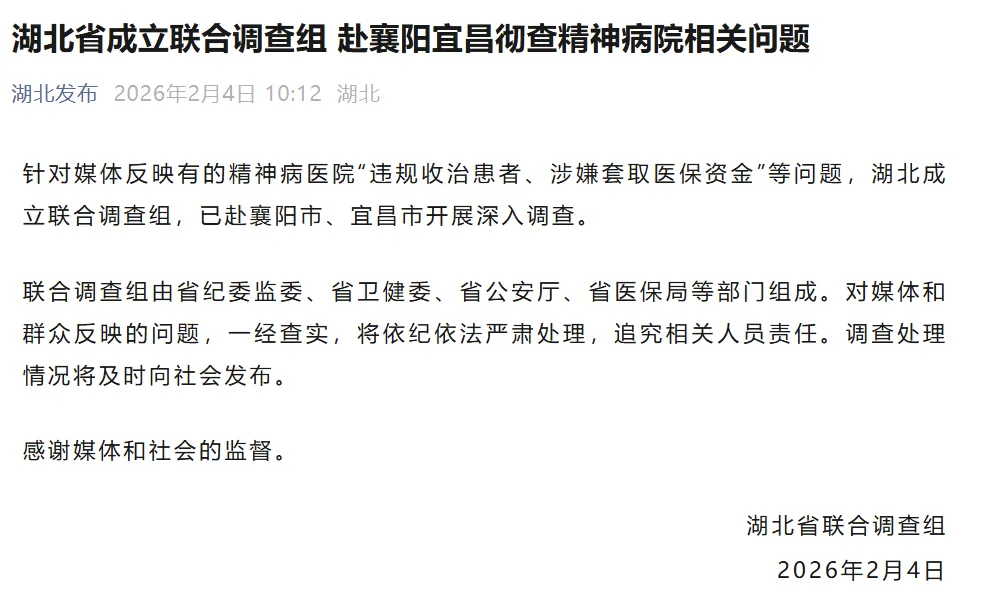
湖北省成立联合调查组赴襄阳宜昌彻查精神病院相关问题
Yang Shi Xin Wen Ke Hu Duan· 2026-02-04 02:28
Core Viewpoint - A joint investigation team has been established in Hubei Province to address media reports regarding violations in mental health hospitals, including "illegal patient admissions and suspected healthcare fund fraud" [1] Group 1 - The investigation team consists of members from the Hubei Provincial Commission for Discipline Inspection, Health Commission, Public Security Department, and Medical Insurance Bureau [1] - The team will conduct in-depth investigations in Xiangyang and Yichang cities based on issues raised by the media and the public [1] - If any violations are confirmed, the responsible individuals will face serious consequences in accordance with laws and regulations [1]
湖南两人同病房同一天手术,体内都被遗落钻头,医院认为“影响不大”,隐瞒数月
Xin Lang Cai Jing· 2025-12-20 10:53
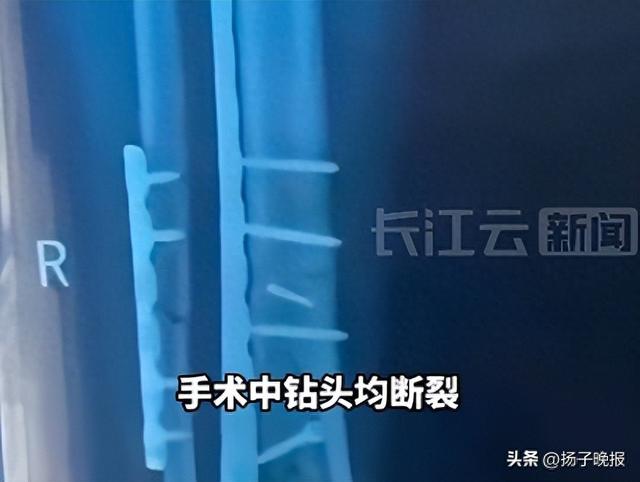
Core Points - Two patients underwent orthopedic surgery at Qiyang Traditional Chinese Medicine Hospital and both had surgical drill bits left inside their bodies, leading to prolonged pain and misdiagnosis [3][4] - The hospital initially did not inform the patients about the retained drill bits, believing it would not significantly impact their health [4][5] - The hospital has acknowledged the medical error and is willing to take responsibility, but compensation discussions with the patients remain unresolved [5][6] Summary by Sections - **Incident Description** - Two patients, Zhou Waiping and Bai Xisheng, experienced severe pain post-surgery, which was later discovered to be caused by retained surgical drill bits [3][4] - Both patients sought medical attention multiple times, only to be told that their pain was normal [3] - **Hospital's Response** - The hospital confirmed the incident but claimed that the impact on the patients was minimal and planned to address the issue during a subsequent surgery [4][5] - An administrative penalty was imposed on the hospital for failing to inform patients about the medical risks and not properly documenting the procedures [5] - **Regulatory Oversight** - The local health commission is responsible for the hospital's oversight, but there are questions about the effectiveness of surgical safety regulations [5][6] - The health department has attempted to mediate between the hospital and the patients, but no agreement has been reached regarding compensation [5][6]
在创新中狠抓落实丨跟进督办提升服务质效
Zhong Yang Ji Wei Guo Jia Jian Wei Wang Zhan· 2025-12-09 00:11
Core Viewpoint - The Weifang Municipal Commission for Discipline Inspection and Supervision is actively addressing issues related to redundant medical examinations and improper charges in the healthcare sector, aiming to alleviate the financial burden on citizens [1][2][3] Group 1: Issues Addressed - The Weifang Municipal Commission has focused on resolving public concerns regarding excessive medical examinations and high treatment costs by implementing a rectification plan in collaboration with health authorities [1] - A comprehensive review of complaints related to redundant medical checks and improper charges has been conducted, resulting in the establishment of a rectification ledger for 78 identified issues [1][3] Group 2: Supervision and Monitoring - The Commission employs various methods, including participation in health committee meetings and on-site inspections, to continuously monitor and address the challenges of redundant medical examinations and improper charges [2] - A new monitoring platform, "E-Lian Tong," has been developed to oversee key areas such as drug procurement and material management, enhancing the ability to detect and warn against irregularities [2] Group 3: Outcomes and Measures - Since the initiation of the rectification efforts, the Commission has identified 31 specific issues related to non-compliant medical practices, leading to the investigation and disciplinary action against five individuals [3] - The healthcare system in Weifang has improved collaboration among various departments, enhancing data analysis and joint assessments to prevent unnecessary redundant medical examinations [3]
超九成患者被手术,整治过度医疗不能止于经济处罚
Qi Lu Wan Bao Wang· 2025-06-17 08:38
Group 1 - The investigation into Huangshi Boshi Anorectal Hospital revealed alarming excessive medical practices, with 113 out of 125 sampled cases exhibiting such behavior, and the surgery rate for patients exceeding 90%, far above the local average [1] - The hospital's actions, which included performing surgeries on patients without proper indications or with clear contraindications, not only pose risks of infections and complications but also severely undermine public trust in the healthcare system [1] - Existing penalties for excessive medical practices are insufficient, with the hospital facing only a total fine of 50,000 yuan from 2020 to 2022, contrasting sharply with the profits gained from excessive medical procedures [1] Group 2 - The root cause of the disproportionate penalties lies in the shortcomings of the system design and execution, as current healthcare laws prohibit excessive medical practices but lack a systematic recognition mechanism and graduated penalty standards [2] - To address the issue, it is crucial to improve the regulatory framework and supervision processes, including establishing clear standards for recognizing excessive medical practices and implementing severe penalties such as revoking medical licenses and imposing administrative and criminal sanctions [2] - A comprehensive governance system is necessary to combat excessive medical practices, which includes enhancing industry self-regulation, technical supervision, and facilitating public reporting channels to encourage community oversight [3]