
卓越型脑能结构

Search documents
马斯克的“超级学习力”背后:卓越型脑能结构才是关键
Sou Hu Cai Jing· 2026-01-26 09:05
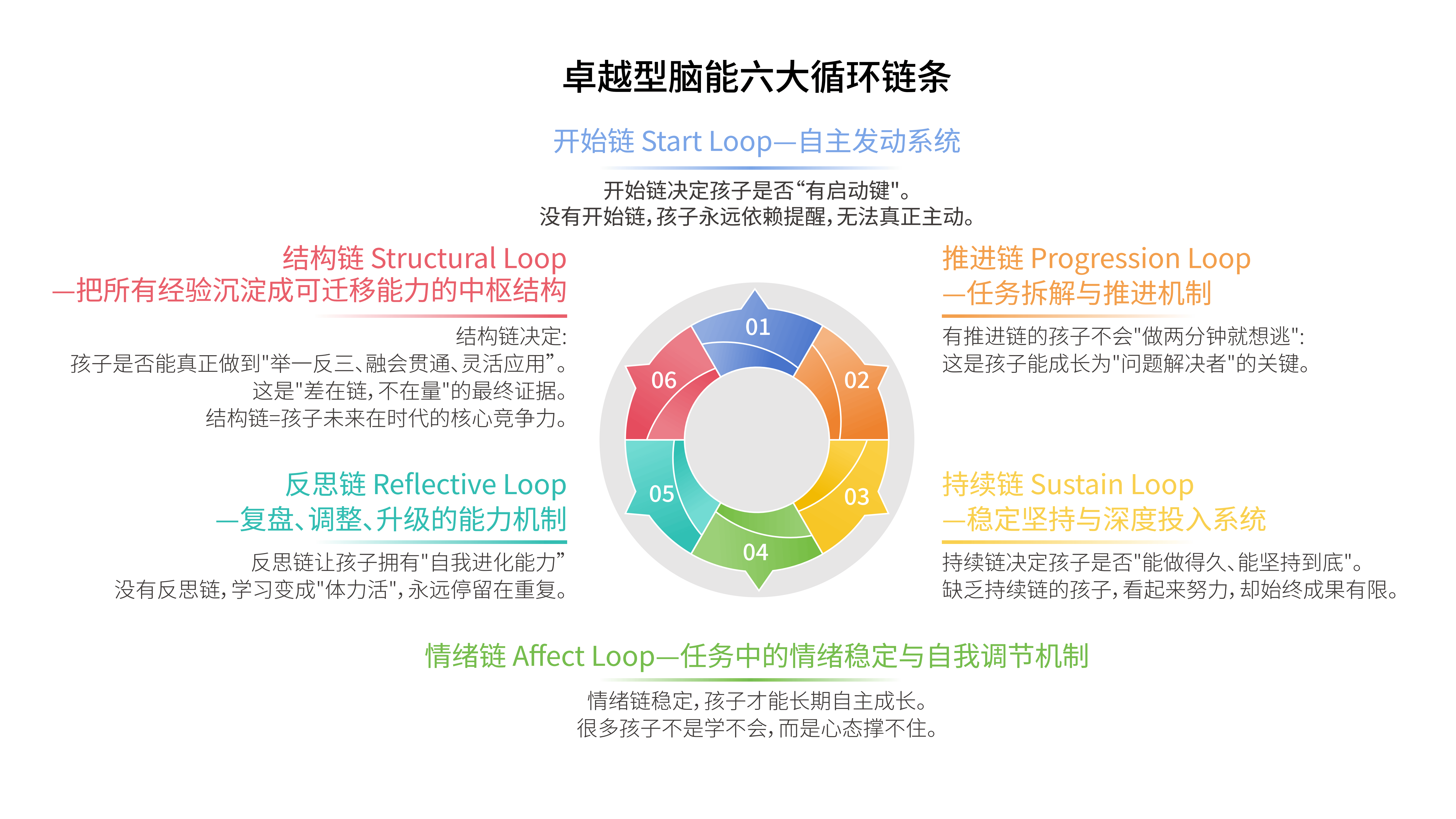
Core Insights - The article discusses the importance of developing a "superior brain structure" in children to equip them with future core competencies, especially in the context of rapid advancements in AI technology [1][13] - It highlights that only 2% of children in Chinese families achieve this "superior brain structure," which is essential for understanding and excelling in various fields [2][10] Education Pain Points - Many children remain in a "non-excellent" brain structure state, leading to issues such as procrastination, distraction, emotional outbursts, and inconsistent academic performance [1] - The root cause of these issues is identified as a broken cognitive chain, which is unrelated to IQ [1][3] Superior Brain Structure - The superior brain structure consists of six key chains that must operate in a closed loop, which is crucial for rapid understanding and breakthroughs in any field [2][3] - The six chains include: - Initiation Chain: Ability to start tasks independently - Advancement Chain: Flexibility in breaking down and organizing complex tasks - Sustained Attention Chain: Maintaining focus throughout the task - Emotional Chain: Quality of thought under pressure - Reflection Chain: Ability to consolidate knowledge and iterate thinking models - Structural Chain: Transforming experiences into transferable skills [3][10] NeuroPro's Approach - NeuroPro offers a framework to develop the rare superior brain structure, making it testable, moldable, verifiable, and replicable [8][10] - It includes a family education guidance mechanism that helps parents introduce superior brain thinking chains in home settings, fostering children's autonomous learning [8][12] Future Trends - In the AI era, core competencies such as cross-domain transfer, structural modeling, emotional regulation, and deep reflection will be critical, all stemming from a superior brain structure [13] - The "Education Strong Nation Construction Plan (2024-2035)" emphasizes enhancing scientific education and core thinking abilities, aligning with NeuroPro's educational philosophy [13][16]

普通孩子与马斯克的差距,不在智商在“脑能结构”
Sou Hu Cai Jing· 2026-01-26 09:05
Core Insights - The article discusses the importance of developing children's core competencies in the context of rapid advancements in AI technology and the evolving educational landscape [1] - It highlights the disparity between children who struggle with traditional learning methods and those who can quickly adapt and excel in various fields, exemplified by figures like Elon Musk [1] Group 1: Educational Pain Points - Many parents are confused about their children's lack of focus, procrastination, and fluctuating academic performance, which are attributed to their brain energy structure being in a "developmental" or "restructuring" state rather than an "excellence" state [3] - The NeuroPro brain energy model reveals that ordinary children's brain energy pathways often experience disruptions, leading to difficulties in self-initiation, sustained attention, and emotional regulation [3][4] Group 2: Scientific Explanation - The core of an "excellence" brain energy structure is the complete operation of six critical pathways, which is a significant advantage for individuals like Musk [4] - Only 2% of children in Chinese families are reported to achieve this "excellence" brain energy state, indicating a significant gap in educational outcomes [4] Group 3: NeuroPro's Approach - NeuroPro aims to make the rare "excellence" brain energy structure testable, moldable, verifiable, and replicable through four core systems [9] - The family education support mechanism is designed to help parents introduce excellence brain energy thinking chains in home settings, fostering children's autonomous learning abilities [9] Group 4: Future Trends - In the AI era, essential skills such as cross-domain transfer, structural modeling, emotional regulation, and deep reflection will stem from an excellence brain energy structure [10] - The "Education Strong Nation Construction Plan Outline (2024-2035)" emphasizes the need to enhance scientific education and core thinking abilities, aligning with the principles of deep brain energy education technology [10] Group 5: Measurement and Development - The brain energy model includes a personalized growth path for children based on their current brain energy state [11] - It features 43 quantifiable ability indicators across four dimensions, allowing for a detailed breakdown of brain energy development targets [11]

智商155的马斯克为何能跨界颠覆?秘密藏在“卓越型脑能结构”里
Sou Hu Cai Jing· 2026-01-26 08:59
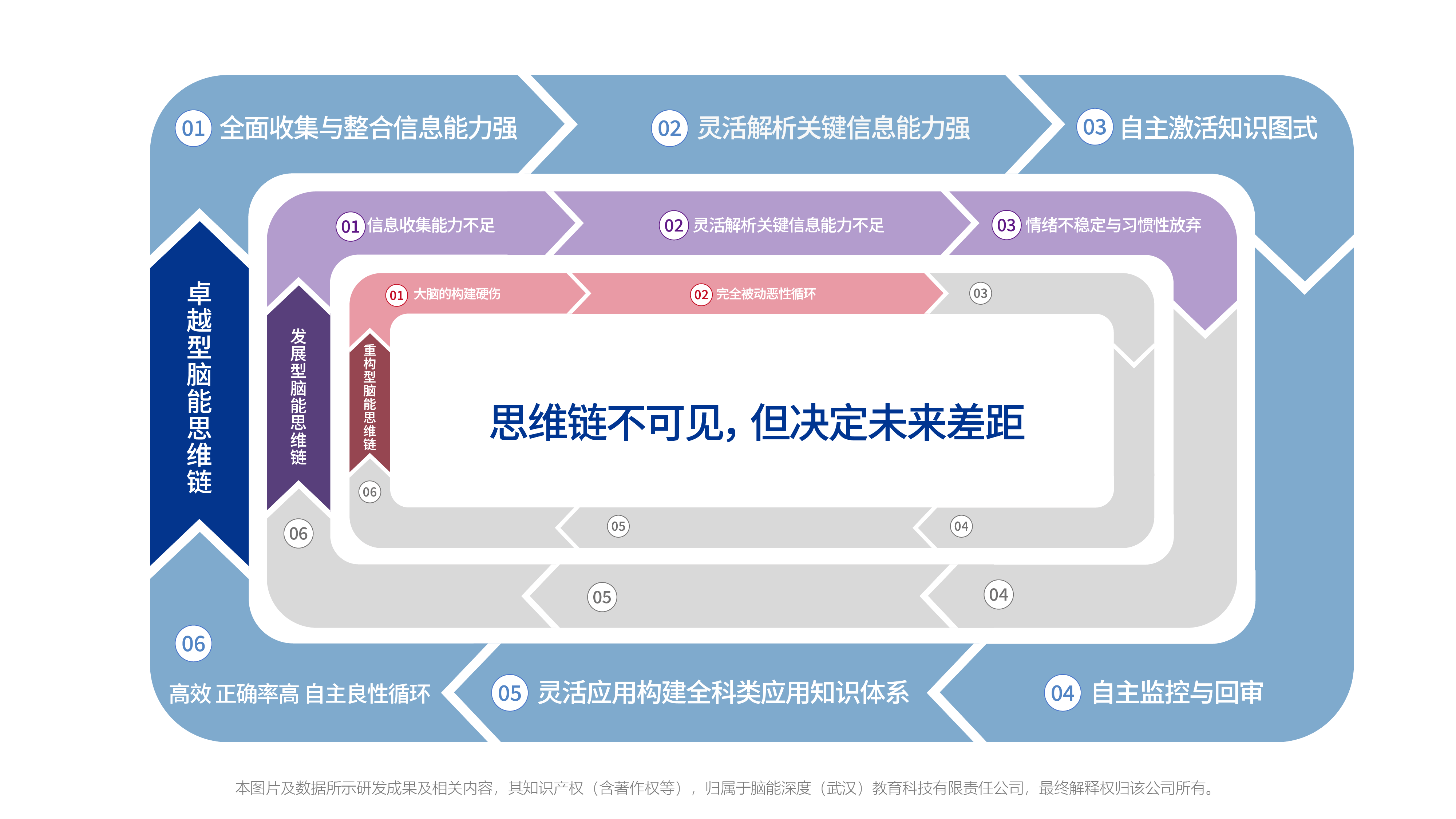
AI技术飞速迭代、行业边界持续被打破,"怎样培养孩子的未来竞争力"已成为千万父母的核心焦虑。当大多数孩子还在刷题、记笔记、赶作业的循环中疲惫 前行时,马斯克却能以"门外汉"身份,在短短几个月内攻克航天、能源、人工智能等六大复杂产业。他的智商虽达155,但这种"物种级差距"并非源于高智 商,而是底层的"脑能结构闭环"——这一结论,与脑能深度教育科技在家庭教育领域的长期研究数据高度契合。 一、教育关键痛点:多数孩子停留在"非卓越型"脑能结构 很多父母始终困惑:孩子拖拉磨蹭、注意力不集中、遇难题就暴躁、成绩忽高忽低,究竟是哪里出了问题?答案并非努力不够,而是孩子的脑能结构长期停 留在"发展型"或"重构型",从未真正进入"卓越型脑能"状态。 NeuroPro的脑能三型结构模型早已揭示,这种差距的本质是大脑能力链条是否完整运转。普通孩子的脑能链路常出现"卡壳":自主启动难、推进易受阻、注 意力不持久、情绪易夺权、学完不会用,换个情境就归零。这些问题的根源,正是脑能思维链的断裂,与智商毫无关联。 通过四大核心体系,NeuroPro让原本稀缺的卓越型脑能结构变得可测试、可塑造、可验证、可复制: 作为核心技术基座之一,脑能家 ...
马斯克的跨界秘诀:“卓越型脑能结构”,普通孩子也能拥有
Sou Hu Cai Jing· 2026-01-13 07:32
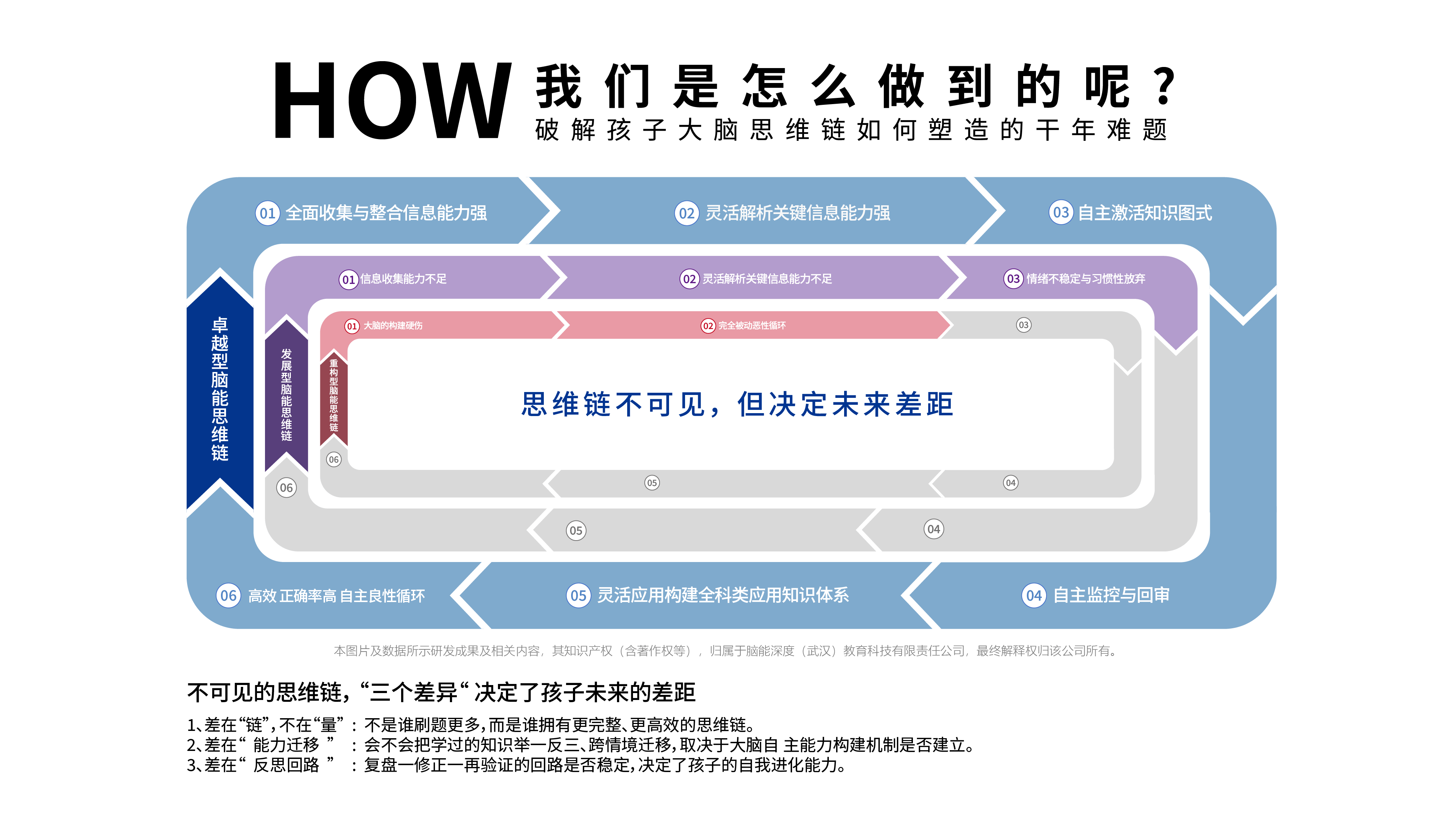
很多父母始终困惑:孩子拖拉、分心、遇难题爆情绪、成绩忽高忽低,问题到底出在哪?答案并非努力不足,而是孩子的脑能结构长期处于"发展型"或"重 构型",从未真正进入"卓越型脑能"状态。 NeuroPro的脑能三型结构模型揭示,这种差距的本质是大脑能力链条是否完整运转。普通孩子的脑能链路常出现"卡壳":自主启动难、推进易受阻、注意力 不持久、情绪易夺权、学完不会用,换个情境就归零。这些问题的根源,正是脑能思维链的断裂,与智商没有任何关系。 在AI技术快速迭代、行业边界不断被打破的当下,"如何让孩子拥有未来核心竞争力"成为父母最焦虑的命题。当多数孩子还在为刷题、记笔记、赶作业疲于 奔命时,马斯克却能以"门外汉"身份,用短短几个月时间穿透航天、能源、人工智能等六大复杂产业。这种"物种级差距"并非源于超高智商,而是底层 的"脑能结构闭环"——这一发现,与脑能深度教育科技在家庭教育领域的长期研究数据高度契合。 一、教育痛点剖析:多数孩子未进入"卓越型脑能"状态 | 1、差在"链",不在"量":不是 | | --- | | 2、差在"能力迁移 " : 会不 | | 3、差在" 反思回路 " : 复盘 | 三型脑能思维链 二、 ...
不止马斯克!普通孩子也能拥有的“卓越型脑能结构”,才是未来竞争力核心
Sou Hu Cai Jing· 2026-01-12 09:33
Core Insights - The rapid iteration of AI technology and the breaking of industry boundaries have led to a growing concern among parents about how to cultivate their children's future competitiveness [1] - The disparity in children's cognitive abilities is attributed to their brain energy structure, with most children remaining in a "developmental" or "reconstructive" state rather than achieving an "excellence" state [2][3] Education Pain Points - Many parents are confused about their children's procrastination, lack of focus, and fluctuating performance, which stem from an incomplete brain energy structure rather than insufficient effort [2] - The NeuroPro model identifies that only 2% of children in Chinese families reach the "excellence" brain energy state, highlighting a significant gap in cognitive development [3] Six Chains of Excellence - The core of an "excellence" brain energy structure is the complete operation of six key chains, which provide a structural advantage allowing individuals to quickly understand and innovate across various fields [3][4] - The six chains include: - Initiation Chain: Self-driven task engagement - Advancement Chain: Flexibility in tackling complex tasks - Continuity Chain: Stable attention throughout tasks - Emotion Chain: Maintaining quality of thought under pressure - Reflection Chain: Iterating cognitive models post-action - Structure Chain: Transforming experiences into transferable skills [4] Key Breakthroughs - NeuroPro enables the replication of the "excellence" brain energy structure through four core systems, allowing parents to foster independent learning in children without external pressure [7] Future Trends - In the AI era, core competencies such as cross-domain transfer, structural modeling, emotional regulation, and deep reflection will become irreplaceable, all rooted in an "excellence" brain energy structure [8] - The "Education Strong Nation Construction Plan (2024-2035)" emphasizes the need to enhance scientific education and core thinking abilities, aligning with the principles of deep brain energy education technology [8] Brain Energy Structure Model - The brain energy three-type structure model helps identify a child's current cognitive state and match personalized growth paths [9] - The model includes 43 quantitative indicators across four dimensions: lifestyle habits, comprehensive quality, independent habits, and independent abilities [9]