AI时代育儿

Search documents
马斯克的跨界秘诀:“卓越型脑能结构”,普通孩子也能拥有
Sou Hu Cai Jing· 2026-01-13 07:32
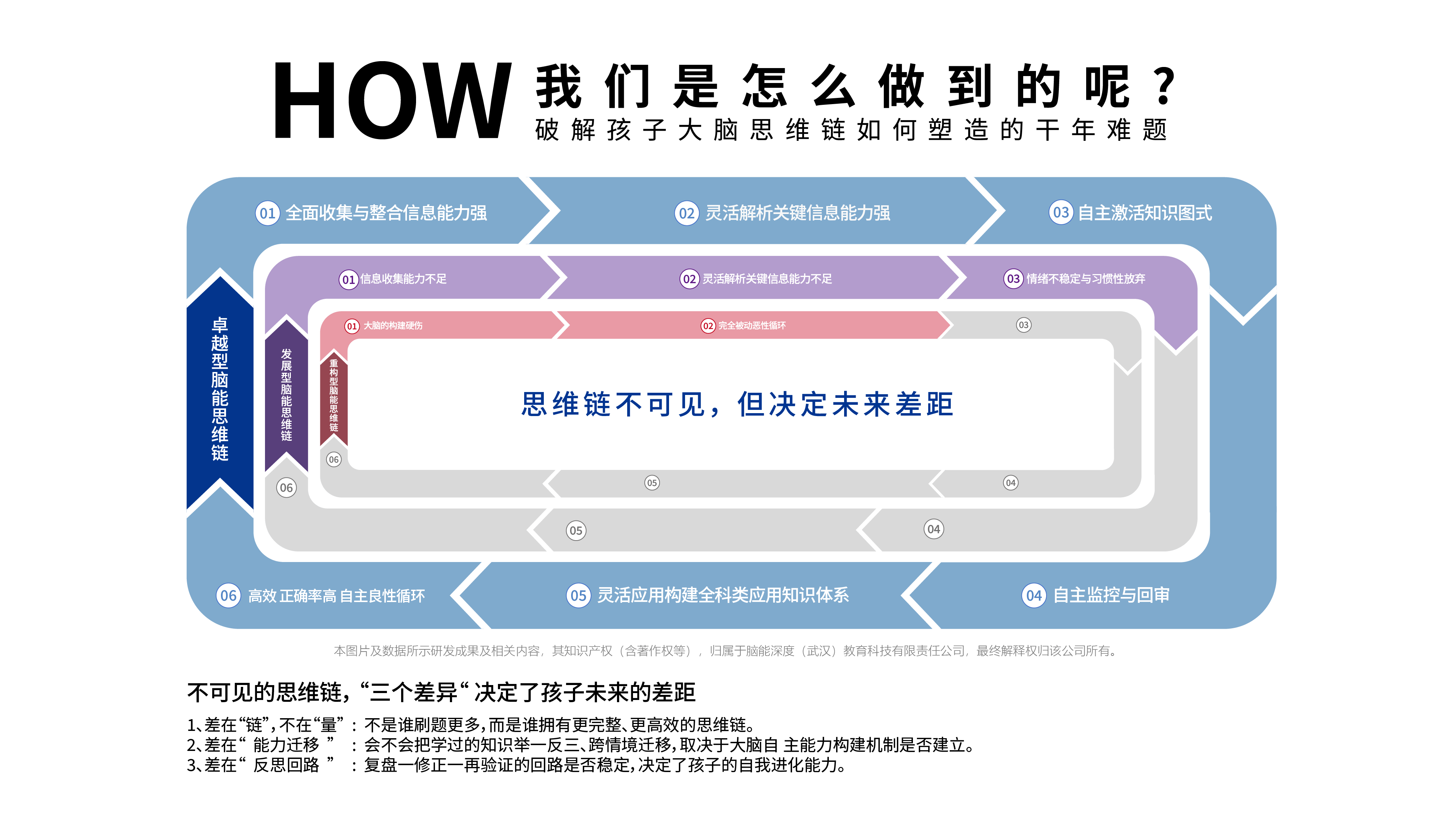
Core Insights - The article emphasizes the importance of developing children's core competencies for the future, particularly in the context of rapid advancements in AI technology and the breaking of industry boundaries [1] - It highlights that many children struggle with focus, emotional regulation, and inconsistent academic performance, which stems from their brain energy structure not reaching an "excellence" state [2] Education Pain Points - Many parents are confused about their children's procrastination, distraction, and emotional outbursts, attributing these issues to a lack of effort rather than an incomplete brain energy structure [2] - The NeuroPro brain energy model indicates that ordinary children often experience disruptions in their brain energy chain, leading to difficulties in self-initiation, task progression, sustained attention, emotional control, and knowledge application [2] Six Chains of Excellence - The article outlines that an "excellence" brain energy structure is characterized by six key chains that operate in a closed loop, which is essential for rapid understanding and breakthroughs in various fields [4] - Only 2% of children in Chinese families are reported to achieve this "excellence" brain energy state [4] NeuroPro's Approach - NeuroPro aims to make the rare "excellence" brain energy structure replicable through four core systems, enabling parents to foster this structure in their children [8] - The model includes a personalized growth path based on the child's current brain energy state, with 43 quantifiable ability indicators across various dimensions [11] Future Trends - In the AI era, the article posits that core competencies such as cross-domain transfer, structural modeling, emotional regulation, and deep reflection will be crucial, all of which stem from an excellence brain energy structure [13] - The article aligns with national educational policies that emphasize the need for scientific education and the enhancement of students' core thinking abilities [13]

YiwealthSMI|抖音高赞作品百花齐放,招行亲子教育作品受青睐
Di Yi Cai Jing· 2025-08-01 10:55
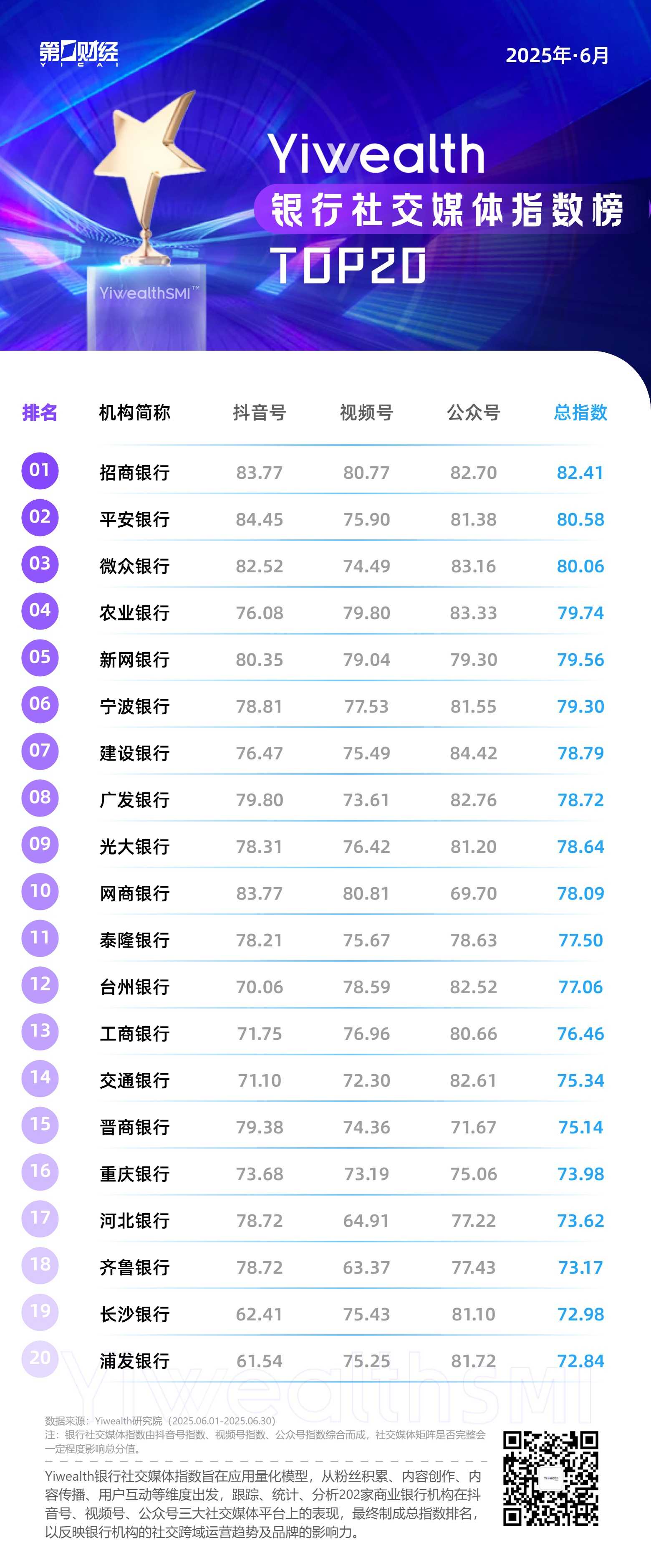
Core Insights - The June 2025 Bank Social Media Index (SMI) shows a dynamic shift in rankings, with several banks entering and exiting the top positions, indicating a competitive landscape in social media engagement among banks [1][2]. Group 1: Bank Rankings and Changes - Chengdu Bank, Zhengzhou Bank, Dongying Bank, and Jiangxi Bank dropped out of the top 20 rankings, while WeBank, Tailong Bank, Hebei Bank, and Qilu Bank made their way into the list [1]. - The SMI is derived from a quantitative model that evaluates 202 commercial banks across three social media platforms: Douyin, video accounts, and public accounts, reflecting their operational trends and brand influence [5][16]. Group 2: Content Strategies and Engagement - Banks are focusing on diverse content creation strategies on Douyin, emphasizing emotional resonance, professional value, and creative engagement to broaden their reach [1]. - WeBank's series "Painting 100 Small Shops" gained significant traction, leveraging popular IP Labubu to promote traditional culture, achieving over 200,000 likes [1]. - Ningbo Bank's educational content on rare earth elements received nearly 6,000 likes, showcasing a comprehensive approach to financial literacy amid geopolitical discussions [1]. Group 3: Video Account Highlights - Notable content from China Bank includes a high-quality anti-fraud video based on real cases, which has been shared over 47,000 times, indicating a preference for engaging, non-traditional educational formats [2]. - China Merchants Bank's focus on parenting in the AI era resonated with users, with their educational video series receiving over 1,000 likes each, significantly outperforming other content [2]. Group 4: Public Account Trends - The public account content primarily revolves around welfare benefits and internship recruitment, reflecting banks' efforts to engage with younger audiences and potential employees [2][30].