
危险化学品安全管理

Search documents
沈阳集中整治非法违法“小化工”
Xin Lang Cai Jing· 2025-12-28 23:33
Core Viewpoint - The city of Shenyang is launching a comprehensive crackdown on illegal "small chemical factories" that operate without legal approval and violate laws related to the production, operation, and storage of chemical products, particularly hazardous chemicals [1] Group 1: Definition and Issues - "Small chemical factories" refer to enterprises, workshops, or dens that engage in the production, operation, or storage of chemical products without legal approval [1] - These factories often exhibit inadequate safety awareness, outdated technology, lack of proper design, and chaotic production management, which significantly increases the risk of accidents such as fires, explosions, and poisoning [1] Group 2: Regulatory Context - The state has strict regulations regarding the storage of hazardous chemicals, explicitly prohibiting storage in densely populated areas, schools, hospitals, and sensitive environmental regions such as drinking water sources and natural reserves [1] - To evade regulation, these "small chemical factories" often operate in concealed locations, making their risks less visible and potentially leading to severe accidents that could result in mass casualties and public safety incidents [1]
危险化学品安全法明年5月1日起施行
Xin Lang Cai Jing· 2025-12-28 20:28
Core Viewpoint - The newly passed "Safety Law for Hazardous Chemicals" aims to enhance safety management in the hazardous chemicals industry, prevent accidents, and protect public health and the environment, effective from May 1, 2026 [1][2] Group 1: Legislative Framework - The law consists of 10 chapters and 127 articles covering various aspects such as production, storage, usage, transportation, and emergency response for hazardous chemicals [1] - It emphasizes the responsibility of hazardous chemicals units to provide safety training and protective equipment for employees, ensuring compliance with national standards [1] Group 2: Safety Management and Responsibilities - The law establishes specific safety management requirements for all stages of hazardous chemicals handling, reinforcing the accountability of hazardous chemicals units [2] - It mandates the implementation of a comprehensive safety production responsibility system and the establishment of hazard identification and management protocols [2] - Local governments and hazardous chemicals units are required to enhance emergency response capabilities and conduct regular drills to improve emergency handling skills among employees [2] Group 3: Public Awareness and Reporting - The law encourages the dissemination of safety knowledge related to hazardous chemicals and promotes the reporting of illegal activities and major safety hazards [2] - It stipulates strict accountability measures for violations, aiming to strengthen the safety net for hazardous chemicals management [2]
筑牢危险化学品安全防护网!这部法律自2026年5月1日起施行
Xin Lang Cai Jing· 2025-12-28 11:11
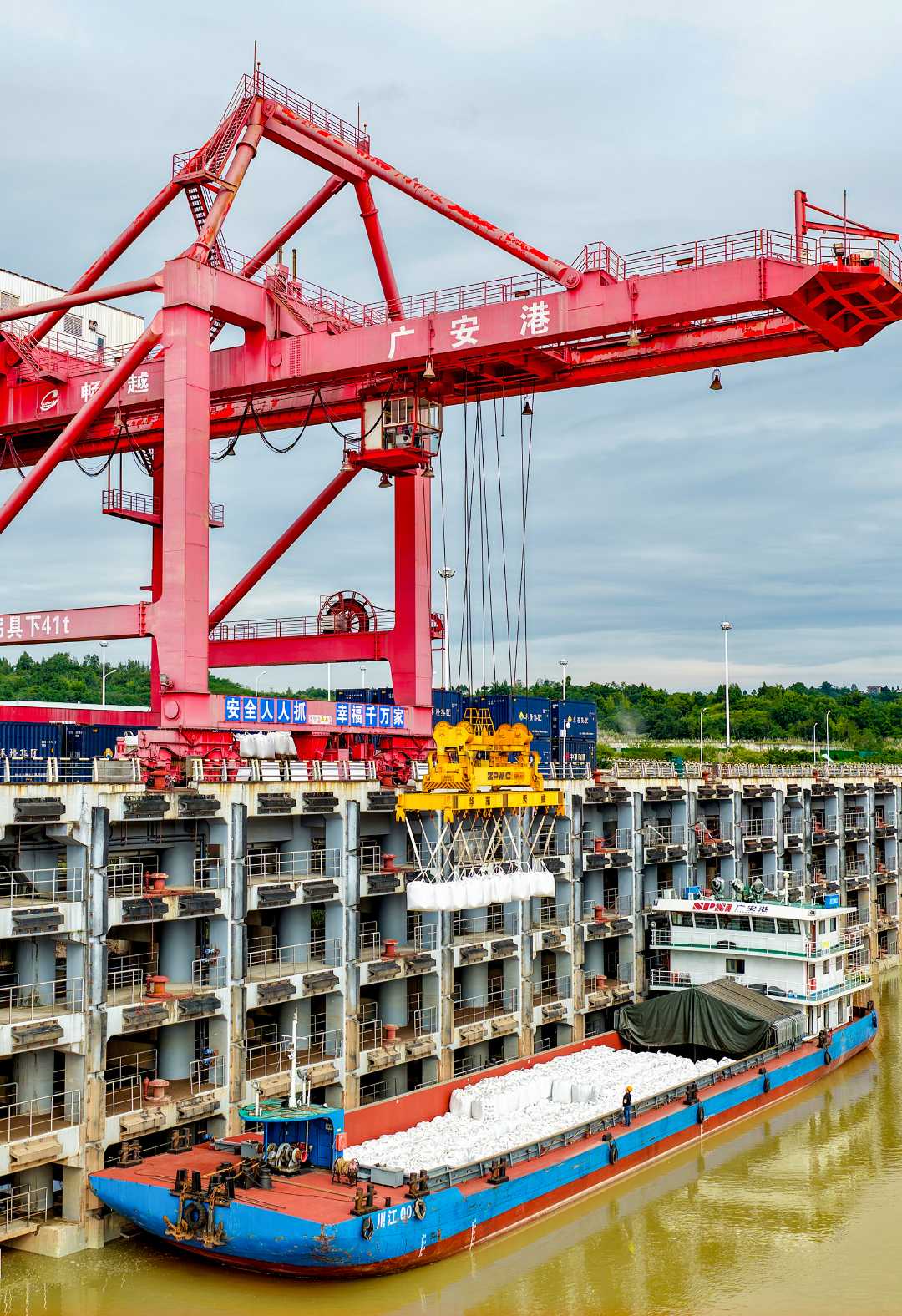
Core Viewpoint - The newly passed Hazardous Chemicals Safety Law will take effect on May 1, 2026, aiming to enhance safety management and reduce accidents related to hazardous chemicals [1]. Group 1: Legislative Framework - The law integrates risk prevention concepts throughout its provisions, emphasizing accident prevention and long-term governance [3]. - It establishes clear responsibilities for hazardous chemical units and regulatory departments, ensuring that safety management requirements for personnel and users are specific and enforceable [3]. Group 2: Safety Management Measures - The law mandates local governments to plan chemical parks for the production and storage of hazardous chemicals, ensuring new projects enter these designated areas [3]. - Provincial governments are responsible for recognizing and regularly reviewing chemical parks, as well as conducting safety risk assessments [3]. Group 3: Transportation Regulations - The law outlines qualifications for companies and personnel involved in the transportation of hazardous chemicals, requiring safety measures during transport [4]. - Specific safety management requirements for vehicles and personnel are established, including the need for permits to enter restricted areas [4].

受权发布丨中华人民共和国危险化学品安全法
Xin Hua Wang· 2025-12-27 12:30
Core Points - The law aims to strengthen the safety management of hazardous chemicals, prevent and reduce accidents, and protect public health, safety, and the environment [2][4]. Chapter Summaries Chapter 1: General Principles - The law applies to the safety management of the production, storage, use, operation, and transportation of hazardous chemicals [3]. - Hazardous chemicals are defined as those that are toxic, corrosive, explosive, flammable, or have other harmful properties [4]. - The management of hazardous chemicals must adhere to the leadership of the Communist Party of China and prioritize safety and prevention [4][5]. Chapter 2: Planning and Layout - The state will implement coordinated planning and reasonable layout for the production and storage of hazardous chemicals [18]. - Chemical parks must be recognized and regularly reviewed by local governments, ensuring safety risk assessments are conducted [17][18]. Chapter 3: Production and Storage Safety - New hazardous chemical construction projects must undergo safety condition reviews by emergency management departments [22]. - Safety facilities for hazardous chemical projects must be designed, constructed, and put into use simultaneously with the main project [24][25]. Chapter 4: Safety in Use - Local governments are responsible for supervising the use of hazardous chemicals in various institutions [46]. - Units using hazardous chemicals must establish safety management systems and ensure compliance with relevant laws and standards [47][48]. Chapter 5: Operational Safety - A licensing system is established for the operation of hazardous chemicals, prohibiting unlicensed operations [53]. - Businesses must meet specific conditions, including having qualified personnel and emergency response plans [54][55]. Chapter 6: Transportation Safety - Transportation of hazardous chemicals must comply with safety regulations and be conducted by licensed companies [64][65]. - Drivers and personnel involved in the transportation of hazardous chemicals must be qualified and familiar with safety protocols [68].
中华人民共和国危险化学品安全法
Xin Hua She· 2025-12-27 12:15
Core Points - The law aims to strengthen the safety management of hazardous chemicals, prevent and reduce accidents, and protect public health, life, property, and the ecological environment [2] - The law applies to the production, storage, use, operation, and transportation of hazardous chemicals [3] - Hazardous chemicals are defined as those that are toxic, corrosive, explosive, flammable, or have other harmful properties [4] Chapter Summaries Chapter 1: General Principles - The law emphasizes the leadership of the Communist Party of China in hazardous chemical safety management [5] - It promotes a safety-first approach, prioritizing prevention and comprehensive governance [5] - Entities involved in hazardous chemicals must implement a full responsibility system for safety production [6] Chapter 2: Planning and Layout - The state will coordinate the planning and layout of hazardous chemical production and storage [16] - Chemical parks must be recognized and regularly reviewed by local governments [17] - New hazardous chemical projects must be located within chemical parks unless specified otherwise [18] Chapter 3: Production and Storage Safety - New hazardous chemical construction projects require safety condition reviews by emergency management departments [20] - Safety facilities must be designed and constructed simultaneously with the main project [21] - Companies must conduct regular safety evaluations and maintain safety management systems [29] Chapter 4: Usage Safety - Government departments are responsible for supervising the use of hazardous chemicals in various institutions [34] - Companies must establish safety management systems and operational procedures for hazardous chemical use [35] Chapter 5: Operational Safety - A licensing system is established for the operation of hazardous chemicals, prohibiting unlicensed operations [37] - Companies must meet specific conditions to operate hazardous chemicals, including having trained personnel and emergency plans [38] Chapter 6: Transportation Safety - Transportation of hazardous chemicals must comply with safety regulations and licensing requirements [47] - Transport companies must ensure that their vehicles meet safety standards and are regularly inspected [51]
新华社权威快报|我国危险化学品安全管理有了专门法律
Xin Hua She· 2025-12-27 01:34
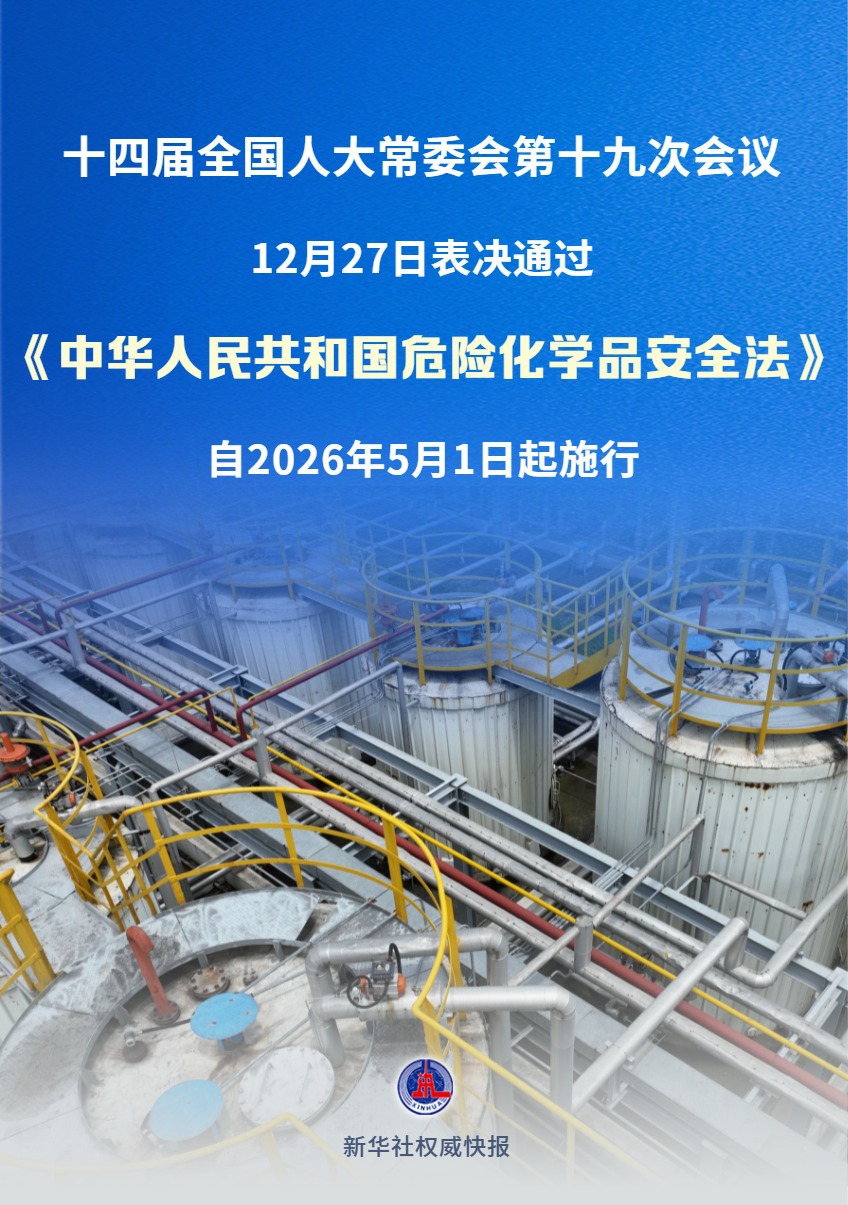
Core Viewpoint - The Standing Committee of the 14th National People's Congress passed the "Safety Law for Hazardous Chemicals" on December 27, 2023, which will take effect on May 1, 2026, aimed at enhancing the safety management of hazardous chemicals and protecting public health and the environment [3]. Summary by Sections - The law consists of 10 chapters and 127 articles, covering general principles, planning and layout, production and storage safety, usage safety, operational safety, transportation safety, hazardous chemical registration, emergency response to accidents, legal responsibilities, and supplementary provisions [3]. - The primary objective of this legislation is to prevent and reduce accidents involving hazardous chemicals, ensuring the safety of people's health, lives, and property, as well as protecting the ecological environment [3].
加强对个人使用危险化学品管理
Xin Lang Cai Jing· 2025-12-23 19:08
Core Viewpoint - The draft of the Hazardous Chemicals Safety Law is undergoing its third review by the 19th meeting of the 14th National People's Congress Standing Committee, with an emphasis on enhancing public awareness and safety management regarding hazardous chemicals [1] Group 1: Legislative Changes - The draft has incorporated suggestions to promote the dissemination of hazardous chemicals safety knowledge, which is expected to foster a safer management environment [1] - It mandates that local governments and relevant departments adopt various methods to enhance the publicity of hazardous chemicals safety laws and knowledge [1] - Chemical parks and hazardous chemicals units are required to inform surrounding communities and other businesses about safety regulations and knowledge [1] Group 2: Public Responsibility - Media outlets are encouraged to conduct public service announcements regarding hazardous chemicals safety laws and to supervise illegal activities through public opinion [1] - There is a new provision emphasizing the need for individuals using hazardous chemicals to understand their properties, proper usage methods, and protective measures [1] - Individuals are prohibited from illegally using, storing, or disposing of hazardous chemicals [1]
中国拟规定危化品道路运输企业对运输车辆实时监控
Zhong Guo Xin Wen Wang· 2025-12-19 06:36
Core Viewpoint - The draft of the Hazardous Chemicals Safety Law is set for its third review by the National People's Congress, aiming to enhance real-time monitoring and management of hazardous materials transportation [1][2] Group 1: Legislative Changes - The draft proposes real-time monitoring of transportation vehicles and drivers by hazardous chemicals transportation companies to correct illegal driving behaviors promptly [1] - It includes provisions for the promotion of safety knowledge related to hazardous chemicals [1] - The draft mandates safety training for employees in hazardous chemicals production to improve safety awareness and skills [1] - Individuals using hazardous chemicals must understand their properties, proper usage, and protective measures, and are prohibited from illegal use, storage, or disposal [1] Group 2: Safety Management and Accident Prevention - The overall safety situation regarding hazardous chemicals in China is stable, but accidents still occur in some areas [2] - The draft emphasizes strict safety management across the entire supply chain and various stages [2] - It aims to strengthen the responsibilities of hazardous chemicals units and clarify government regulatory responsibilities [2] - The legislation seeks to enhance emergency rescue capabilities and create a favorable social atmosphere for hazardous chemicals safety [2] - It also proposes increased accountability measures for safety violations [2]