历史观

Search documents
王献华:当AI陪着人类“装神弄鬼”,历史学是否会被宣判死刑?
Xin Lang Cai Jing· 2026-02-13 23:52
Core Viewpoint - The rise of "folk historical enthusiasm" in China reflects societal progress, as people seek cultural engagement after basic needs are met, highlighting a contrast with the ongoing "crisis in the humanities" [3][4] Group 1: Historical Perspective - The "1644 historical view" represents a confusion in historical perspectives, stemming from a century of Chinese scholars abandoning traditional views in favor of Western academic frameworks [4][12] - The need to reconstruct a genuine historical perspective rooted in Chinese tradition is emphasized, as failure to do so will allow misconceptions like the "1644 historical view" to persist [16][12] Group 2: Role of Professionals - Professionals in the humanities should act as facilitators rather than authoritative figures, providing constructive input without imposing their views on the public [4][7] - The internet has democratized access to historical knowledge, reducing the mystique surrounding the field and allowing non-experts to engage with historical research [7][8] Group 3: Challenges of AI and Misinformation - The advent of AI poses significant challenges to historical accuracy, as AI can generate convincing but false historical narratives, complicating the public's understanding of history [8][9] - The proliferation of misinformation through AI and social media has led to a situation where even experts struggle to counteract false narratives effectively [8][13] Group 4: Educational and Social Responsibilities - There is a call for scholars to bridge the gap between academic knowledge and public understanding, ensuring that their work serves the community effectively [17][19] - The importance of integrating high-level knowledge with practical societal applications is highlighted, as professionals must demonstrate their expertise through meaningful contributions to public discourse [18][19]

当AI陪着人类“装神弄鬼”,历史学是否会被宣判死刑?
Guan Cha Zhe Wang· 2026-02-13 23:47
Core Viewpoint - The rise of "folk historical enthusiasm" in China reflects societal progress, as people seek cultural engagement after basic needs are met, highlighting a contrast with the ongoing "crisis in the humanities" [3][4] Group 1: Historical Perspective - The "1644 historical view" represents a confusion in historical perspectives, stemming from a century of Chinese scholars abandoning traditional views in favor of Western academic frameworks [3][12] - The need to reconstruct a genuine historical perspective rooted in Chinese tradition is emphasized, as failure to do so will allow misconceptions like the "1644 historical view" to persist [16][19] Group 2: Role of Professionals - Professionals in the humanities should act as facilitators rather than authoritative figures, providing constructive input without imposing their views on the public [4][7] - The importance of engaging with the public's enthusiasm for history is highlighted, suggesting that professionals should contribute positively to this interest [4][18] Group 3: Impact of Technology - The internet has democratized access to historical materials, allowing the public to engage in historical research, but the advent of AI poses challenges by generating misleading information that can confuse even experts [7][8] - The ability of AI to produce convincing but false historical narratives raises concerns about the integrity of historical knowledge and the role of professionals in clarifying these issues [8][9] Group 4: Educational and Social Responsibilities - There is a call for professionals to bridge the gap between the "crisis in the humanities" and the public's historical enthusiasm, emphasizing the need for a service-oriented approach in academia [3][17] - The discussion highlights the necessity for scholars to adapt to the changing landscape of knowledge dissemination and to prioritize genuine engagement with societal needs [19][20]

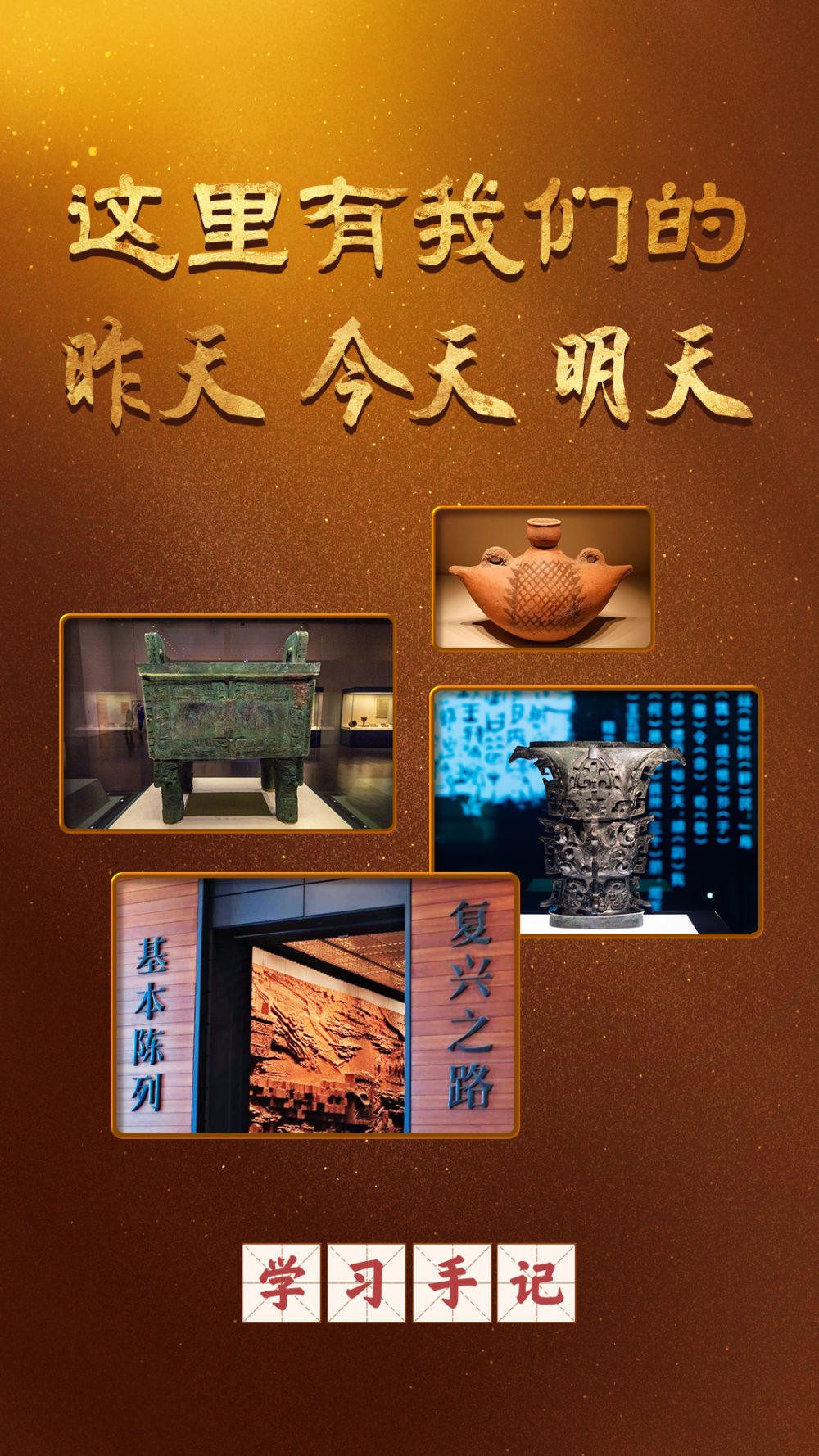
学习手记|这里有我们的昨天今天明天
Xin Hua She· 2025-05-18 08:02
Core Viewpoint - The article emphasizes the significance of museums as a bridge connecting the past, present, and future, highlighting the importance of historical awareness and cultural confidence in governance and national identity [3][4][8]. Group 1: Historical Significance - The "Road to Rejuvenation" exhibition at the National Museum encapsulates a century of Chinese history, reflecting on the past, showcasing the present, and envisioning the future of the Chinese nation [4][5]. - Historical exhibitions serve to witness history, learn from it, and inspire future generations, as emphasized by the leadership's visits to various museums [6]. Group 2: Cultural Confidence - The article illustrates the pride in Chinese civilization, with references to significant artifacts like the Terracotta Army, showcasing the depth of Chinese history and culture [7]. - The leadership's commitment to exploring and promoting the wisdom embedded in Chinese civilization is highlighted, indicating a strong cultural identity [7]. Group 3: Governance and Future Vision - The interconnectedness of history, reality, and future is stressed, suggesting that understanding historical continuity is crucial for navigating the future [8]. - The call to remember past struggles and achievements while embracing current responsibilities and future aspirations reflects a comprehensive approach to national governance [9].