
厌食症

Search documents
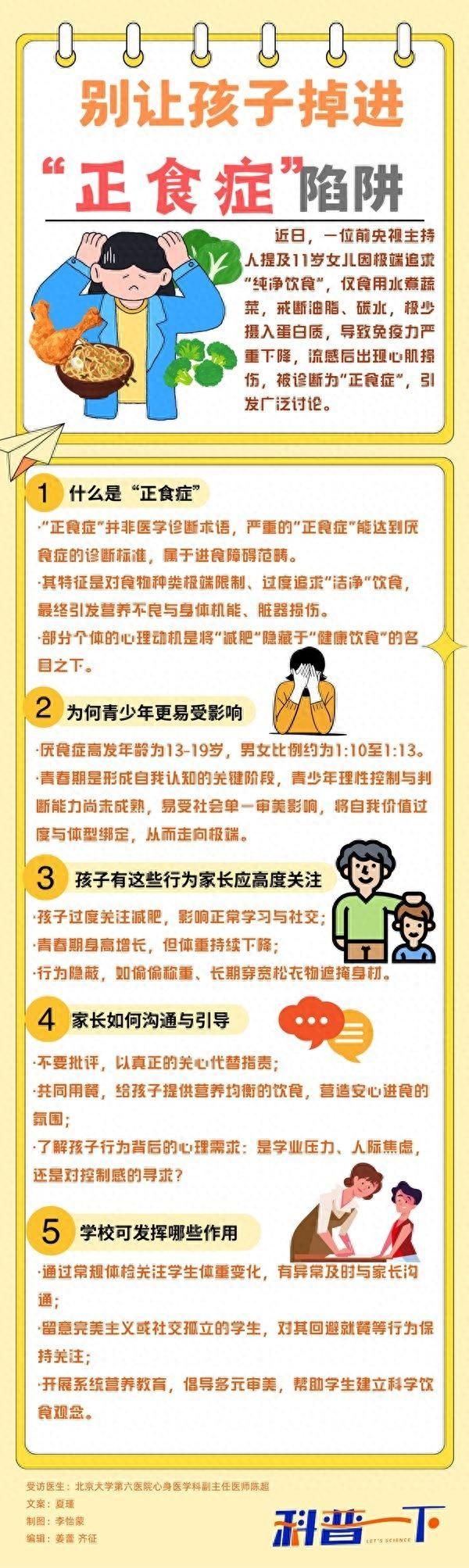
警惕青少年陷入“正食症”心理困局
Xin Lang Cai Jing· 2025-12-26 23:07
Core Viewpoint - The recent case of a former CCTV host's daughter suffering from "orthorexia" has brought significant public attention to this eating disorder, which stems from an extreme obsession with "pure" eating habits that can lead to severe health consequences [3][4]. Group 1: Definition and Characteristics of Orthorexia - "Orthorexia" is defined as an eating disorder characterized by an excessive focus on healthy eating, leading to severe nutritional deficiencies and organ damage [4]. - It is not recognized as an independent medical diagnosis and is considered a manifestation of anorexia nervosa, similar to binge eating disorders [4][5]. - Patients often disguise their desire to lose weight under the guise of pursuing a healthy diet, indicating a deeper psychological issue [4][5]. Group 2: Demographics and Psychological Factors - Adolescents, particularly those aged 13-19, are at a higher risk for developing eating disorders, with a significant gender disparity favoring females [6]. - The pursuit of an ideal body image during adolescence can lead to extreme dieting behaviors, as seen in cases where academic and social pressures contribute to unhealthy weight control methods [6][9]. - Many adolescents with orthorexia exhibit perfectionist traits and are influenced by societal beauty standards, which can distort their self-worth and lead to unhealthy eating patterns [9][10]. Group 3: Treatment and Recovery - Treatment for orthorexia involves a combination of nutritional support and psychological intervention, focusing on restoring healthy eating habits and addressing underlying psychological issues [8][10]. - Successful recovery often requires medical supervision and family support, with patients gradually regaining a balanced approach to food and life [7][8]. - Schools play a crucial role in early detection and prevention of eating disorders by monitoring students' health and providing education on nutrition and body image [11][12].

前央视主持人王小骞哭诉11岁女儿患正食症!“正食症”是一种什么病?
Xin Lang Cai Jing· 2025-12-23 13:55
Core Viewpoint - The recent case of Wang Xiaoqian's daughter suffering from Orthorexia Nervosa has brought attention to this eating disorder, which is characterized by an excessive focus on healthy eating, leading to severe dietary restrictions and potential nutritional deficiencies [4][5]. Group 1: Definition and Characteristics - Orthorexia Nervosa, translated from English, refers to a strict limitation on diet in pursuit of an overly "healthy" and "pure" eating pattern, which can lead to malnutrition [4]. - Unlike anorexia, which primarily aims at weight control, Orthorexia is driven by the belief in achieving a perfect diet, resulting in a narrow range of food choices [5]. Group 2: Health Implications - Patients with Orthorexia may experience significant weight loss and nutritional deficiencies, potentially evolving into anorexia if the condition worsens [5]. - The condition can lead to severe health issues, such as heart damage, as seen in Wang Xiaoqian's daughter, who exhibited a heart rate of 120 due to extreme dietary restrictions [4]. Group 3: Psychological Aspects - Both Orthorexia and anorexia may be associated with compulsive behavior patterns, reflecting cognitive biases and a high need for control [5]. - The underlying psychological motivations for these eating disorders often stem from environmental factors, such as a tense family atmosphere, leading individuals to exert control over their food intake [5].

吃完就去厕所、床底下藏食物……戒掉暴食催吐需要几步
Zhong Guo Qing Nian Bao· 2025-11-05 03:21
Core Viewpoint - The article discusses the challenges faced by adolescents, particularly young girls, in overcoming binge eating and purging behaviors, highlighting the psychological and physical consequences of these disorders, as well as the need for awareness and intervention from parents and healthcare professionals [1][7]. Group 1: Psychological and Behavioral Aspects - The prevalence of binge eating and purging discussions on social media platforms is primarily among adolescents aged 12-25, with a focus on those aged 14-18, indicating a growing awareness of these behaviors as serious mental health issues [1][2]. - Many individuals with binge eating and purging experiences are sharing recovery stories and preventive education, reflecting a long and challenging journey influenced by various factors [1][2]. - The psychological mechanisms behind these behaviors include feelings of emptiness, boredom, anxiety, and stress, which can trigger binge eating and purging episodes [10][11]. Group 2: Physical Health Consequences - Repeated purging can lead to severe physical health issues, including damage to the digestive system, electrolyte imbalances, and increased risk of esophageal and gastric conditions [3][4][5]. - Specific substances, such as sweet melon tips, are being misused for their emetic properties, posing significant health risks, including potential toxicity and severe dehydration [5][6]. - The article emphasizes the importance of recognizing the physical symptoms and consequences of these behaviors, such as dental erosion and gastrointestinal damage, which can have long-term effects on health [3][4]. Group 3: Parental and Medical Intervention - Parents play a crucial role in identifying signs of eating disorders in their children, such as extreme food selectivity, rapid weight loss, and secretive eating behaviors [8][9]. - Effective intervention strategies include providing emotional support, encouraging healthy eating habits, and seeking professional medical advice when necessary [9][10]. - The article suggests that parents should educate themselves about these disorders and engage in supportive practices rather than punitive measures to help their children recover [9][10].
戒掉暴食催吐需要几步
Zhong Guo Qing Nian Bao· 2025-11-05 01:21
Core Viewpoint - The article discusses the increasing awareness and prevalence of binge eating and purging behaviors among adolescents, particularly young girls aged 12-25, highlighting the complex psychological and physiological challenges they face in recovery [1][2][3]. Group 1: Psychological and Behavioral Aspects - Many adolescents with binge eating and purging behaviors are aware of the harmful nature of these actions but struggle to quit, often sharing experiences online while simultaneously seeking help [4][7]. - The age of onset for eating disorders is typically between 13-19 years, with many patients hiding their behaviors from parents until significant health issues arise [7][8]. - Parents play a crucial role in identifying symptoms and intervening early, as children often lack the ability to control their behaviors independently [8][9]. Group 2: Physical Health Consequences - Repeated purging can lead to severe physical health issues, including damage to the digestive system, electrolyte imbalances, and increased risk of esophageal and gastric complications [3][5][6]. - Specific substances, such as sweet melon stem tablets, are marketed as remedies but pose significant health risks, including toxicity and severe gastrointestinal distress [5][6]. Group 3: Recovery Strategies - Effective recovery strategies include establishing a regular eating schedule, incorporating small healthy snacks, and gradually reintroducing a balanced diet to restore normal digestive function [11][12]. - Emotional regulation techniques, such as breathing exercises and physical activity, can help manage the impulses associated with binge eating [12].