
反周期投资

Search documents
National Energy Services Reunited Corp.(NESR) - 2025 Q4 - Earnings Call Transcript
2026-02-17 14:02
Financial Data and Key Metrics Changes - Fourth quarter revenue reached $398.3 million, marking a record high with a sequential increase of 34.9% and a year-over-year increase of 15.9% [16] - Full year 2025 revenue totaled $1.324 billion, up 1.7% year-over-year, supported by higher activity levels across several countries [19] - Adjusted EBITDA for Q4 2025 was $84.4 million, with a margin of 21.2%, stable compared to previous quarters despite increased revenues [17] - Full year 2025 adjusted EBITDA was $281.4 million, with margins of 21.3%, down approximately 250 basis points year-over-year [19] - Operating cash flow for Q4 was exceptionally strong, contributing to a free cash flow of $120.8 million for the full year, representing a 43% conversion from adjusted EBITDA [21][22] Business Line Data and Key Metrics Changes - The mobilization of the new Jafurah contract beginning November 1 significantly contributed to revenue growth in Q4 2025 [16] - Strong activity increases were noted in North Africa, Kuwait, Iraq, Egypt, and Libya, driving overall revenue growth [17] - The company anticipates a steady state of operations at Jubail by Q2 2026, with potential for additional fleet additions in Q3 and Q4 [33] Market Data and Key Metrics Changes - The MENA region is experiencing steady activity growth driven by oil capacity expansion and strategic domestic gas development [6] - Kuwait is projected to invest $8 billion-$10 billion annually in upstream spending through 2030, which is expected to significantly enhance NESR's growth potential in the region [8] - Libya is seeing a surge in activity with a commitment of $20 billion in investment over 25 years, indicating a strong growth pillar for NESR [10] Company Strategy and Development Direction - NESR aims to double its size over the next couple of years, leveraging its existing business and new technologies [28] - The company is focused on countercyclical growth investments, preparing equipment ahead of demand to ensure readiness for increased activity [33] - Strategic partnerships and technology development are key components of NESR's growth strategy, particularly in areas like decarbonization and directional drilling [61] Management's Comments on Operating Environment and Future Outlook - Management expressed confidence in the MENA region's resilience, noting that activity levels are largely decoupled from oil and gas prices [7] - The company expects to exit 2026 with an annualized revenue run rate of approximately $2 billion, supported by a growing contract portfolio [24] - Management highlighted the importance of maintaining strong operational execution and cost control to drive profitable growth [26] Other Important Information - The company has a solid balance sheet with gross debt totaling $310 million and a net debt to adjusted EBITDA ratio of 0.66, well below the target threshold of 1x [22][23] - Capital expenditures for 2026 are projected to be approximately $165 million, consistent with the expanding growth outlook [24] Q&A Session Summary Question: Update on Jubail and ramp-up to $2 billion run rate - Management indicated that Jubail is on track, with a steady state expected by Q2 2026 and potential for additional fleet additions in Q3 and Q4 [33] Question: Supply chain concerns and logistics - Management addressed supply chain readiness, stating that all necessary materials and logistics have been planned to avoid delays [34] Question: Medium-term targets beyond $2 billion - Management expressed optimism about doubling the company size, with a significant number of tenders submitted across the region [39] Question: Incremental efficiencies at Jafurah - Management highlighted potential for 20% efficiency improvements through optimized operations and technology integration [47] Question: Kuwait's growth potential and contract timelines - Management confirmed that Kuwait's upstream spending is already underway, with contracts expected to be awarded throughout 2026 [52] Question: Investment needs for higher activity levels - Management indicated that capital expenditures will remain within the planned range, with potential increases if contract wins exceed expectations [58] Question: Shareholder returns and leverage strategy - Management stated that the goal is to maintain a net debt to EBITDA ratio of 1 or less, with plans to discuss shareholder return strategies in the next earnings call [63]

National Energy Services Reunited Corp.(NESR) - 2025 Q4 - Earnings Call Transcript
2026-02-17 14:00
Financial Data and Key Metrics Changes - Fourth quarter revenue reached $398.3 million, marking a 34.9% sequential increase and a 15.9% year-over-year growth, driven by the mobilization of the new Jafurah contract and increased activity in North Africa [16][17] - Full year 2025 revenue totaled $1.324 billion, up 1.7% year-over-year, supported by higher activity levels across several countries, although partially offset by lower rig counts in Saudi Arabia [19] - Adjusted EBITDA for Q4 2025 was $84.4 million, with a margin of 21.2%, remaining stable despite higher revenues due to strong cost discipline and operational execution [17][19] - Full year 2025 adjusted EBITDA was $281.4 million, with margins of 21.3%, down approximately 250 basis points year-over-year due to country and segment mix [19] Business Line Data and Key Metrics Changes - The mobilization of the Jafurah contract significantly contributed to revenue growth, alongside strong activity in North Africa, Saudi Arabia, Kuwait, Iraq, Egypt, and Libya [16][17] - The company is focused on optimizing operations and cost control, particularly in the Jafurah project, which is expected to enhance margins as efficiencies are realized [43][44] Market Data and Key Metrics Changes - The MENA region is experiencing steady activity growth driven by oil capacity expansion and domestic gas development, with significant investments announced in countries like Kuwait and Libya [5][10] - Kuwait is set to become the second-largest market for the company, with a commitment of $8 billion-$10 billion per year in upstream spending through 2030 [7][49] - North Africa, particularly Libya, is highlighted as a key growth area, with substantial investment commitments and plans to increase oil capacity [10][11] Company Strategy and Development Direction - The company aims to double its size over the next few years, leveraging its existing contracts and pursuing new opportunities in the MENA region [27][36] - The strategic focus includes enhancing technology capabilities, reducing leverage, and optimizing working capital to deliver sustainable long-term value [25] - The company is also exploring opportunities in critical minerals and decarbonization, aligning with regional trends and customer needs [83] Management's Comments on Operating Environment and Future Outlook - Management expressed confidence in the growth trajectory for 2026, anticipating a path to an annualized revenue run rate of approximately $2 billion, supported by a growing contract portfolio [22][23] - The outlook for the MENA region remains constructive, with expectations of continued investment in oil capacity and gas development [25] - Management emphasized the importance of aligning strategy with the multi-year view of customers to maximize shareholder value [28] Other Important Information - The company reported strong cash flow generation, with fourth quarter operating cash flow and free cash flow being exceptionally robust [20][21] - As of December 31, 2025, gross debt totaled $310 million, and net debt was $185.3 million, with a net debt to adjusted EBITDA ratio of 0.66 [21][22] Q&A Session Summary Question: Update on Jubail and ramp-up to $2 billion run rate - The company is on track with the ramp-up at Jubail, expecting to reach a steady state by Q2 2026, with additional fleets potentially added in Q3 and Q4 [31][32] Question: Supply chain concerns and optimization strategies - The company has proactively addressed supply chain issues by ensuring local supplies and aligning with partners, allowing for timely delivery of required materials [33][34] Question: Medium-term targets and growth beyond $2 billion - The company is optimistic about winning a significant share of tenders across the region, which could facilitate doubling the company's size in the coming years [36][37] Question: State of the union in Saudi Arabia outside of Jafurah - Activity in Saudi Arabia is ramping up, with Aramco adding rigs and a significant tender backlog expected to drive growth in 2026 [61][63]
又一供应链巨头港股上市,去年净利约150亿
Sou Hu Cai Jing· 2026-02-06 09:57
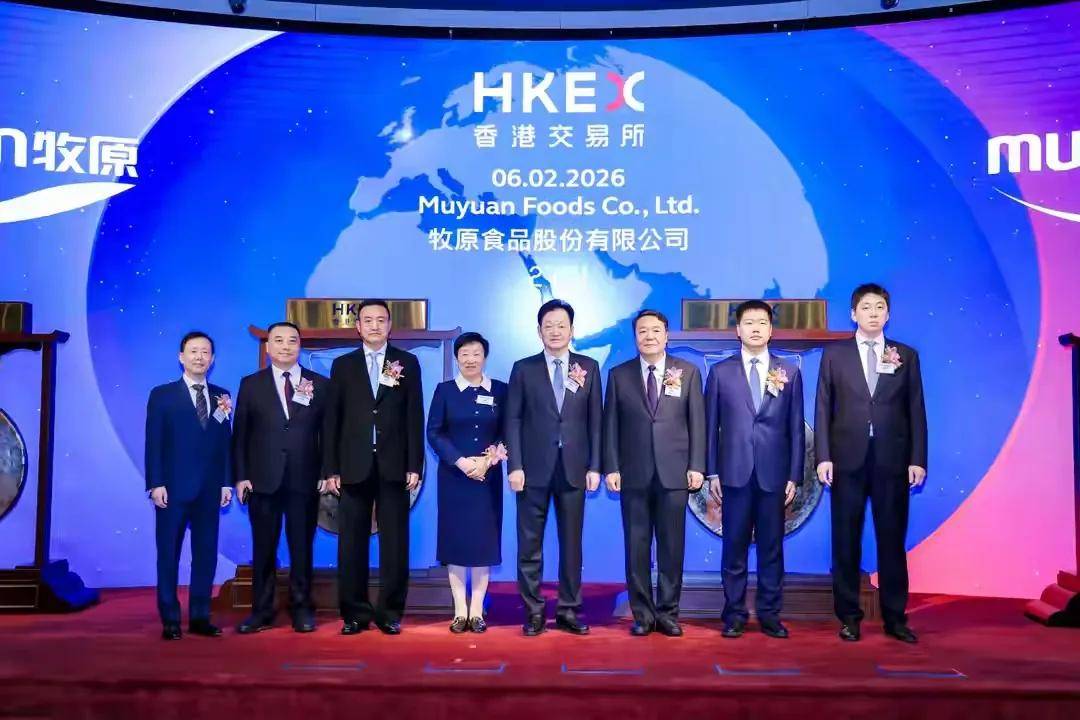
Core Viewpoint - Muyuan Foods Co., Ltd. has successfully completed its dual listing on the Hong Kong Stock Exchange, raising over HKD 10.4 billion, which is expected to enhance its strategic investments and global expansion capabilities amid a challenging industry environment [1][7]. Company Overview - Founded in 1992 and headquartered in Nanyang, Henan, Muyuan Foods is the world's largest pig farming company, having gone public in A-shares in 2014. The company operates a complete pork industry chain, including feed processing, pig breeding, pig farming, and slaughtering [3]. - By 2025, Muyuan is projected to have a pig output of 77.98 million heads and a slaughter volume of 28.66 million heads. The company has a presence in 25 provinces across 109 cities in China, with 308 subsidiaries [3]. Financial Performance - In the first three quarters of 2025, Muyuan reported revenue of CNY 111.79 billion, a year-on-year increase of 15.5%, and a net profit attributable to shareholders of CNY 14.78 billion, up 41.0% year-on-year [3]. - However, the company anticipates a decline in net profit for the full year 2025, projecting a range of CNY 15.1 to 16.1 billion, representing a year-on-year decrease of 14.93% to 20.21% [5]. Industry Context - The pig farming industry is currently experiencing a downturn, with companies like Muyuan, New Hope, and Zhengbang Technology all reporting profit declines due to falling pig prices. Muyuan noted an average selling price of CNY 13.5 per kilogram, down approximately 17.3% year-on-year [6]. - The industry is in a low cycle phase characterized by severe supply-demand imbalances and persistent low prices, with expectations that this downturn will continue into the first half of the year [6]. Strategic Implications of the Listing - The funds raised from the Hong Kong listing will be used strategically, with 60% allocated for expanding overseas markets, 30% for research and development across the entire industry chain, and 10% for working capital [7]. - The listing is seen as a critical move for Muyuan to maintain and enhance its strategic investments during a period of industry contraction, allowing the company to differentiate itself from competitors and solidify its market position [7]. Global Expansion and Challenges - Muyuan aims to leverage its listing to explore new growth avenues and mitigate market volatility by expanding its operations globally, particularly in Southeast Asia [7]. - However, the company faces significant challenges in international operations, including political stability, regulatory risks, and the complexities of establishing local supply chains [8].

West Fraser(WFG) - 2025 Q3 - Earnings Call Transcript
2025-10-23 16:32
Financial Data and Key Metrics Changes - West Fraser reported an adjusted EBITDA of -$144 million for Q3 2025, indicating continued operation within an extended cycle trough [3] - The company exited the quarter with nearly $1.6 billion in available liquidity and a positive net cash position after debt [4] - Cash flow from operations was $58 million, with a net cash balance of $212 million, down from $310 million in the prior quarter [9] Business Line Data and Key Metrics Changes - The lumber segment posted an adjusted EBITDA of -$123 million in Q3 2025, a significant decline from $15 million in Q2 2025, primarily due to lower pricing and a $67 million duty expense [6] - The North America EWP segment reported an adjusted EBITDA of -$15 million, down from $68 million in the previous quarter, driven by lower OSB pricing [7] - The pulp and paper segment's adjusted EBITDA was -$6 million, compared to -$1 million in Q2, largely due to an annual maintenance shutdown [8] - The Europe business generated $1 million of adjusted EBITDA, similar to the $2 million reported in the second quarter [8] Market Data and Key Metrics Changes - U.S. housing starts averaged 1.31 million units through August, indicating stable but uninspiring levels of new home construction [4] - The company noted subdued demand in repair and remodeling, continuing a trend observed in previous quarters [4] Company Strategy and Development Direction - The company is focused on a defensive capital allocation strategy, leveraging a strong balance sheet to invest countercyclically and pursue investment opportunities [5] - West Fraser has permanently removed 820 million board feet of lumber capacity, representing approximately 12% of its total capacity, to optimize its asset portfolio [11] - The company plans to maintain flexibility in its operating strategy to meet customer needs while driving down costs [12] Management's Comments on Operating Environment and Future Outlook - Management expressed optimism about navigating the current challenging macroeconomic conditions, supported by a strong financial position [11] - The company is preparing for a potential recovery in demand while remaining cautious about the timing and nature of such recovery [14] - Management highlighted the importance of quality in potential M&A opportunities, emphasizing a focus on enhancing strength at the bottom of the cycle [24] Other Important Information - The U.S. Department of Commerce announced final softwood lumber duty rates of 26.5%, with West Fraser having the lowest duty rate in the Canadian industry [10] - A 10% Section 232 tariff on imported softwood timber and lumber into the U.S. was imposed, effective October 14, 2025 [10] Q&A Session Summary Question: Approach to managing production in lumber and North America OSB - Management discussed maintaining a variable operating strategy that aligns with economics and customer demand needs, adjusting production as necessary [19] Question: Implied Q4 operating rate for OSB - The implied operating rate for OSB in Q4 is expected to be around 80%, influenced by seasonal maintenance shutdowns [22] Question: M&A opportunities in the current down cycle - Management emphasized a quality-first approach to M&A, focusing on opportunities that enhance the company's strength [23][24] Question: Federal support for the lumber industry - Management noted ongoing discussions with the government regarding support measures for the lumber industry, but specifics were limited [29] Question: Inventory levels in the U.S. channel - Management indicated that their inventory levels are intentionally lean, with customers buying as needed [31][34] Question: Conditions in the Canadian markets - The Canadian market remains competitive, but it does not drive demand as significantly as the U.S. market [46] Question: Capital expenditures outlook - Management indicated that capital expenditures would be discussed in more detail in February 2026, with a focus on operationalizing recent major projects [49] Question: State of the Cowie facility post-fire - The Cowie facility has been repaired and is back up and running, with positive signs in the European segment [50] Question: European lumber imports and OSB demand - Management noted limited visibility on European lumber imports but observed some price improvement and demand growth in OSB [55]

专门收购和孵化无聊产品,年收入 3 亿美金的 Tiny 给了些启发
投资实习所· 2025-09-01 06:31
Core Insights - Tiny has transformed into a holding company with an annual revenue of $300 million by acquiring and incubating overlooked but profitable products [1][6] - The company adopts a patient, opportunistic approach, acquiring businesses from founders seeking a long-term home while maintaining their independent operations [2][15] Group 1: Investment Philosophy - Tiny focuses on acquiring businesses that are "boring but profitable," avoiding the intense competition of popular Silicon Valley sectors [9][22] - The company seeks businesses with high profit margins, unique advantages, simple business models, stable profitability, a successful operating history, and quality teams [14][27] Group 2: Key Business Units - MetaLab serves as Tiny's cash flow engine, generating $40-50 million in annual revenue with a profit of $20 million, leveraging geographic arbitrage [11] - Dribbble, acquired for under $10 million, now generates tens of millions in annual revenue under Tiny's management, exemplifying the company's investment philosophy [12] - WeCommerce showcases Tiny's ability to create a cohesive ecosystem through the acquisition and integration of multiple Shopify applications [13] Group 3: Acquisition Strategy - Tiny's acquisition method contrasts traditional private equity by being founder-friendly, providing resources and support while preserving company culture [15][19] - Post-acquisition, Tiny enhances efficiency through standardized marketing processes, optimized pricing strategies, and shared best practices among its companies [17][18] Group 4: Entrepreneurial Insights - Entrepreneurs are advised to focus on industries with less competition and to leverage AI tools for market and financial analysis to reduce trial and error costs [22][24] - Common mistakes include entering over-saturated markets, and entrepreneurs should seek to scale their businesses while delegating less enjoyable tasks [25][26] Group 5: Future Outlook - Tiny's strategy highlights the potential of counter-cyclical investment opportunities, focusing on cash flow and long-term holding philosophy [28]
National Energy Services Reunited Corp.(NESR) - 2025 Q1 - Earnings Call Transcript
2025-06-03 13:02
Financial Data and Key Metrics Changes - Overall first quarter revenue was $303.1 million, up 2.1% year-over-year but down 11.7% sequentially [23] - Adjusted EBITDA for Q1 2025 was $62.5 million with margins of 20.6%, down 100 basis points year-over-year [24] - Free cash flow for Q1 2025 was negative $9.6 million with CapEx at $30 million [26] - Net debt to adjusted EBITDA was 0.93, remaining below the one times target for three consecutive quarters [27] Business Line Data and Key Metrics Changes - Year-over-year growth was observed in Abu Dhabi, Algeria, Kuwait, Iraq, and Libya, partially offset by a slow start in Saudi Arabia [23] - The sequential decrease in Saudi was mainly due to slowdowns in main projects during Ramadan [24] Market Data and Key Metrics Changes - Most markets in the Middle East, apart from Saudi Arabia, were flat to up in Q1 2025 compared to Q1 2024 [22] - The geopolitical and economic environment has led to lower oil prices and rig counts in certain countries [22] Company Strategy and Development Direction - The company is adapting its long-term strategy to fit current market conditions, focusing on right-sizing fixed costs and reallocating resources [13] - The company anticipates growth in 2025 and 2026 due to a larger set of incremental contract opportunities and recent contract wins [13][14] - Investment in technology and innovation is a key focus, particularly in Kuwait and North Africa [15][16] Management's Comments on Operating Environment and Future Outlook - The management highlighted a resetting of the oil cycle, with expectations of a softening market in Saudi Arabia but growth opportunities in unconventional gas [6][7] - The company remains optimistic about its positioning in the MENA region, expecting to outperform the market due to favorable project exposure [32] Other Important Information - The company is undergoing a tender process to convert outstanding warrants into equity [29] - The outlook for the MENA region remains favorable, with upstream spending expected to be durable [31] Q&A Session Summary Question: How does Saudi's upstream spending interplay with OPEC's actions? - Management indicated that Saudi's unconventional activities will continue to grow, while conventional activities may see a drop [40][41] Question: What are the expectations for margins recovery? - Management stated that margins are expected to improve but may not reach 25% until 2026 [48][49] Question: What are the pricing trends in the Middle East? - Management noted that pricing is expected to soften due to increased capacity and competition [56] Question: What growth opportunities exist in Kuwait? - Management highlighted that Kuwait is tendering for multiple contracts across various segments, which supports growth expectations [58][59] Question: What is the status of contracts in North Africa? - Management mentioned that many contracts in North Africa are expected to be awarded in the second half of the year, with potential for significant growth [66][70]
National Energy Services Reunited Corp.(NESR) - 2025 Q1 - Earnings Call Transcript
2025-06-03 13:00
Financial Data and Key Metrics Changes - Overall first quarter revenue was $303.1 million, up 2.1% year over year but down 11.7% sequentially [21] - Adjusted EBITDA for Q1 2025 was $62.5 million with margins of 20.6%, down 100 basis points year over year [22] - Earnings per share adjusted for charges and credits was 14 cents for Q1 2025, with charges impacting adjusted EBITDA being the lowest for many periods [23] - Cash flow from operations during Q1 2025 was $20.5 million, with free cash flow being negative $9.6 million due to increased Days Sales Outstanding (DSO) [24] - Gross debt as of March 31 was $366 million, with net debt at $288 million, maintaining a net debt to adjusted EBITDA ratio of 0.93 [25] Business Line Data and Key Metrics Changes - Year-over-year growth was observed in Abu Dhabi, Algeria, Kuwait, Iraq, and Libya, partially offset by a slow start in Saudi Arabia [21] - The sequential decrease in Saudi Arabia was mainly due to slowdowns in main projects during Ramadan [22] - The company expects to grow in Oman and UAE due to strong contract bases and new contract wins [12][21] Market Data and Key Metrics Changes - The overall market in the Middle East is expected to remain stable to slightly up, with Saudi Arabia experiencing a decline [82] - Kuwait is projected to be the biggest growth market due to added rigs and capacity [84] - North Africa is expected to see stable growth, with opportunities for significant market share increase [70] Company Strategy and Development Direction - The company is adapting its long-term strategy to right-size its fixed cost structure and reallocate resources to areas of growth [11] - The focus remains on countercyclical investing, with plans to capitalize on downturn opportunities [19][75] - The company aims to be a top player in every segment within the countries it operates, leveraging its existing relationships and market footprint [76] Management's Comments on Operating Environment and Future Outlook - The management highlighted the geopolitical and economic uncertainties impacting oil demand and supply, with expectations of a market reset [5][7] - Despite the challenges, the company remains optimistic about growth opportunities in the MENA region, particularly in gas development [31] - The outlook for 2025 remains unchanged, with expectations of revenue growth driven by recent contract wins and technology deployments [26] Other Important Information - The company is undergoing a tender process to convert outstanding warrants into equity to improve its capital structure [28] - The company has reshaped its back office and implemented new processes and controls over the past two years [28] Q&A Session Summary Question: How does Saudi upstream spending interplay with OPEC's actions? - Management indicated that Saudi Arabia's unconventional projects will continue to grow, while conventional activity is expected to decline [39][40] Question: What are the expectations for margins recovery? - Management stated that margins are expected to improve but will not return to 25% by year-end, aiming for recovery in 2026 [47][48] Question: What are the pricing trends in the Middle East? - Management noted that pricing is expected to soften due to increased competition and the nature of long-term contracts [55] Question: What growth opportunities exist in Kuwait? - Management highlighted that Kuwait is tendering for various contracts, and the company is well-positioned to capture significant market share [59] Question: What is the status of contracts in North Africa? - Management expects many contracts to be awarded in the second half of the year, with potential for significant growth in Libya and Egypt [67][70] Question: How does the company view joint ventures in the region? - Management expressed confidence in their market position and plans to invest during downturns rather than pursue joint ventures [75]