
反对“台独”

Search documents
王毅:当年日本以“存亡危机事态”为幌子发动侵略,历史教训决不能重演
21世纪经济报道· 2025-12-17 00:07
Group 1 - The visit of Wang Yi to the UAE, Saudi Arabia, and Jordan emphasized the adherence to the One China principle and support for China's sovereignty and territorial integrity, contrasting sharply with the actions of a few other countries [1] - Wang Yi presented historical facts and legal context regarding the Taiwan issue, highlighting China's firm opposition to interference from Japan in this matter [1] - The Arab nations reaffirmed their support for China's stance on Taiwan, reflecting a shared historical experience of colonial oppression and a mutual understanding of core interests [1] Group 2 - The 80th anniversary of the victory in the Chinese People's War of Resistance Against Japanese Aggression and the World Anti-Fascist War serves as a reminder of the dangers of militarism and fascism, urging vigilance against any resurgence of such ideologies [2]

王毅最新涉日表态
财联社· 2025-12-16 23:44
Group 1 - The core viewpoint of the article emphasizes the importance of the One China principle and the support from Arab nations for China's sovereignty and territorial integrity, contrasting it with the actions of certain countries [1] - Wang Yi, during his visit to the UAE, Saudi Arabia, and Jordan, highlighted the historical facts and legal aspects of the Taiwan issue, asserting China's firm opposition to foreign interference, particularly from Japan [1] - The Arab nations reaffirmed their commitment to the One China principle, supporting China's efforts to maintain national unity, which reflects a shared historical experience of colonial oppression [1] Group 2 - The article also reflects on the 80th anniversary of the victory in the Chinese People's War of Resistance Against Japanese Aggression, warning against the resurgence of militarism and fascism, and the need for global vigilance against such ideologies [2]

国台办:统一是台湾前途的唯一方向
财联社· 2025-12-11 13:36
Core Viewpoint - The article emphasizes that peace is a common pursuit for both sides of the Taiwan Strait, and unification is the only direction for Taiwan's future. The struggle against "Taiwan independence" is framed as a fight between unification and division, justice and evil [1]. Summary by Relevant Sections - The spokesperson from the State Council Taiwan Affairs Office, Chen Binhua, expresses a willingness to create broad space for peaceful unification while firmly opposing any form of "Taiwan independence" [1]. - The article urges the Taiwanese people to recognize the extreme dangers and harms of the "Taiwan independence" route promoted by the Lai Ching-te administration, advocating for a united front against division and external interference [1]. - It calls for maintaining peace and stability in the Taiwan Strait and promoting peaceful development of cross-strait relations, aiming for national unification and national rejuvenation [1].

王毅:中国曾无条件支持德国统一,希望经历分裂之痛的德国能充分理解和支持中国维护国家的主权和领土完整,反对一切“台独”行径
第一财经· 2025-11-04 01:22
Group 1 - The core viewpoint of the article emphasizes the importance of mutual respect and cooperation in the development of Sino-German relations, highlighting that both countries should maintain a healthy and stable relationship for mutual benefits and global peace [1][2] - Wang Yi stated that the Taiwan issue is a matter of China's internal affairs and a core interest, asserting that the One China principle is the most important political foundation for Sino-German relations [1] - Wang Yi expressed the need for a more stable and sustainable policy framework to ensure that bilateral relations remain on the right track [1] Group 2 - The German Foreign Minister, Baerbock, emphasized the importance of the relationship with China and expressed a desire for further communication on significant issues, reaffirming Germany's commitment to the One China policy [2] - Baerbock highlighted the successful diplomatic and security strategic dialogue held in July and expressed eagerness to visit China for deeper discussions [2]
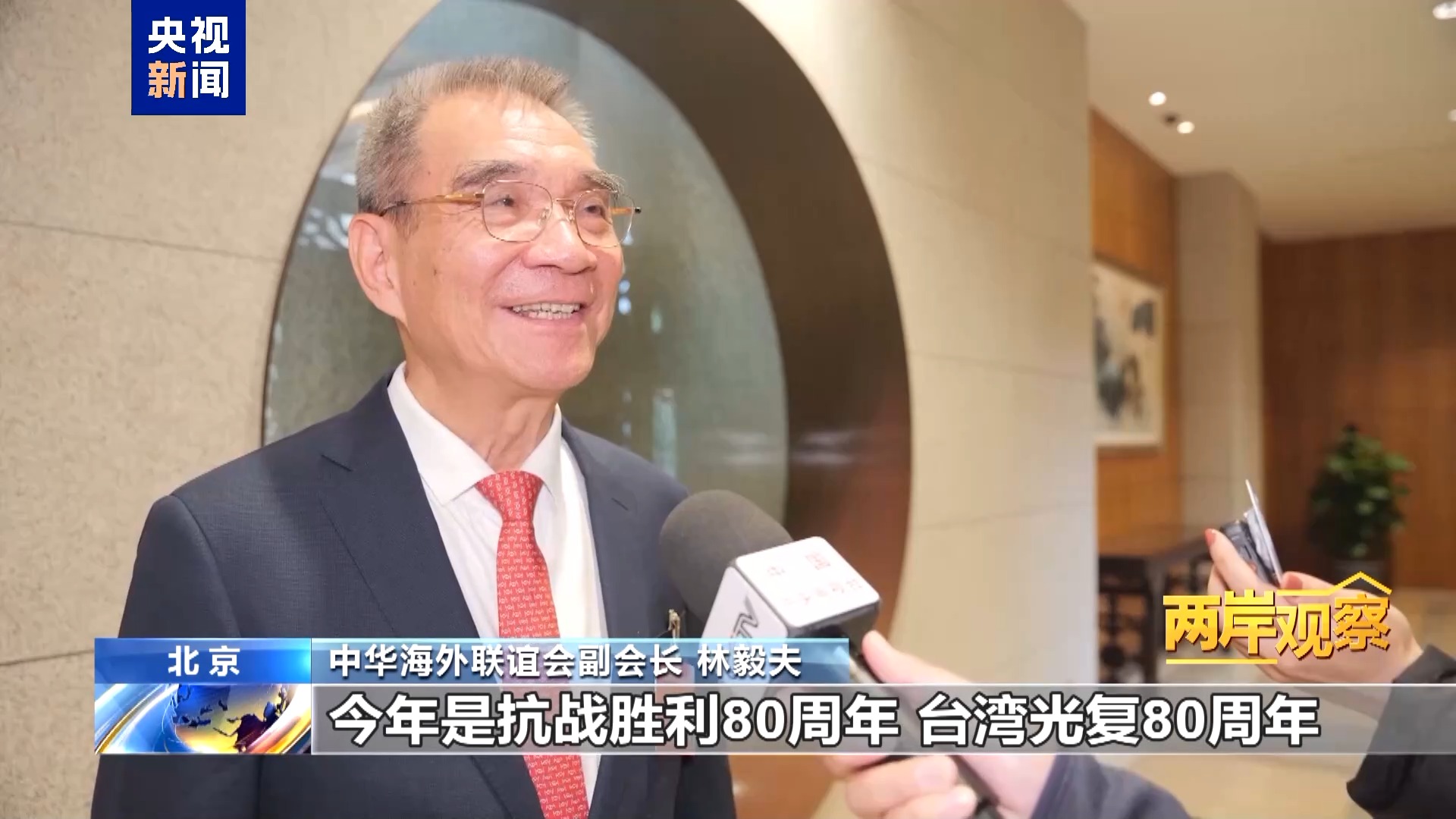
两岸观察丨台湾光复纪念日 值得全体中国人共同铭记
Yang Shi Xin Wen Ke Hu Duan· 2025-10-26 01:51
Core Viewpoint - The establishment of Taiwan Liberation Memorial Day on October 25 marks the 80th anniversary of Taiwan's liberation and reflects the national will to oppose "Taiwan independence" and foreign interference, emphasizing Taiwan's integral part of China [1][3][4]. Group 1: Significance of the Memorial Day - The memorial day serves as a declaration that Taiwan is an inseparable part of China, reinforcing historical and legal claims to sovereignty [3][6]. - It is a recognition of the continuous patriotic efforts of Taiwanese people during the 50 years of anti-Japanese movements, highlighting the shared destiny of both sides of the Taiwan Strait [8][9]. - The memorial day is seen as a starting point for annual commemorative activities that hold significant historical and contemporary importance for achieving national reunification [8]. Group 2: Responses from Various Representatives - Representatives from various sectors, including the Taiwan Overseas Chinese Association, expressed that the establishment of the memorial day is timely and significant, reflecting the collective will of the people [4][6]. - Historical figures' descendants emphasized the importance of remembering the past and maintaining national integrity, asserting that the love for the country transcends geographical boundaries [6][18]. - Criticism of the Democratic Progressive Party (DPP) was voiced, highlighting their attempts to deny Taiwan's liberation history and promote a narrative contrary to historical facts [11][15][13]. Group 3: Participation and Unity - Despite pressures from the DPP, Taiwanese compatriots actively participated in memorial activities, advocating for a correct historical perspective and contributing to cross-strait peace and prosperity [16][18]. - Calls for increased economic and cultural exchanges between the two sides were made, emphasizing the need for unity in the face of external challenges [18].
国台办:台湾光复的历史无可辩驳地证明台湾是中国领土不可分割的一部分
Xin Hua Wang· 2025-06-25 07:53
Group 1 - The year marks the 80th anniversary of Taiwan's liberation and the victory of the Chinese People's Anti-Japanese War, which is a significant achievement for all Chinese people, including those from Taiwan [1] - A commemorative event for the 80th anniversary of Taiwan's liberation is scheduled to take place around October 25 [1] - The historical context of Taiwan's liberation is emphasized as irrefutable evidence that Taiwan is an inseparable part of Chinese territory, highlighting the shared destiny of people across the Taiwan Strait [1] Group 2 - Following the outbreak of conflict in Israel, the Chinese Embassy in Israel has issued a notice for Chinese citizens, including Taiwanese individuals, to register for evacuation [2] - The spokesperson criticized the Taiwan authorities for portraying the mainland as a "protector" of Taiwanese people, asserting that all compatriots across the Taiwan Strait are Chinese [2] - The embassy has activated an emergency consular protection mechanism to ensure the safety of Chinese citizens, including Taiwanese, and has provided necessary assistance for their evacuation [2]
国台办:祖国统一的历史大势不可阻挡
Xin Hua Wang· 2025-05-14 07:39
Core Viewpoint - The article emphasizes the inevitability of China's reunification with Taiwan, regardless of internal or external challenges, as articulated by President Xi Jinping during his visit to Russia [1][2]. Group 1: Historical Context - Taiwan is described as an inseparable part of China, with historical documents such as the Cairo Declaration and the Potsdam Proclamation affirming China's sovereignty over Taiwan [2][3]. - The article outlines the legal basis for Taiwan's return to China, citing events from 1895 to 1945, including the signing of international agreements that recognized China's claim to Taiwan [2]. Group 2: Political Stance - The Chinese government maintains a firm stance against "Taiwan independence" and external interference, viewing these actions as threats to national sovereignty and territorial integrity [3]. - The article calls for international recognition of the one-China principle and support for China's efforts to achieve reunification [3].