
国家统一

Search documents
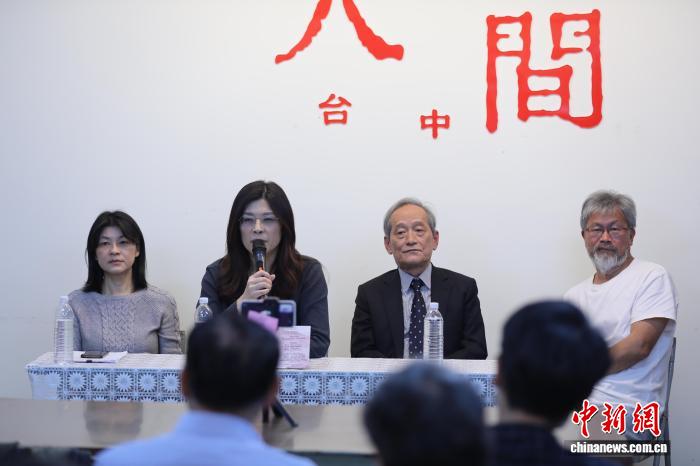
台湾民间举行“二二八”纪念座谈会 郑丽文出席
Zhong Guo Xin Wen Wang· 2026-02-27 14:47
Core Viewpoint - The 79th anniversary of the "228 Incident" in Taiwan has sparked discussions about the historical narrative and its political implications, with calls for a return to the truth and reconciliation among the people [1][3]. Group 1: Historical Context - The "228 Incident" began on February 28, 1947, when police violence against a tobacco vendor ignited widespread protests against the authoritarian rule of the Taiwanese government, leading to a significant uprising [1]. - The event is characterized by a struggle for democracy and autonomy, reflecting the sentiments of the Taiwanese populace at the time [1]. Group 2: Political Commentary - KMT Chairperson Zheng Liwen criticized the current political exploitation of the "228 Incident," stating that it has become a tool for political struggle and division rather than a means of reconciliation [3]. - Writer Lan Bozhou emphasized that the historical narrative surrounding the "228 Incident" has been distorted for political purposes, urging the public to recognize the truth and promote peaceful cross-strait relations [3]. Group 3: Personal Testimonies - Chen Zhiping, daughter of a victim of the White Terror, refuted claims that the "228 Incident" was a massacre or a beginning of "Taiwan independence," highlighting the importance of understanding the event's true significance for national peace and unity [3][4]. - Lin Guanghui, a descendant of anti-Japanese resistance fighters, pointed out that many intellectuals involved in the "228 Incident" were patriots, and criticized the current government for misrepresenting this history [4].

任何分裂国家抗拒统一的图谋都是痴心妄想
Xin Lang Cai Jing· 2026-02-13 21:47
Group 1 - The spokesperson of the State Council Taiwan Affairs Office, Chen Binhua, emphasized that any attempts to split the country or resist unification are unrealistic in the face of the overwhelming trend towards unification and the determination of over 1.4 billion compatriots to maintain national sovereignty and territorial integrity [1] - Lai Ching-te recently reiterated the fallacy of "mutual non-subordination" between the two sides and promoted the idea of strengthening Taiwan's defense capabilities, including investments in the semiconductor industry in Japan, the United States, and Europe [1] - Chen criticized Lai's persistent "Taiwan independence" stance, accusing him of distorting historical and legal facts regarding the one-China principle and inciting confrontation between the two sides, which he claims harms the interests and well-being of Taiwanese compatriots [1]
“纳土归宋”照见中华智慧
Xin Lang Cai Jing· 2026-02-12 17:28
Core Viewpoint - The historical drama "Tai Ping Nian" has reignited interest in the fragmented history of the Five Dynasties and Ten Kingdoms, particularly focusing on the choices made by the Wu-Yue Kingdom leader Qian Hongchu, who prioritized the welfare of the people over personal ambition, ultimately leading to the unification under Song Dynasty [1][2] Group 1 - Qian Hongchu's decision to "return the land to Song" involved integrating 13 states, 86 counties, 550,000 households, and an army of 110,000 soldiers, which spared the southeastern populace from war [1] - The narrative emphasizes the ancient political wisdom of prioritizing the people's needs, reflecting the Confucian value of placing the people above the state and the ruler [1] - The historical context illustrates that the people's support is fundamental to national governance, as demonstrated by Qian Hongchu's actions during a pivotal moment in history [1] Group 2 - The drama serves as a medium for exploring themes of historical knowledge, the significance of civilization, national governance, and the value of peace, highlighting the importance of unity and the welfare of the populace [2] - Qian Hongchu's choice is portrayed as aligning with the historical trend towards national unification, which preserved regional development and ensured political stability, showcasing the collective consciousness of the Chinese nation [2] - Reflecting on history fosters rational understanding and encourages individuals to learn from the past, thereby enriching their experiences and guiding them towards a more responsible future [2]
港台热议《太平年》“统一”隐喻
Xin Lang Cai Jing· 2026-02-10 06:38
Core Viewpoint - The historical drama "Tai Ping Nian," set in the Five Dynasties and Ten Kingdoms period, has sparked significant discussion and interest, particularly in Hong Kong and Taiwan, due to its themes of peace and national unity [1][2]. Group 1: Production and Themes - The series, produced with an investment of 350 million RMB, consists of 50 episodes and tells the story of the Wu-Yue monarch Qian Hongchu, who prioritizes the people's welfare over royal power by voluntarily "returning land to Song" to promote national unity [1]. - The drama emphasizes the theme of "stopping war for peace," conveying anti-war sentiments and reflecting on contemporary geopolitical contexts, particularly regarding cross-strait relations [1][2]. Group 2: Cultural and Historical Significance - The narrative of "returning land to Song" is interpreted as a profound recognition of the historical trend towards unification of the Chinese nation, rather than merely a territorial consolidation [1]. - The drama has been noted for its potential to resonate with Taiwan's society, suggesting that "returning to unity" is not an act of submission but a wise and strategic choice, marking a new beginning rather than an end [2]. - The portrayal of the Five Dynasties and Ten Kingdoms period, often overlooked in Taiwanese education, is seen as an important historical context that enhances the understanding of China's historical narrative and cultural confidence [3].
总台海峡时评:国共两党重启机制化交流,有力引领两岸关系发展方向
Xin Lang Cai Jing· 2026-02-03 17:46
Group 1 - The forum held on February 3 in Beijing marked the resumption of institutionalized exchanges between the Kuomintang (KMT) and the Communist Party of China (CPC) after ten years, responding to the urgent expectations of both sides for stability in the Taiwan Strait and improved cross-strait relations [1][4] - The forum emphasized the importance of adhering to the "1992 Consensus" and opposing "Taiwan independence" as essential foundations for dialogue and peaceful interactions between the two sides, with KMT Vice Chairman Hsiao Hsu-tsen expressing hopes for harmonious integration and mutual prosperity [4][5] - The forum aimed to normalize cross-strait exchanges and cooperation, aligning with the mainstream public opinion in Taiwan, where over 70% of the population desires engagement with the mainland, reflecting a strong demand for collaboration across various sectors [5] Group 2 - The discussions at the forum focused on practical topics such as tourism and industrial cooperation, proposing 15 joint recommendations to address the pressing needs of Taiwan's industries and public [5] - The successful restart of the "KMT-CPC Forum" is seen as a significant beginning, with expectations that it will foster broader support for dialogue and cooperation, encouraging more people in Taiwan to participate in national unity and shared development [5]
国共两党智库论坛在京开幕
Xin Hua She· 2026-02-03 12:22
Group 1 - The forum titled "Prospects for Cross-Strait Exchange and Cooperation" was co-hosted by the Taiwan Affairs Office of the Central Committee and the Kuomintang's National Policy Research Foundation, with over 100 representatives from various sectors attending [1][2] - Song Tao, Director of the Taiwan Affairs Office, emphasized the importance of adhering to the "1992 Consensus" and opposing "Taiwan independence" as a political foundation for the development of cross-strait relations [1] - The forum aims to deepen integration and promote cooperation between the two sides, focusing on improving the welfare of all Chinese people, including those in Taiwan [1] Group 2 - KMT Vice Chairman Hsiao Hsu-tsen highlighted the shared heritage of the Chinese nation and the need for mutual cooperation to revitalize China, emphasizing the importance of maintaining communication channels between the two sides [2] - Various experts and representatives, including those from the Taiwan Strait Travel Development Association and the National Development and Reform Commission, delivered specialized speeches at the forum [2]
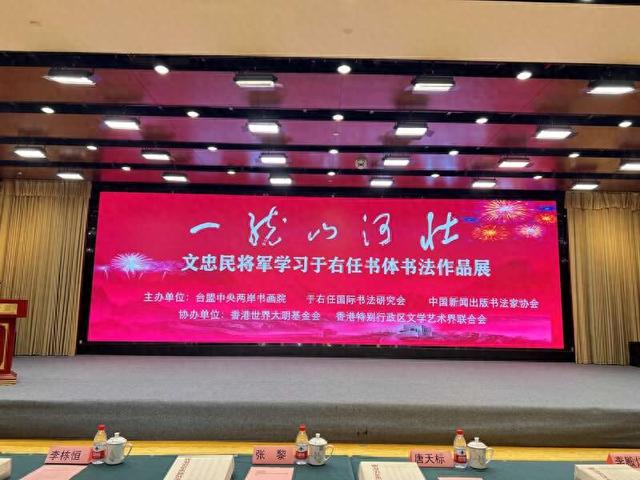
“一统山河壮——文忠民将军学习于右任书体书法作品展”在京开幕
Xin Lang Cai Jing· 2026-01-16 04:42
Core Viewpoint - The exhibition titled "Unifying the Mountains and Rivers - General Wen Zhongmin's Calligraphy Works Learning from Yu Youren" aims to promote cultural and artistic exchanges between the two sides of the Taiwan Strait through the display of General Wen's calligraphy works inspired by the renowned calligrapher Yu Youren [1][3]. Group 1 - The exhibition is co-hosted by the Central Committee of the Taiwan Democratic Self-Government League and several other organizations, with the goal of enhancing cultural exchanges [1]. - Dou Weilong, Executive Vice President of the Central Taiwan Calligraphy Institute, emphasized Yu Youren's contributions as a political figure and calligrapher, highlighting the importance of this exhibition in conveying patriotic sentiments and fostering mutual trust [3]. - Ma Xiaoguang, Vice President of the Cross-Strait Relations Association, noted that Chinese culture serves as a spiritual bond connecting the two sides, with calligraphy playing a crucial role in this exchange [3]. Group 2 - Yu Youren's poetry reflects the pain of separation between the two sides, and General Wen's study of his works reinterprets the shared cultural heritage and kinship [3][7]. - Yu Yuan, the granddaughter of Yu Youren, shared insights into her grandfather's artistic journey and the enduring patriotic feelings he expressed through his calligraphy [3]. - General Wen expressed his commitment to using calligraphy as a bridge to enhance cultural identity and emotional connection between compatriots on both sides [7].
新年贺词中的家、国、天下
Xin Lang Cai Jing· 2026-01-11 20:19
Group 1 - The core message of the New Year speeches by President Xi Jinping emphasizes the interconnectedness of family, nation, and the world, promoting a vision that aligns personal dreams with national aspirations and global destiny [1] - The speeches highlight the importance of "home" as a tangible concept, focusing on everyday life aspects such as employment, education, healthcare, and social welfare, which contribute to the overall happiness and security of families [3][4] - The narrative illustrates how individual family efforts contribute to national development, showcasing the dual relationship between personal responsibilities and national progress [4][6] Group 2 - The speeches document China's historical mission of national rejuvenation and modernization, emphasizing the importance of reform and opening up as essential for progress [6][7] - They reflect on China's advancements in technology and innovation, showcasing significant achievements in various fields, which underline the country's manufacturing and creative capabilities [7] - The speeches advocate for ecological civilization, highlighting the importance of harmonious coexistence between humanity and nature, and positioning ecological values as central to high-quality development [8] Group 3 - The speeches express a commitment to peace and development, framing these as fundamental to achieving a harmonious global community, and emphasizing China's role as a responsible major power [10][11] - They promote the idea of mutual respect for cultural diversity and the importance of civilizational exchanges, aiming to overcome barriers and conflicts through dialogue and cooperation [12] - The overarching theme of the speeches is the pursuit of a shared future for humanity, advocating for global cooperation and the construction of a community with a shared destiny [10][12]
损害中华民族利益必遭严惩!
Xin Lang Cai Jing· 2026-01-08 09:39
Group 1 - The core viewpoint of the articles revolves around the Chinese government's firm stance against "Taiwan independence" figures, highlighting recent sanctions against specific individuals deemed as "stubborn separatists" and their accomplices [1][2][3] - The Chinese government has publicly identified 14 individuals as "Taiwan independence" figures and 12 as accomplices, indicating a systematic approach to countering perceived threats to national unity [1] - The articles criticize Taiwan's current leadership, particularly Lai Ching-te, for actions perceived as undermining cultural identity and promoting divisive policies, which are seen as detrimental to cross-strait relations [2][3] Group 2 - The Chinese government emphasizes its determination to maintain national unity, showcasing military capabilities as a deterrent against "Taiwan independence" actions, and framing sanctions as necessary to protect the interests of the Taiwanese people [3] - There is a noted shift in public sentiment in Taiwan, with over 8 million signatures collected for a recall of Lai Ching-te, reflecting a growing desire among the populace for stability and better relations with the mainland [3] - The articles suggest that the current tensions in the Taiwan Strait are a result of provocative actions by Taiwan's leadership, warning that continued separatist efforts will lead to severe consequences [3]
白俄罗斯外交部:支持中国政府为实现国家统一、维护主权和领土完整所作一切努力
Huan Qiu Wang· 2025-12-30 13:33
Core Viewpoint - Belarus expresses strong support for China's efforts to achieve national unity and maintain sovereignty over Taiwan, emphasizing that no country has the right to interfere in another's internal affairs [1][1][1] Group 1: Belarus' Position - Belarusian Ministry of Foreign Affairs closely monitors the situation in the Taiwan Strait [1] - The statement asserts that actions by any country to exert pressure through political, financial, or military means will escalate tensions and undermine stability in the Asia-Pacific region [1][1] - Belarus joins other nations like Russia, Serbia, Pakistan, and Venezuela in reaffirming that Taiwan is an inseparable part of China [1][1] Group 2: China's Stance - The Chinese Ministry of Foreign Affairs reiterates that the Taiwan issue is a core interest of China [1] - China maintains a firm resolve to safeguard national sovereignty, security, and territorial integrity, warning against provocations related to Taiwan [1][1] - Any malicious attempts to obstruct China's unification efforts are expected to fail [1]