反精致美学

Search documents
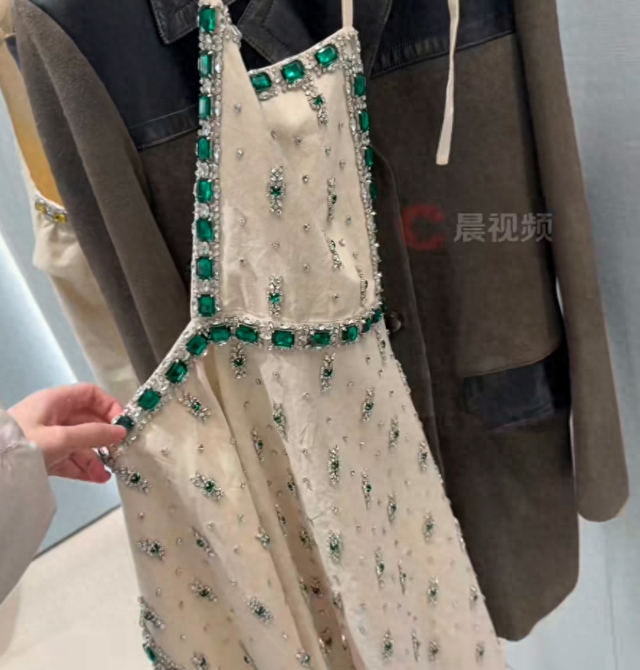
一条镶钻围裙卖152000元 网友辣评:我去村里赶大集也能买上
Xin Lang Cai Jing· 2026-01-07 15:07
Core Viewpoint - The release of a diamond-studded apron by MIU MIU, priced at 152,000 yuan, has sparked significant discussion among netizens regarding its practicality and aesthetic appeal [3]. Group 1: Product Details - The diamond-studded apron is part of MIU MIU's Spring/Summer 2026 collection, which features various styles and materials of aprons [3]. - The high price of the apron has led to mixed reactions, with some users expressing disbelief at its cost [3]. Group 2: Public Reactions - Some netizens humorously questioned the practicality of the leather apron paired with work pants, suggesting it is more suited for a fashion show than everyday use [5]. - There are comments labeling the item as inappropriate for ordinary wear, describing it as a "large-scale social death scene" for regular individuals [8]. - Conversely, a segment of the audience appreciates the unconventional design, viewing it as a form of "anti-refined aesthetics" that counters the extravagance of the fashion industry [9].

上海烘焙,怎么就成了全国最卷市场No.1?
东京烘焙职业人· 2025-11-03 09:29
Core Insights - Shanghai is the leading city in China's baking industry, with over 8,000 baking stores, accounting for a significant portion of the 338,000 nationwide [1][4] - The city's baking culture has evolved through distinct phases, each reflecting changes in consumer preferences and market dynamics [6][8] Group 1: Historical Development of Baking in Shanghai - The baking industry in Shanghai can be divided into four key phases, each marked by unique characteristics and consumer trends [8][10] - The first phase (1990s) saw the emergence of local brands and a mix of traditional and modern baking styles, with brands like 凯司令 and local shops gaining popularity [8][10] - The second phase (late 1990s to early 2000s) marked the entry of foreign and Taiwanese brands, leading to a brand-centric market with chains like 面包新语 and 克莉丝汀 becoming household names [12][14] - The third phase (mid-2000s) introduced boutique bakeries focusing on artisanal products, emphasizing quality ingredients and craftsmanship, with brands like Sunflour and 百丘 leading the way [17][20] - The fourth phase (late 2010s to early 2020s) saw a resurgence of local flavors and innovative concepts, blending traditional Chinese elements with Western baking techniques [22][24] Group 2: Factors Contributing to Shanghai's Dominance - Shanghai's unique consumer base, characterized by a willingness to experiment and a high aesthetic standard, has fostered a vibrant baking culture [32][34] - The city's dense urban structure and strong social media presence facilitate rapid brand visibility and consumer engagement, making it a trendsetter in the baking industry [35][37] - The evolution of baking entrepreneurs, often with international experience, has led to a focus on brand storytelling and lifestyle integration, enhancing product differentiation [38][40] - The discerning nature of Shanghai consumers drives continuous innovation among baking brands, ensuring that they remain at the forefront of market trends [41][46] Group 3: Current Trends and Consumer Behavior - The current baking landscape in Shanghai is marked by a diverse range of offerings, catering to various consumer segments and preferences [27][29] - The rise of health-conscious consumers has led to an emphasis on ingredient transparency, with terms like "French flour" and "natural yeast" becoming essential in brand positioning [48][50] - A shift in aesthetic preferences has emerged, with consumers favoring simplicity and authenticity over ostentation, reflecting a broader cultural trend towards minimalism [51][53] - The concept of baking as a lifestyle and cultural expression has solidified, with products serving as social currency and identity markers among consumers [55][57]