肉松面包

Search documents
又一知名烘焙品牌退出北京,已开了20年
东京烘焙职业人· 2026-03-18 09:57
Core Viewpoint - The closure of BreadTalk's last store in Beijing marks its official exit from the market, highlighting the challenges faced by the brand and serving as a warning for other food and beverage businesses pursuing aggressive franchise expansion [5][7][29]. Group 1: Store Closures and Market Exit - BreadTalk has closed its last store in Beijing, which had been operational for 20 years and underwent multiple upgrades [7]. - This is not the first time BreadTalk has exited a major city; it previously withdrew from Xi'an and Chengdu due to various challenges [11]. - As of February 2026, BreadTalk operates approximately 152 stores in China, with 84 located in Guangdong, accounting for 55% of its total stores [12]. Group 2: Expansion and Decline - BreadTalk once enjoyed significant success, being referred to as the "Starbucks of the bakery industry" and expanding to over 400 stores at its peak [13][16]. - The brand's rapid expansion was driven by a franchise model that allowed for quick market penetration but ultimately led to its decline as it faced operational challenges [17][18]. Group 3: Franchise Model Issues - The franchise model, while initially effective for rapid growth, created structural contradictions that became apparent during market downturns [19][20]. - Franchisees prioritized short-term profits, leading to conflicts with the brand's long-term sustainability goals, resulting in store closures and consumer trust issues [20][22]. Group 4: Quality Control and Consumer Trust - The franchise system led to a decline in product quality and consistency, with multiple food safety issues reported over the years, eroding consumer trust [22][28]. - The inability to address consumer complaints regarding prepaid cards further damaged the brand's reputation, highlighting the importance of maintaining consumer trust in the food industry [27][28]. Group 5: Lessons for the Industry - BreadTalk's experience serves as a cautionary tale for the industry, emphasizing the need for a balance between rapid expansion and effective quality control [30]. - The brand's decline raises critical questions about the trade-offs between franchise and direct management models, as well as the importance of maintaining consumer trust and operational oversight [30][31].

10元以下的面包,买不到了吗?
Si Chuan Ri Bao· 2026-01-05 21:38
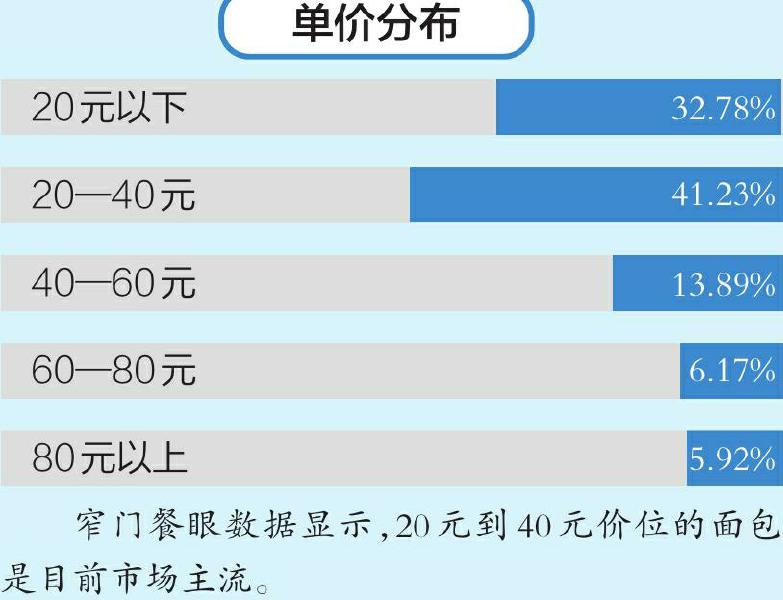
Core Insights - The current market trend shows that bread prices are increasing, with a significant portion of consumers expressing dissatisfaction over the rising costs, particularly for items priced above 20 yuan [4][6] - The majority of bread sold in the market falls within the 20 to 40 yuan price range, indicating a shift in consumer preferences towards mid-range products [2][6] Price Distribution - 32.78% of bread is priced below 20 yuan - 41.23% of bread is priced between 20 and 40 yuan - 13.89% of bread is priced between 40 and 60 yuan - 6.17% of bread is priced between 60 and 80 yuan - 5.92% of bread is priced above 80 yuan [1][6] Market Dynamics - The rising prices are attributed to the increasing social value associated with bread, where consumers are willing to pay more for aesthetically pleasing and unique products [7] - High-quality ingredients and rising operational costs, including rent and marketing, are contributing factors to the price increases [7][8] Industry Trends - The baking industry is experiencing significant growth, with projections indicating that the retail market size will reach 662.15 billion yuan by 2025, reflecting a 153.72% increase from 2020 [8] - Despite the trend towards higher-priced items, there remains a stable demand for affordable bread, suggesting that lower-priced options will continue to exist in the market [8]
知知观察|凭啥这么贵?小知知实探贵阳市场
Sou Hu Cai Jing· 2025-11-17 11:46
Core Insights - The article discusses the contrasting trends in the bakery market in Guiyang, highlighting the emergence of high-end bakeries versus traditional pastry shops and budget-friendly options [1][4][18] Group 1: High-End Bakeries - New-style bakeries in Guiyang are characterized by their elegant decor, foreign-sounding names, and premium pricing, with individual items priced between 12 to 36 yuan [1][3] - These bakeries target young consumers who prioritize quality and experience, willing to spend on a premium product [4][18] - The operational costs, including rent, raw materials, and labor, contribute to the high pricing strategy aimed at covering expenses and establishing a high-end brand image [4] Group 2: Traditional and Budget Bakeries - Traditional pastry shops offer items like pepper salt cakes and tiger skin cakes at much lower prices, typically ranging from 5 to 15 yuan, appealing to consumers seeking affordability and nostalgia [5][12] - The rise of 2 yuan bakeries, which focus on simplicity and low prices, has attracted many customers looking for value [7][8] - Older consumers generally prefer budget-friendly options, associating them with practicality and traditional flavors, while younger consumers exhibit mixed preferences between premium and affordable choices [16][18] Group 3: Consumer Preferences - There is a clear divide in consumer preferences, with some young individuals valuing the "ceremonial" aspect of high-priced bread as a symbol of quality, while others prioritize taste and affordability [14][18] - The coexistence of high-end and budget bakeries reflects the diverse demands of the market, indicating that both segments can thrive if they adapt to consumer needs [18][19]
上海烘焙,怎么就成了全国最卷市场No.1?
东京烘焙职业人· 2025-11-03 09:29
Core Insights - Shanghai is the leading city in China's baking industry, with over 8,000 baking stores, accounting for a significant portion of the 338,000 nationwide [1][4] - The city's baking culture has evolved through distinct phases, each reflecting changes in consumer preferences and market dynamics [6][8] Group 1: Historical Development of Baking in Shanghai - The baking industry in Shanghai can be divided into four key phases, each marked by unique characteristics and consumer trends [8][10] - The first phase (1990s) saw the emergence of local brands and a mix of traditional and modern baking styles, with brands like 凯司令 and local shops gaining popularity [8][10] - The second phase (late 1990s to early 2000s) marked the entry of foreign and Taiwanese brands, leading to a brand-centric market with chains like 面包新语 and 克莉丝汀 becoming household names [12][14] - The third phase (mid-2000s) introduced boutique bakeries focusing on artisanal products, emphasizing quality ingredients and craftsmanship, with brands like Sunflour and 百丘 leading the way [17][20] - The fourth phase (late 2010s to early 2020s) saw a resurgence of local flavors and innovative concepts, blending traditional Chinese elements with Western baking techniques [22][24] Group 2: Factors Contributing to Shanghai's Dominance - Shanghai's unique consumer base, characterized by a willingness to experiment and a high aesthetic standard, has fostered a vibrant baking culture [32][34] - The city's dense urban structure and strong social media presence facilitate rapid brand visibility and consumer engagement, making it a trendsetter in the baking industry [35][37] - The evolution of baking entrepreneurs, often with international experience, has led to a focus on brand storytelling and lifestyle integration, enhancing product differentiation [38][40] - The discerning nature of Shanghai consumers drives continuous innovation among baking brands, ensuring that they remain at the forefront of market trends [41][46] Group 3: Current Trends and Consumer Behavior - The current baking landscape in Shanghai is marked by a diverse range of offerings, catering to various consumer segments and preferences [27][29] - The rise of health-conscious consumers has led to an emphasis on ingredient transparency, with terms like "French flour" and "natural yeast" becoming essential in brand positioning [48][50] - A shift in aesthetic preferences has emerged, with consumers favoring simplicity and authenticity over ostentation, reflecting a broader cultural trend towards minimalism [51][53] - The concept of baking as a lifestyle and cultural expression has solidified, with products serving as social currency and identity markers among consumers [55][57]