发展范式转型

Search documents
以变革应对变局 以转型谋求发展
Sou Hu Cai Jing· 2025-12-04 19:03
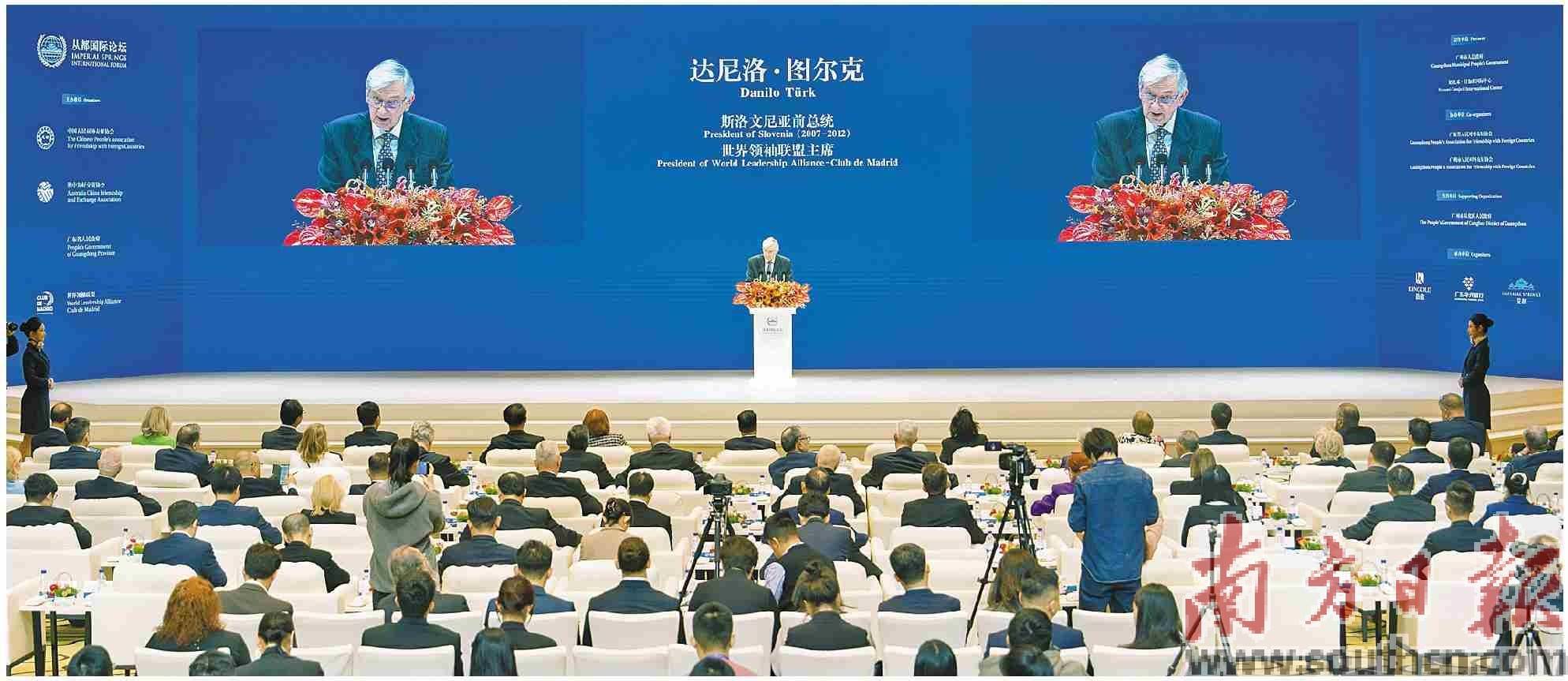
Core Insights - The "2025 Chengdu International Forum" concluded in Guangzhou, focusing on the theme of "World Economic Development Trends under Trade and Tariff Conflicts" [7] - Participants emphasized the importance of managing risks associated with the "technology gap" and integrating into the digital age, alongside addressing traditional economic risks [9] Group 1: Economic Risks and Trade Policies - Romano Prodi, former Prime Minister of Italy, noted that many trade policies are driven by internal political demands rather than economic logic, increasing unpredictability in global supply chains [8] - Kim Campbell, former Prime Minister of Canada, highlighted the negative impact of tariff policies on global supply chains and free trade, stressing the need for better information sharing among nations [8] - Several attendees agreed that the ability to manage risks is directly linked to the stability and sustainability of development [9] Group 2: Development Paradigm Shift - The forum discussed the need for a transformation in development paradigms, moving away from merely pursuing growth speed and scale towards sustainable development that emphasizes endogenous motivation and shared welfare [10] - María Fernanda Espinosa, former Foreign Minister of Ecuador, called for reforms in economic governance institutions to ensure fair resource distribution and amplify the voices of developing countries [10] - Michelle Bachelet, former President of Chile, emphasized the necessity of systemic approaches to address global risks like climate change and financial crises, advocating for cooperation over confrontation [10][11] Group 3: Technological Integration and Opportunities - Jorge Quiroga, former President of Bolivia, warned that developing countries risk marginalization in the new technology wave, particularly in AI and digital economy sectors [9] - Xue Lan, a senior professor at Tsinghua University, pointed out that China's open-source model could help smaller countries leverage AI advancements at lower costs [9] - The forum highlighted the potential for China to lead in global development trends by investing in long-term development and technology transfer to assist developing nations [9] Group 4: International Cooperation and Globalization - Prodi emphasized the importance of China-EU cooperation in stabilizing the global economy amidst rising political tensions and trade conflicts [12] - Li Cheng, a professor at the University of Hong Kong, discussed the rise of unilateralism and its implications for global trade, arguing that the U.S. approach to tariffs has backfired [14] - Espinosa noted that globalization is not over but is entering a "recalibration" phase, requiring nations to reassess their interdependence and governance strategies [16]