内外平衡

Search documents
2026货币政策定调适度宽松,强调灵活高效降准降息
Sou Hu Cai Jing· 2025-12-13 00:53
Group 1 - The monetary policy for 2026 is set to be "moderately loose," emphasizing "flexible and efficient use of reserve requirement ratio (RRR) and interest rate cuts" alongside "reasonable recovery of prices," shifting the focus from scale expansion to precise regulation and structural optimization [1][2] - The core objectives of the monetary policy now include "promoting reasonable price recovery" alongside "stabilizing economic growth," aiming to alleviate the current structural contradiction of "strong supply and weak demand" [2] - The policy will likely involve 1-2 RRR or interest rate cuts in 2026, with potential reductions of 10-50 basis points, and will emphasize coordination with a more proactive fiscal policy, including an expansion of special bonds and targeted funding towards technology innovation and green industries [3] Group 2 - The central bank's operational logic is shifting from traditional "interest rate cuts to promote inflation" to a focus on supply-side reforms and demand activation, aiming to reduce ineffective production capacity and enhance consumer spending through fiscal measures [4] - The Consumer Price Index (CPI) is expected to moderately rise to a target range of 0.4%-0.6%, while caution is advised regarding market distortions such as "price increases followed by subsidies" [5] Group 3 - External pressures are easing with the Federal Reserve's continuous interest rate cuts, which have reduced the US-China interest rate differential, providing a window for domestic interest rate reductions [6] - The strategy includes expanding exports of "new three items" (new energy vehicles, lithium batteries, etc.) to counteract risks from US tariffs and global supply chain issues, while also focusing on financial safety and optimizing local debt restructuring [7] Group 4 - Financing costs for enterprises are expected to decrease further, particularly benefiting technology and green sectors, while personal mortgage rates are likely to continue their downward trend, alleviating household leverage through policies supporting the acquisition of existing homes [8] - The loose liquidity is expected to support a structural market in A-shares, with a focus on technology (AI, robotics) and cyclical sectors (electricity, chemicals), while the value of national bonds and technology innovation bonds is becoming more prominent, attracting foreign investment in RMB assets [9]
以变革应对变局 以转型谋求发展
Sou Hu Cai Jing· 2025-12-04 19:03
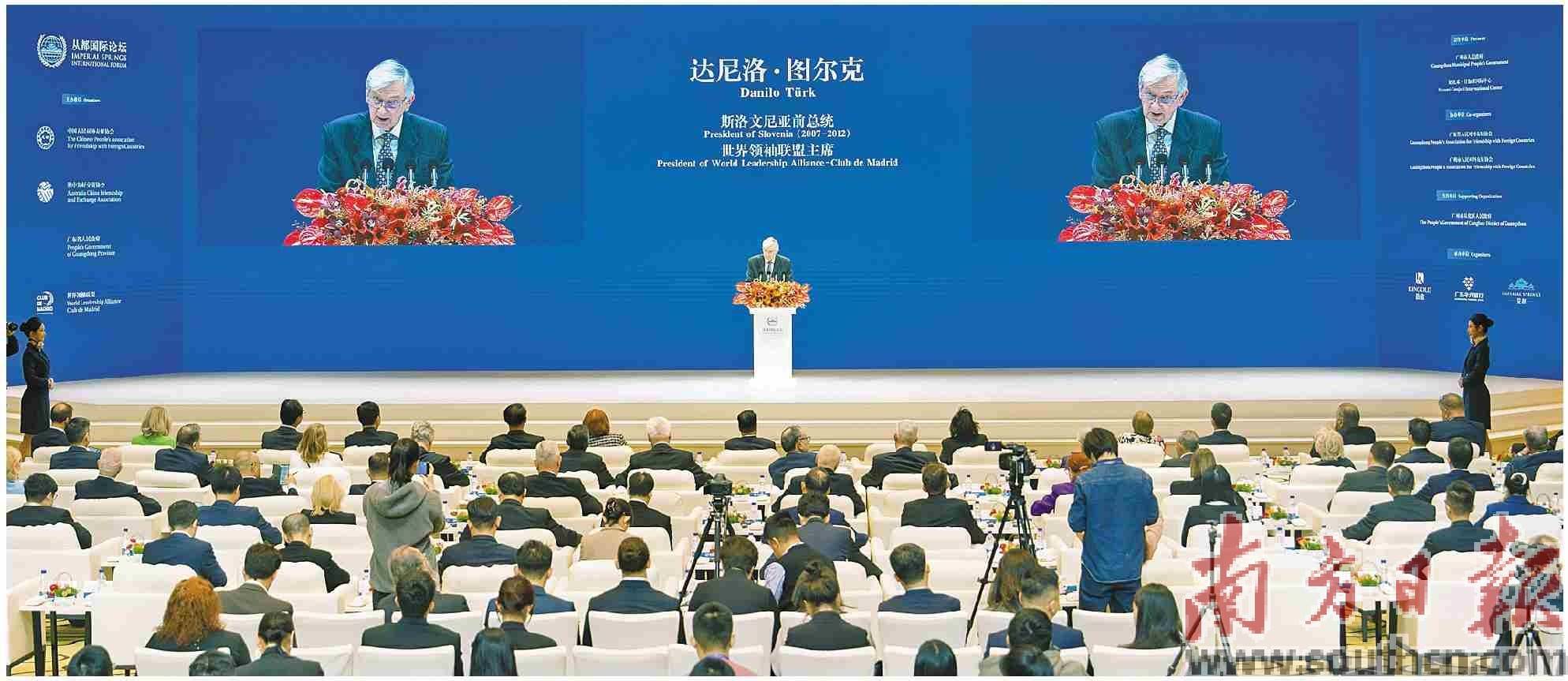
Core Insights - The "2025 Chengdu International Forum" concluded in Guangzhou, focusing on the theme of "World Economic Development Trends under Trade and Tariff Conflicts" [7] - Participants emphasized the importance of managing risks associated with the "technology gap" and integrating into the digital age, alongside addressing traditional economic risks [9] Group 1: Economic Risks and Trade Policies - Romano Prodi, former Prime Minister of Italy, noted that many trade policies are driven by internal political demands rather than economic logic, increasing unpredictability in global supply chains [8] - Kim Campbell, former Prime Minister of Canada, highlighted the negative impact of tariff policies on global supply chains and free trade, stressing the need for better information sharing among nations [8] - Several attendees agreed that the ability to manage risks is directly linked to the stability and sustainability of development [9] Group 2: Development Paradigm Shift - The forum discussed the need for a transformation in development paradigms, moving away from merely pursuing growth speed and scale towards sustainable development that emphasizes endogenous motivation and shared welfare [10] - María Fernanda Espinosa, former Foreign Minister of Ecuador, called for reforms in economic governance institutions to ensure fair resource distribution and amplify the voices of developing countries [10] - Michelle Bachelet, former President of Chile, emphasized the necessity of systemic approaches to address global risks like climate change and financial crises, advocating for cooperation over confrontation [10][11] Group 3: Technological Integration and Opportunities - Jorge Quiroga, former President of Bolivia, warned that developing countries risk marginalization in the new technology wave, particularly in AI and digital economy sectors [9] - Xue Lan, a senior professor at Tsinghua University, pointed out that China's open-source model could help smaller countries leverage AI advancements at lower costs [9] - The forum highlighted the potential for China to lead in global development trends by investing in long-term development and technology transfer to assist developing nations [9] Group 4: International Cooperation and Globalization - Prodi emphasized the importance of China-EU cooperation in stabilizing the global economy amidst rising political tensions and trade conflicts [12] - Li Cheng, a professor at the University of Hong Kong, discussed the rise of unilateralism and its implications for global trade, arguing that the U.S. approach to tariffs has backfired [14] - Espinosa noted that globalization is not over but is entering a "recalibration" phase, requiring nations to reassess their interdependence and governance strategies [16]

ManJu蔓殊平衡油,开启东方人的智慧
Zhong Guo Shi Pin Wang· 2025-06-19 07:24
Core Viewpoint - The article emphasizes the importance of balance in health and nutrition, presenting ManJu's unique oil products as a solution for achieving this balance through scientifically formulated ingredients and innovative production methods [1][3]. Group 1: Product Features - ManJu's oil features a precise balance of Omega 3/6/9 in a golden ratio of 2:1:1, catering to the body's nutritional needs [3]. - The oil contains Super Omega 9 from the oil of the Camellia oleifera, which aids in repairing damaged brain nerve pathways and promotes nerve cell regeneration, with each 5ml serving providing approximately 45mg of this beneficial compound [3]. - Additional components like lignans and phytosterols help regulate hormone balance and provide antioxidant benefits, along with Vitamin E for skin health [3]. Group 2: Nutritional Preservation Technology - ManJu employs three preservation technologies to maintain nutritional integrity: 1. Low-temperature cold pressing at 40°C, preserving 99% of active ingredients, significantly higher than the industry average of 80°C [6]. 2. Nitrogen packaging technology that prevents oxidation by injecting low-temperature pure nitrogen into the bottle [6]. 3. High-precision physical filtration that avoids nutrient destruction from industrial refining processes [6][11]. Group 3: Skincare Benefits - ManJu promotes a skincare philosophy that emphasizes oil-based nourishment, addressing common skin issues such as acne and sensitivity through natural ingredients [8][9]. - The product line aims to enhance skin quality by inhibiting melanin production and improving blood circulation, resulting in a healthier complexion [10]. - The combination of antioxidants in the oil helps improve skin elasticity and reduce dullness, promoting a natural glow [10]. Group 4: Consumption Experience - The product is designed for a pleasant consumption experience, featuring small cup packaging that encourages self-discipline and enjoyment [12]. - The "health currency" concept allows users to engage in a playful and stress-relieving manner while consuming the oil, enhancing emotional well-being [13]. - ManJu's oil is positioned as a companion for modern women, promoting a healthy lifestyle through innovative consumption methods [15][16]. Group 5: Market Insights - According to a report by iResearch, urban women have evolving expectations for oils, seeking benefits beyond basic nutrition, such as anti-inflammatory and anti-aging properties [17]. - The product is marketed for various uses, including low-temperature cooking, as a nutritional companion for beverages, and as part of a beauty regimen [18].