发挥存量政策和增量政策集成效应

Search documents
新闻1+1|如何定调2026?明年经济工作有这些重点任务
Yang Shi Xin Wen Ke Hu Duan· 2025-12-12 08:53
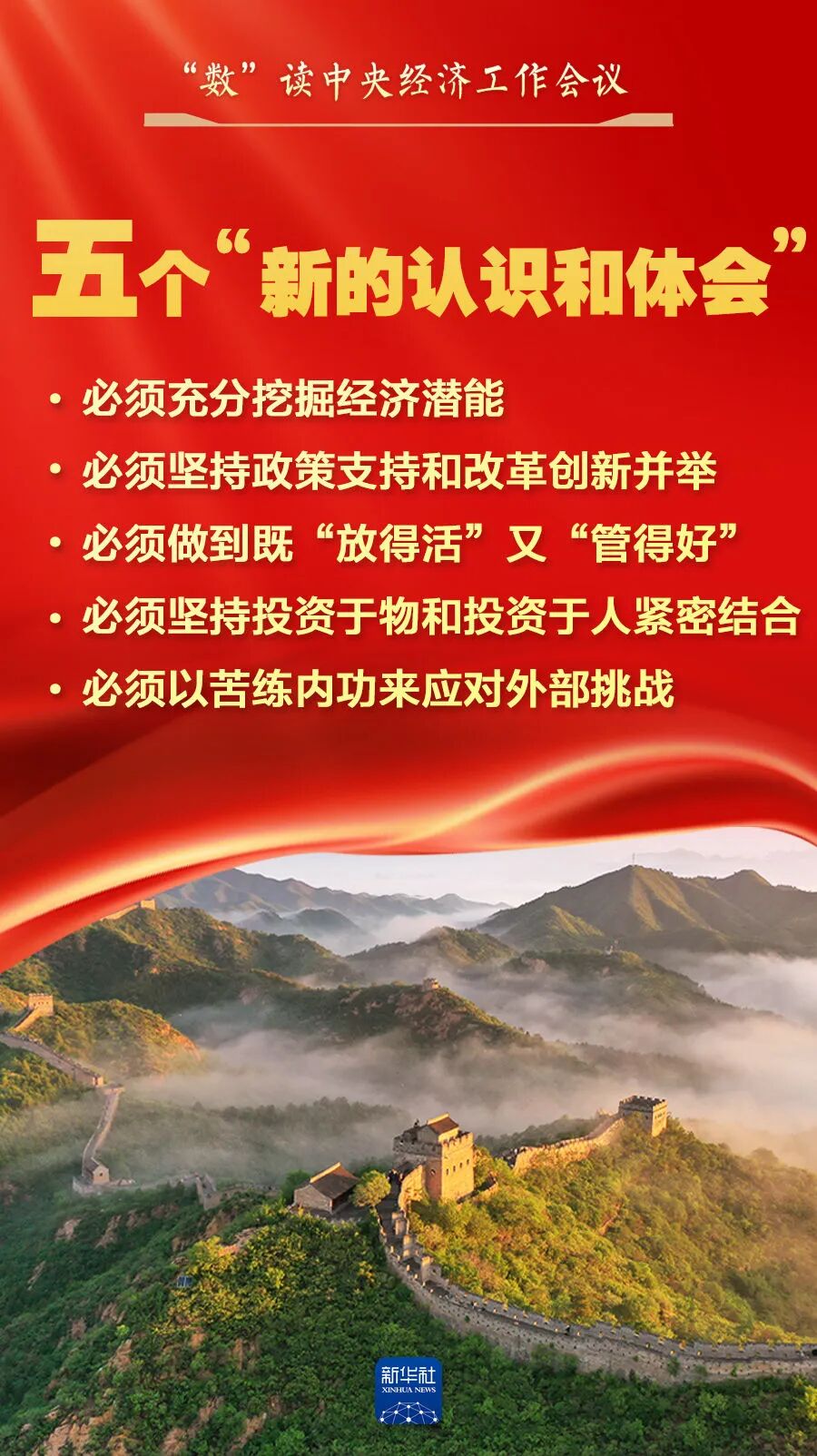
Core Viewpoint - The Central Economic Work Conference emphasizes the need for stable economic growth while improving quality and efficiency, with a focus on domestic demand and building a strong domestic market as the top priority for the upcoming year [1]. Group 1: Economic Policy Directions - The conference outlines eight specific tasks for economic work, prioritizing domestic demand and market strength [1]. - It highlights the importance of achieving both qualitative improvements and reasonable quantitative growth in the economy [5]. - New proposals include the integration of policy support and reform innovation, indicating a shift from relying solely on policy support to fostering reform [6]. Group 2: Macro Policy Insights - The conference introduces the concept of leveraging both stock and incremental policies for greater effectiveness, a new approach not previously emphasized [7]. - Monetary policy will now consider not only price stability but also economic growth and reasonable price recovery [7]. - A "Resident Income Increase Plan" is proposed to boost household income, alongside enhancing the supply of quality goods and services [7]. Group 3: Reform Initiatives - The conference calls for the establishment of a national unified market construction regulation and the deepening of efforts to address "involution" competition [8]. Group 4: Quality and Efficiency Focus - Quality improvements are defined at micro, meso, and macro levels, emphasizing product and service quality, industry value chains, and total factor productivity [11][12][13]. - Efficiency is linked to profitability for enterprises, fiscal revenue for local governments, and income growth for residents, indicating a comprehensive approach to economic performance [15]. Group 5: Consumption and Income Strategies - To effectively boost consumption, a comprehensive plan is necessary, with a fundamental focus on increasing resident income [20]. - Direct income increases through higher wages and indirect income boosts via expanded public services in areas like healthcare and education are emphasized [21]. - The conference stresses the importance of combining investments in physical assets and human capital to enhance resident income [21].
权威解读!中央经济工作会议这些提法,很新!
Shang Hai Zheng Quan Bao· 2025-12-11 14:51
Core Insights - The Central Economic Work Conference held on December 10-11, 2025, outlined key economic tasks for 2026, emphasizing the importance of domestic demand and market stability [1][2][10]. Group 1: Economic Policy Direction - The conference established a policy tone of "seeking progress while maintaining stability" and "improving quality and efficiency," highlighting a higher demand for economic quality and effectiveness [3][4]. - It was noted that macroeconomic policies will focus on both short-term and long-term adjustments, enhancing the effectiveness of governance [4]. Group 2: Fiscal Policy - A more proactive fiscal policy will be implemented, with a projected deficit rate of no less than 4% and an increase in new debt scale [5][6]. - The fiscal spending structure will shift towards supporting consumption and improving residents' welfare, including increased childcare subsidies and pension benefits [5][6]. Group 3: Monetary Policy - The conference reiterated the commitment to a moderately loose monetary policy, emphasizing the flexible use of various policy tools such as interest rate cuts and reserve requirement ratio adjustments [7][9]. - The aim is to enhance liquidity and promote economic stability through effective monetary policy coordination [7][9]. Group 4: Domestic Demand and Consumption - The primary task for 2026 is to "maintain domestic demand as the main driver and build a strong domestic market," with a focus on boosting consumption and investment [10][11]. - Specific measures to stimulate consumption include increasing fiscal support and expanding the range of supported consumer goods [11]. Group 5: Innovation and New Growth Drivers - The conference highlighted the importance of "innovation-driven development" as a key task, aiming to create a comprehensive innovation ecosystem [12][13]. - Initiatives include establishing international technology innovation centers and enhancing intellectual property protection in emerging fields [12][13]. Group 6: Capital Market Reforms - Continuous deepening of capital market reforms was emphasized, focusing on improving the investment and financing functions of the capital market [16][17]. - Future measures may include optimizing capital market infrastructure and enhancing investor protection [17]. Group 7: Real Estate Market Stability - The conference stressed the need to stabilize the real estate market through targeted policies, including inventory reduction and promoting affordable housing [25]. - Measures may involve using special bond funds to acquire existing housing for public welfare and implementing tax incentives for home purchases [25]. Group 8: Energy Strategy - The conference called for the formulation of a national energy strategy, focusing on building a new energy system and expanding green electricity applications [22][23]. - This marks a significant shift in energy development strategy, aiming to replace traditional fossil fuels with clean energy sources [22][23]. Group 9: Local Government Debt Management - The conference addressed the need to manage local government debt risks proactively, encouraging compliance and restructuring of existing debts [27][28]. - Strategies include replacing high-cost debts with lower-interest bonds and utilizing asset management techniques to mitigate risks [27][28].