台风

Search documents
强冷空气今日抵邕 带来降温降雨大风
Xin Lang Cai Jing· 2026-02-05 23:24
Group 1 - A strong cold air mass is affecting Guangxi, bringing significant temperature drops, rainfall, and strong winds, with the lowest temperatures expected on February 8 [1][2] - The cold wave will lead to minimum temperatures in high mountainous areas dropping to between -3℃ and 2℃, while other regions will see temperatures between 8℃ and 11℃ [2] - The city of Nanning is forecasted to experience a prolonged period of cold and rainy weather, with minimum temperatures dropping to 7℃ and maximum temperatures ranging from 11℃ to 14℃ [2] Group 2 - The cold air mass is expected to cause a temperature decrease of 6℃ to 8℃ across various regions, with some areas experiencing drops of over 10℃ [1] - Nanning will see a transition to wet and cold weather starting from the evening of February 6, with small rain expected and wind gusts reaching 6 to 8 levels [2] - The second typhoon of the year, "Xiwangyang," formed on February 5 but is not expected to have a significant impact on the region as it moves into the southeastern part of the South China Sea [1]
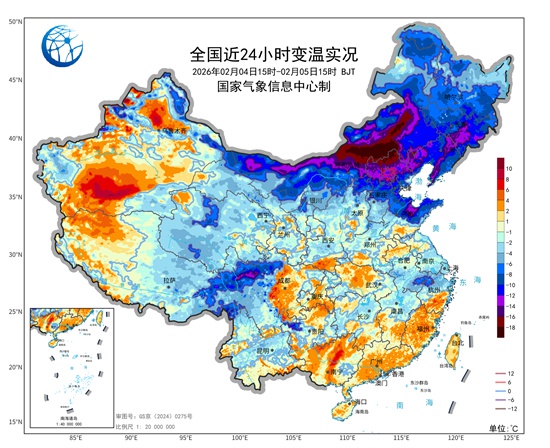
寒潮+台风少见“同框”!立春寒潮将携雨雪袭江浙沪等地
Yang Shi Wang· 2026-02-05 11:53
Group 1 - The core viewpoint of the news is the significant impact of the cold wave and the simultaneous formation of Typhoon "Xiwangyang," highlighting the contrasting weather systems in China [1][3][6] - The cold wave is expected to bring a sharp temperature drop, with some areas experiencing a decrease of over 18°C within 24 hours, particularly affecting the eastern regions of China more than the west [1][2] - The cold wave will lead to widespread precipitation in southern China, with rain transitioning to sleet or snow in several provinces, including Jiangsu, Anhui, and Shanghai, with the potential for heavy snowfall [4][5] Group 2 - Typhoon "Xiwangyang" is characterized by an asymmetric structure and significant vertical wind shear, which will limit its development and impact on China, as it is expected to weaken significantly upon entering the South China Sea [6][7] - The occurrence of both a cold wave and a typhoon simultaneously is a rare phenomenon, as they represent different weather systems with distinct energy sources and atmospheric structures [3][7]

今年第2号台风“西望洋”已生成 今夜将在菲律宾东南部沿海登陆
Jin Rong Jie· 2026-02-05 00:29
Core Points - Typhoon "Xiwangyang" (tropical storm level) is currently located approximately 1240 kilometers southeast of Manila, Philippines, with a maximum wind force of level 8 (18 m/s) and a minimum central pressure of 998 hPa [1] - The typhoon is expected to move westward at a speed of 20-25 km/h and will strengthen, making landfall on the southeastern coast of the Philippines tonight [1] - After crossing central and southern Philippines, the typhoon is projected to enter the southeastern part of the South China Sea by the 8th, where its intensity will significantly weaken [1]
中央气象台:天 气 公 报(2026年01月18日)
Xin Lang Cai Jing· 2026-01-18 00:57
Domestic Weather Situation - A cold wave is expected to impact most regions of China from January 18 to 21, bringing strong winds and significant temperature drops, with average daily or minimum temperatures decreasing by 6 to 12 degrees Celsius [3][6] - Specific areas such as the southern Huanghuai, western Jianghuai, eastern Jianghan, and parts of Guizhou and northern Guangxi may experience temperature drops of 12 to 14 degrees Celsius, with localized drops exceeding 16 degrees Celsius [3][6] - Snowfall has been reported in regions including Xinjiang, Inner Mongolia, Beijing, and Hebei, with some areas experiencing heavy snow [1][2] Global Weather Situation - Heavy rainfall has been observed in countries such as the Philippines and Argentina, with localized areas experiencing torrential rain [6][7] - North America and Central Asia have reported significant snowfall, with some regions experiencing blizzards [7][10] - The Philippines, Australia, and the Solomon Islands are expected to face strong precipitation in the coming days, with wind speeds reaching 4 to 6 levels and gusts of 7 to 8 levels [9][10]

17日起寒潮将影响我国大部地区
Xin Lang Cai Jing· 2026-01-16 00:32
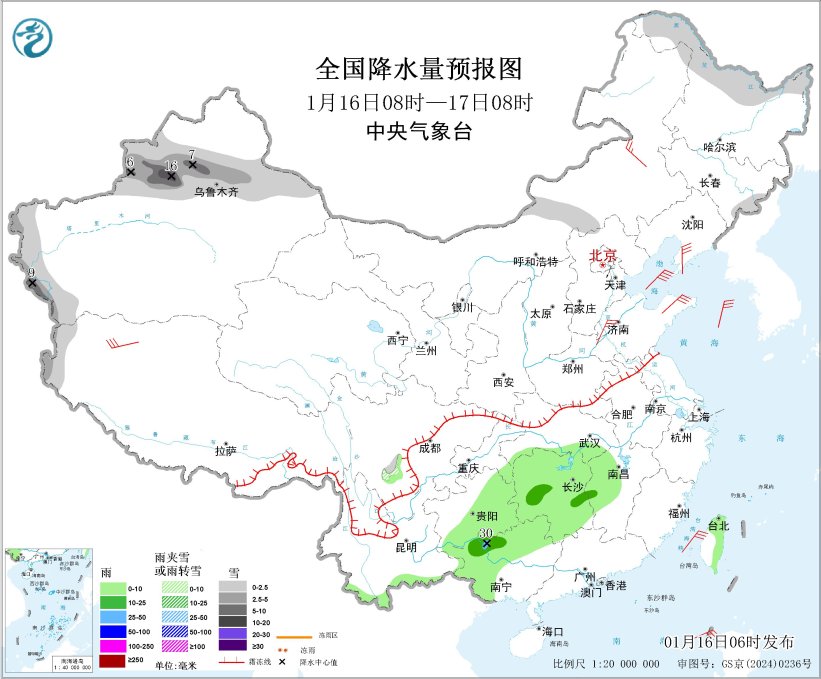
Domestic Weather Situation - Snow and significant temperature drops were reported in Northeast China and Xinjiang, with temperatures decreasing by 6-10°C in various regions [2][3] - Visibility issues due to dense fog were noted in parts of Sichuan, Chongqing, Jiangsu, Shanghai, Zhejiang, and Yunnan [2] Key Weather Forecast - A cold wave is expected to impact most of China from January 17 to 21, with temperatures dropping by 6-10°C, and some areas experiencing drops of over 12°C [3] - Rain and snow are forecasted across central and eastern regions, with heavy snow expected in parts of Shaanxi, Shanxi, Henan, Shandong, Hubei, Hunan, and Anhui [3] Global Weather Situation - Heavy rainfall was observed in regions including the Philippines, Australia, and parts of Europe, with localized heavy rain and flooding [4][5] - North Europe experienced significant snowfall, with temperatures dropping by 6-10°C in various areas [4] - The first typhoon of the year, "Lohan," is expected to bring heavy rain to the central and eastern Philippines, with potential for severe weather conditions [5] Future Weather Forecast - Specific forecasts for January 16-19 indicate varying precipitation across regions, with snowfall expected in Xinjiang, Inner Mongolia, and parts of Northeast China, while rain is anticipated in southern regions [9][11][12]
寒潮即将到来!中东部将现入冬以来最强雨雪冰冻过程
Xin Lang Cai Jing· 2026-01-15 11:14
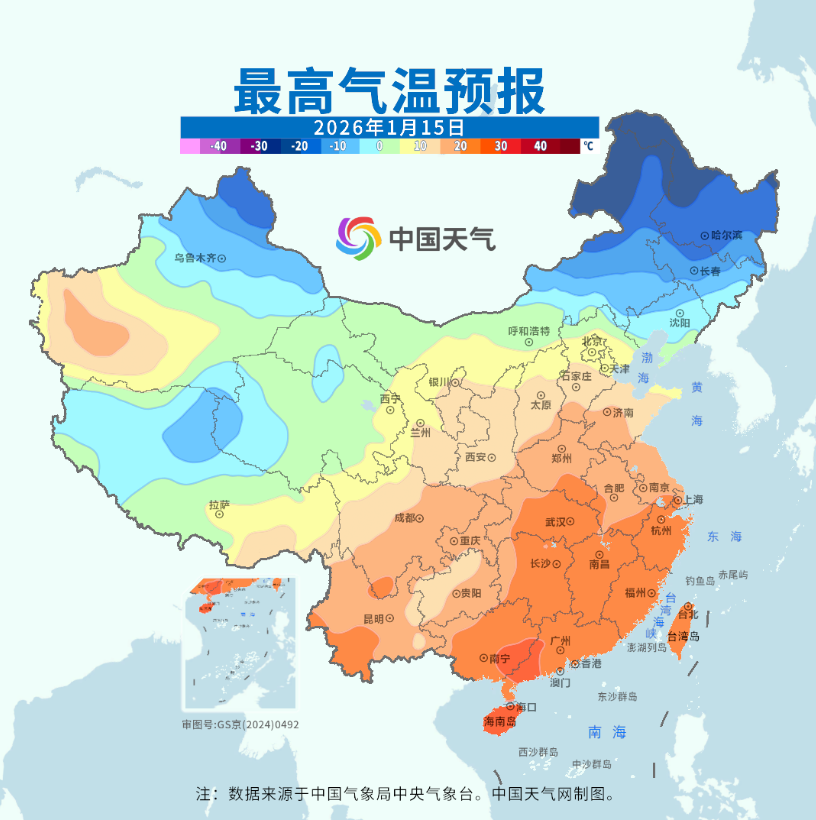
Core Viewpoint - A significant temperature fluctuation is expected across China, with a sharp drop in temperatures following a brief period of unseasonably warm weather, leading to potential impacts on daily life and travel [1][3][5]. Group 1: Temperature Changes - Many regions in China experienced a dramatic rise in temperatures, with Zhengzhou reaching 21.5°C, breaking the historical record for January [1]. - Starting from the weekend, a cold wave will sweep from north to south, causing temperatures to drop by 6 to 10°C across most areas, with some regions experiencing drops exceeding 12°C [3]. - The temperature drop will be particularly severe in areas like Huanghuai, Jianghuai, and Jiangnan, where declines could exceed 20°C [5]. Group 2: Weather Conditions - The upcoming week will see a "sliding" decrease in temperatures, with major cities like Zhengzhou expected to see a drop from 21°C to just above 0°C by Sunday, and potentially down to -5°C early next week, marking a cumulative drop of over 25°C [5]. - The northeastern region will experience extreme cold, with maximum temperatures expected to fall below -15°C and minimums below -25°C, indicating a significant cold snap [7]. - A major rain and snow event is anticipated in the central and eastern regions, with the potential for heavy snowfall and icy conditions, particularly from January 19 to 21 [8]. Group 3: Travel and Safety Implications - The forecasted snow and ice accumulation will adversely affect transportation, necessitating travelers to monitor road conditions and plan accordingly for safety [10].
晴好天气告一段落 广西明日迎来降雨
Xin Lang Cai Jing· 2026-01-13 21:57
Group 1 - The weather in Guangxi has been unusually warm, with temperatures reaching 20°C, resembling spring conditions [2][3] - The highest temperature recorded was 23.6°C in Fangchenggang, while the lowest was 2.5°C in Guilin [2] - A significant change in weather is expected, with rain forecasted from January 14, particularly in northern Guangxi, where moderate to heavy rain may occur [2] Group 2 - The temperature fluctuations in Nanning are expected to remain minimal, with lows above 10°C [3] - Nanning's weather will transition from sunny to cloudy, with temperatures ranging from 12°C to 24°C [3] - A new cold front is anticipated to bring strong cooling, winds, and precipitation in the following week [4]

中国气象局:三股冷空气将至,防范阶段性大风和低温冻害
2 1 Shi Ji Jing Ji Bao Dao· 2025-12-03 06:17
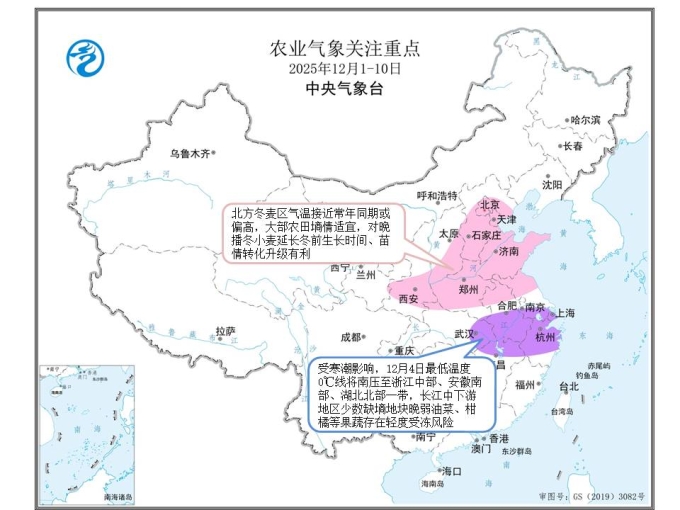
Core Viewpoint - The China Meteorological Administration forecasts that most regions in China will experience temperatures close to or above the historical average in December, with specific areas facing lower temperatures and increased precipitation [2][3]. Weather Forecast - Three cold air masses are expected to impact China from December 3 to December 12, with overall weak intensity and less precipitation, leading to higher temperatures [2]. - A cold wave will affect eastern China from December 3 to 4, bringing temperatures down by 4 to 8 degrees Celsius [2]. - The first typhoon of the season is expected to form in the eastern Philippines around December 5 and impact the South China Sea from December 8 to 10 [2]. Regional Temperature and Precipitation - Most areas will have temperatures near or above the historical average, except for northeastern China, eastern Inner Mongolia, and northern Xinjiang, which will be below average [3]. - Precipitation is expected to be above average in northern China, including parts of North China, Northeast China, and Inner Mongolia, while other regions will see average to below-average precipitation [3][5]. Agricultural Implications - There is a need to prepare for potential wind and low-temperature damage in northern pastoral areas, with recommendations for agricultural facilities to be ready for adverse weather [3]. - Southern regions face risks of frost damage due to high temperatures and low precipitation, necessitating proactive measures [3]. Historical Weather Review - In November, the average temperature across China was 4.2 degrees Celsius, 0.9 degrees higher than the historical average, with three cold air events recorded [5]. - The average precipitation in November was close to the historical average, with significant cold waves affecting transportation and agricultural activities [5][6].
“天琴”或将于2日在南海中西部海域减弱消散
Zhong Guo Xin Wen Wang· 2025-12-01 06:01
Core Viewpoint - The 27th typhoon "Tianqin" is expected to weaken and dissipate in the southwestern South China Sea on December 2, 2023, with ongoing impacts on local weather conditions [1] Group 1: Typhoon Details - As of December 1, 2023, at 08:00, "Tianqin" was located at latitude 14.7°N and longitude 111.6°E, approximately 250 kilometers southwest of Yongxing Island, with a maximum wind force of 8 (18 m/s) [1] - The typhoon is forecasted to move slowly southwest and gradually weaken, dissipating in the southwestern South China Sea [1] Group 2: Weather Impact - On December 1, the central and western South China Sea, as well as the waters near the Xisha, Zhongsha, and Nansha Islands, are experiencing strong winds due to the typhoon [1] - From the night of December 2, the wind force around Hainan Island is expected to increase due to the influence of a new cold air mass [1] Group 3: Precautions and Warnings - The Hainan meteorological department advises that vessels and offshore platforms should continue to take precautions against strong winds on December 1 [1] - Tourists engaging in water activities near the coast should be aware of the strong wind impacts starting from the night of December 2 [1]
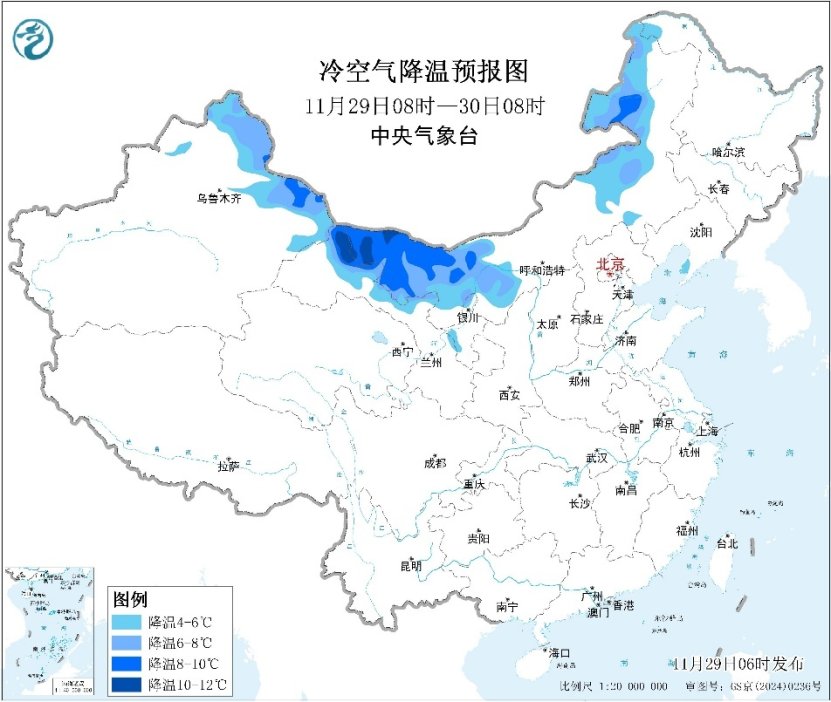
冷空气活跃北方气温将明显下降 南海部分海域风力较大
Yang Shi Wang· 2025-11-29 02:32
Group 1 - The core viewpoint of the articles highlights the impact of cold air and Typhoon "Tianqin" on weather conditions in China, particularly the significant temperature drop in northern regions and strong winds in the South China Sea [1][2][4][5]. Group 2 - From November 29 to December 1, northern China is expected to experience a temperature drop of 6 to 10 degrees Celsius, with localized drops reaching 12 to 14 degrees Celsius, accompanied by strong winds [1][2]. - The cold air will lead to sand and dust storms in parts of Inner Mongolia and northern China, while regions like Inner Mongolia and Heilongjiang will see moderate to heavy snowfall, with snow accumulation of 4 to 8 centimeters, and locally exceeding 10 centimeters [1][2]. - Typhoon "Tianqin," currently located about 360 kilometers south of Sansha City, is expected to weaken while remaining stationary in the southwestern South China Sea, causing strong winds in the surrounding areas [4][5].