咖啡万店俱乐部

Search documents
国内第四个万店咖啡品牌,融资了
3 6 Ke· 2026-01-28 02:44
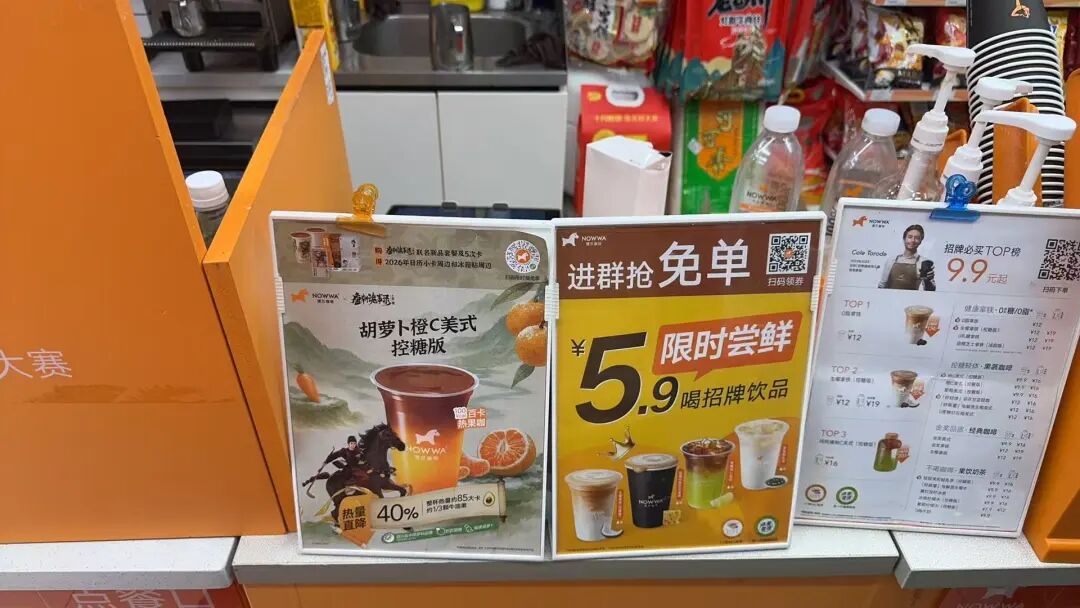
Group 1 - NOWWA Coffee has completed a C round financing of several hundred million yuan, attracting multiple investment institutions including Junlian Capital and Shengwang Fund [1] - The company has completed seven rounds of financing since its establishment, with notable investors such as Sanqi Interactive Entertainment and SIG Asia Investment [1] - As of December last year, NOWWA Coffee announced that it had surpassed 10,000 stores, becoming the fourth coffee brand in China to join the "10,000-store club" [1] Group 2 - NOWWA Coffee primarily operates through a "store-in-store" model, partnering with convenience stores like Meiyijia to set up joint counters [2] - The company adopted a light-asset operation strategy from the beginning, allowing for rapid national market expansion [4] - In 2024, NOWWA Coffee refocused on the "store-in-store" model and accelerated expansion through franchise partnerships, which was a key turning point for its growth [4] Group 3 - As of January 20, NOWWA Coffee had 7,693 stores, with a significant increase in store openings, including 1,800 in a single month [5][6] - The company has a high franchise ratio, with over 80% of its stores being franchises, and aims to build a diverse store ecosystem based on market demand [5] - Analysts note that the "store-in-store" model allows NOWWA Coffee to leverage existing traffic and resources from convenience stores, reducing operational costs [5] Group 4 - The coffee market in China is becoming increasingly competitive, with brands like Luckin Coffee and Kudi also reaching significant store counts [6] - The profitability of coffee brands is challenged by the volatility of raw material prices, making it harder to achieve margins compared to other beverage sectors like tea [7] - Analysts predict that by 2028, the Chinese coffee market will enter a phase of brand consolidation, with key factors for sustainable development including brand effect, scale effect, and supply chain completeness [8]

商业秘密|幸运咖、挪瓦咖啡门店破万背后:行业激战 盈利与增长如何平衡
Di Yi Cai Jing· 2025-12-19 14:00
Core Insights - The coffee industry in China is experiencing significant expansion, with new brands like Luckin Coffee and Nova Coffee joining the "10,000 store club," indicating a shift in industry dynamics [1][2] - The competitive landscape is marked by aggressive price wars, leading to concerns about profitability for franchisees and established brands alike [2][3] Group 1: Industry Expansion - By December 2025, the number of coffee stores in China surpassed 10,000 for both Luckin Coffee and Nova Coffee, joining existing players like Luckin and Kudi [1] - The current market includes four major brands with over 10,000 stores each, highlighting a rapidly evolving competitive environment [1] - Nova Coffee's unique "coffee + convenience store" model has contributed to its rapid growth, achieving a 210% increase in daily cup sales through partnerships [1] Group 2: Competitive Dynamics - The coffee market is projected to reach nearly 250 billion yuan by 2024, with an expected growth rate of around 20% [3] - The number of coffee consumers in China is anticipated to double from 130 million in 2023 to 260 million by 2028, indicating substantial market potential [3] - Price wars initiated in 2023 have intensified competition, with brands adopting low-price strategies that have led to reduced profit margins for franchisees [3][4] Group 3: Consumer Behavior - Consumer preferences are shifting towards high-cost performance coffee, with a significant portion of consumers favoring lower-priced options [5] - A report indicates that 51.9% of consumers prefer new beverage products priced between 15-20 yuan, while only 4% are willing to pay over 25 yuan [5] Group 4: Future Directions - As competition escalates, brands are exploring various strategies to differentiate themselves, with Starbucks planning to expand its store count significantly [6] - Tims Coffee is focusing on differentiation by introducing complementary food items, aiming to stand out in a crowded market [6] - The market is expected to see a shift towards lower price points and a focus on convenience, with brands needing to adapt to survive [7]