商业分析

Search documents
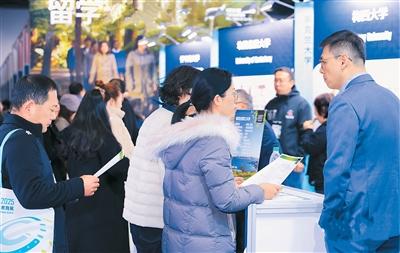
留学选专业,注意新动态
Ren Min Ri Bao Hai Wai Ban· 2026-01-07 23:00
Core Insights - The report by Qide Education highlights the trends in popular study fields and emerging professional directions for international students, driven by advancements in AI, biotechnology, and sustainable energy [1] Group 1: Trends in Study Fields - There is a noticeable shift in application trends from business disciplines to STEM (Science, Technology, Engineering, Mathematics) fields, with STEM applications increasing while business and social sciences are declining [2] - From 2022 to 2025, business and economics remain the most applied fields, but the proportion of applications for science and engineering is steadily rising [2] - The increasing preference for STEM fields is attributed to their higher technical barriers and long-term career prospects, aligning with global technological advancements [2] Group 2: Differences in Undergraduate and Master's Applications - Undergraduate applications tend to be broader, focusing on foundational subjects like mathematics and economics, while master's applications are more career-oriented, concentrating on specific fields such as law, education, and emerging interdisciplinary studies [3] - Students often choose foundational subjects at the undergraduate level for their versatility, allowing them to pivot to more specialized fields in their master's studies [3] - Interdisciplinary programs like business analytics are gaining popularity, combining business, statistics, and computer knowledge, appealing to students from diverse academic backgrounds [3] Group 3: Emerging Professional Advantages by Institutions - Global higher education institutions are deepening their focus on emerging professional fields, with varying strengths based on regional characteristics [4] - U.S. universities emphasize cutting-edge technology and industry collaboration, with institutions like Stanford and MIT leading in AI and robotics research [4][5] - Different countries exhibit unique educational strategies in AI, with the U.S. focusing on technical exploration, Germany integrating courses with industry needs, and Canada offering flexible educational paths in AI and sustainability [5]


2026,留学新趋势
Ren Min Ri Bao Hai Wai Ban· 2025-12-24 22:46
Group 1: Core Insights - The report by Qide Education highlights the evolving landscape of study abroad choices for Chinese students, emphasizing a shift towards more pragmatic and cost-effective options [1][2] - Countries in the Eurasian region, such as Malaysia and South Korea, are gaining popularity due to their stable policies and higher cost-performance ratios compared to traditional destinations like the UK and the US [1][2] - The increasing number of English-taught programs in European countries, particularly Germany and France, is attracting students focused on cost-effectiveness and professional alignment [2] Group 2: Trends in Study Abroad - There is a growing interest in interdisciplinary programs, with fields like artificial intelligence, data science, and sustainability becoming more prominent in students' choices [3] - The demand for dual master's degrees is rising, as students seek to enhance their employability by combining different fields of study [4] - Language proficiency exams are evolving, with a focus on real language output and academic skills rather than rote memorization, reflecting a shift in the selection logic for studying abroad [5] Group 3: Examination Trends - The IELTS exam results indicate that Chinese students maintain stable performance in listening, reading, and speaking, while writing scores have slightly declined [4] - The upcoming reforms in the TOEFL exam will introduce a more personalized and adaptive testing format, enhancing the focus on genuine language skills [5]